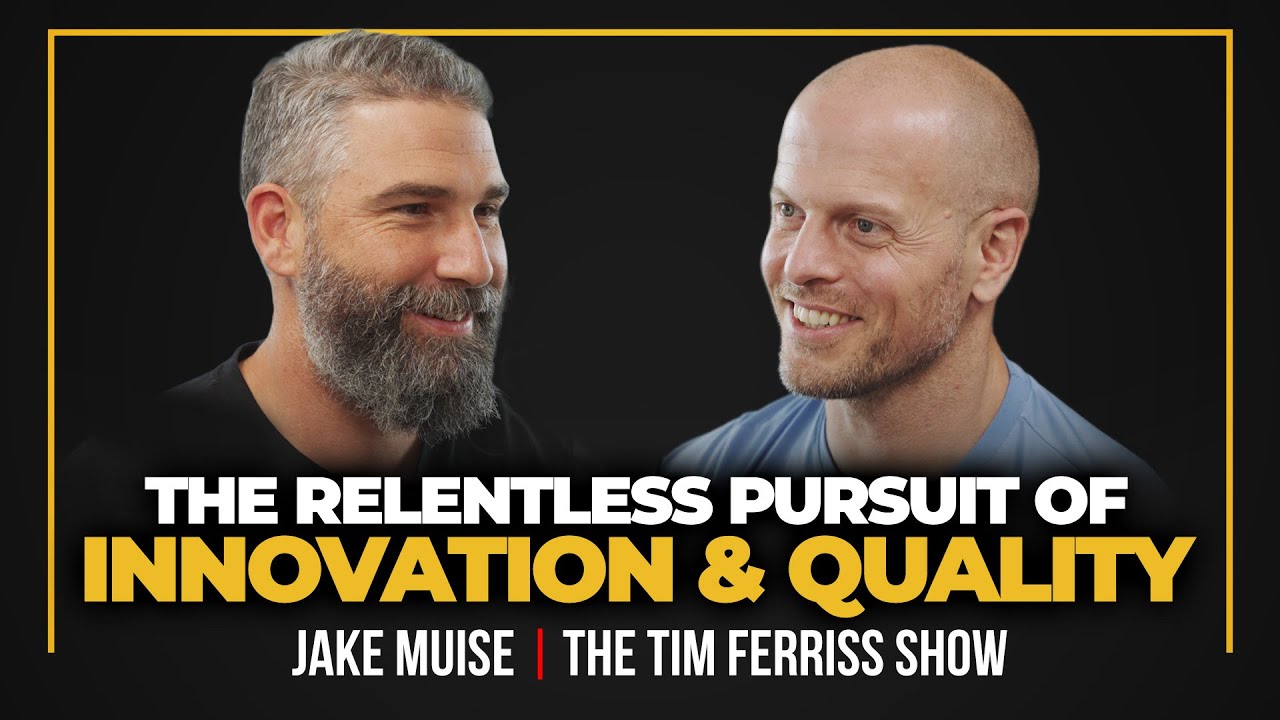
Jake Muise runs a company that gets a little less convenient when it succeeds. In 2025, crews from Maui Nui Venison traveled 34,240 off-road miles, shouldered animals from field to floor and harvested 15,514 wild axis deer. Across the places they help manage, the company reported the first measurable population decline in more than 18 years. The same number of deer took nearly twice the effort to find and remove as the year before.
For an ordinary meat company, scarcer supply is a headache. For Muise, it is evidence. Maui Nui exists to help bring an introduced deer population into better balance with an island that has finite soil, water and forage. Venison is the product. A landscape under less pressure is the intended outcome. The tension between those facts is not tucked into a sustainability report. It is waiting outside every night, in longer routes and quieter hillsides.
A save from the back row
Muise’s route to this problem began far from Maui. He was born in Edmonton, raised in northern Canada and Nova Scotia, and grew up in a family where wild food was ordinary. Moose and pheasant arrived through hunting, not branding. At Eastern Shore High School he played volleyball, basketball, track and badminton, graduated near the top of his class and became a three-time national volleyball all-star.
A volleyball scholarship brought him to the University of Hawaii in 2000. He played libero, the defensive specialist who reads an attack early and keeps a broken play alive. In 2003 he led the Warriors with 2.31 digs per game and ranked 12th nationally in digs. The position rewards anticipation, small corrections and an appetite for the unglamorous save. It is difficult not to see an echo in the work that followed.
The more consequential break was administrative. Muise was accidentally assigned to a dorm with students from Molokaʻi. Friendship led to holidays and summer breaks with a Molokaʻi family, then to time alongside generations of subsistence hunters. Axis deer there were neither a postcard curiosity nor a simple villain. They were food, skill, responsibility and an animal capable of multiplying beyond what an island could comfortably carry.
Seven axis deer had arrived in Hawaii as a royal gift in the nineteenth century. Without the predators they faced in their native range, their numbers grew. Muise became absorbed by the biological and cultural puzzle. After college and a period playing professional volleyball in Europe, he returned to Hawaii. He founded the research-based Axis Deer Institute and spent roughly 12 years as its executive director.
Volleyball had already given him one sharp disappointment. Muise came within a single place of making Canada’s Olympic team. The miss closed one path but left the habits behind: film, repetition, exact roles and blunt feedback. His later teams would work in a different uniform, on uneven ground and against no scoreboard anyone could see. The shared principle was preparation. A player cannot decide where an attack will land, just as a field crew cannot tell a herd where to move. Both can study patterns, improve position and be ready when a narrow chance appears.
“At Maui Nui, we find the balance that’s best for all of our communities - ecosystem communities, food system communities, our human communities, nearshore fisheries.”Jake Muise
Four deer in one very large haystack
One assignment became a three-year education in stubborn problems. Four axis deer had been illegally introduced to Hawaii Island, a place large enough to swallow every other Hawaiian island inside it. Letting a breeding population establish itself risked repeating the pressures already visible on Molokaʻi and Maui. Muise’s team had to locate a handful of wary animals across roughly 100 square miles.
They used camera traps, tracking and patient field work. The arithmetic was absurd: tiny targets, enormous terrain, no useful shortcut. All four deer were eventually removed. The effort made plain that wildlife management needed better information before it needed more force. Count accurately. Learn movement. Choose the right moment. Measure again.
The commercial idea emerged from that loop. If deer had to be actively managed, and if the animals were already valued as food, could a company pay for careful population work by selling the result? Muise and his wife, Kuʻulani, co-founded Maui Nui Venison in 2017. Kuʻulani, raised on Molokaʻi, brought cultural context, writing and a clear eye for the relationships between place, food and community. Jake brought the field obsession. Together they chose a name for the larger prehistoric landmass that once joined Maui, Molokaʻi, Lānaʻi and Kahoʻolawe.
Federal inspection, after dark
Turning a wild animal into food for interstate sale required more than good intentions. Maui Nui developed a federally inspected field-harvest process around nighttime work on private land. Teams use thermal technology and carefully planned routes. Animals must be recovered quickly and carried, not dragged, to avoid bruising and contamination. A USDA inspector accompanies the operation. The work joins wildlife biology, marksmanship, off-road driving, meat handling and disciplined recordkeeping in a single shift.
Muise once described the crew as “snipers, rally car drivers, CrossFit athletes, butchers.” The line is colorful because the job genuinely resists a normal title. He has also said that carrying each deer is one of his favorite parts of the night. After the shot, speed yields to weight and attention. A field worker shoulders the animal into its next use as food. Industrial language becomes personal again.
The company’s rhythm follows the animals rather than a factory clock. Moonlight changes behavior and visibility. Density changes the miles between encounters. Weather and terrain change the route. In 2025 the team wore through 136 tires and 73 pairs of boots. These numbers are funny until you imagine the procurement spreadsheet. Nature rarely agrees to a quarterly plan.
The night everyone showed up
The business found another purpose in 2020. Restaurant sales collapsed during the pandemic while the need for local food rose. Maui Nui launched Holo ʻAi, a program whose name means moving food to where it is needed. Venison went to food banks and community partners. A local delivery program and a national direct-to-consumer business grew at the same time. Emergency improvisation became permanent infrastructure.
After the Maui fires in 2023, Chef Hui needed 3,500 pounds of ground venison for displaced families. Muise’s regular team could not harvest enough in one night. Asking for help did not come naturally to him, but the request went out. Friends and neighbors appeared in the dark. Together they harvested 100 deer, enough for 14,000 bowls of chili.
Muise drew an unexpectedly tender leadership principle from a night full of trucks and knives: every person wants to be useful, so asking for help can become its own generosity. It gives willing people a place to put their effort. Over roughly three months after the fires, Maui Nui reported harvesting, processing and delivering 56,000 pounds of fresh venison for community distribution.
“Every person wants to be useful, which turns asking for help into its own kind of generosity.”Jake Muise
By August 2026, Holo ʻAi had passed one million meals shared since its launch. The milestone belonged to harvesters, butchers, operations staff, customers, ranch partners and the organizations that moved food the last mile. Maui Nui’s customer is not separate from the conservation plan. Each purchase helps finance another survey, another inspected harvest and another portion set aside for community use.
The useful contradiction
Muise’s ambition is not eradication on Maui. It is balance, a word less dramatic and more demanding. The right deer density depends on a particular landscape and the communities around it. It must be measured repeatedly. It requires ranchers, hunters, regulators, food makers, customers and neighbors to accept that one animal can be culturally valued, ecologically disruptive and useful food at the same time.
That complexity may be the company’s real product. Maui Nui gives people a way to participate in a place-based solution without pretending that consumption is automatically virtuous. The harvest carries a cost. So does allowing a population to outrun available habitat. The honest work sits between those facts, after sunset, with an inspector nearby and somebody waiting to sharpen the knives again.
In a clean startup story, growth solves tension. Muise has built one where growth funds the solution and the solution complicates growth. Lower densities mean more miles for every animal. Better distribution creates more demand for a resource the company hopes to bring into balance. The contradictions do not disappear. They become operating constraints.
A libero would recognize the posture. Read what is coming. Move before the ball arrives. Keep the play alive for somebody else. More than two decades after a dorm assignment introduced Muise to Molokaʻi, he is still working the back row of a very large court. The useful number is getting smaller. The night is getting longer. That is what progress looks like from the field.