At midnight on Maui, a government meat inspector climbs into what looks like a tactical golf cart. A drone has already painted the hills in heat. A shooter, a spotter and a recovery crew wait in darkness. When axis deer appear, the inspector evaluates the animals through infrared optics and gives verbal clearance. One precise shot later, runners carry the carcass to a mobile processing unit. The whole sequence happens fast because daylight is a deadline and food safety is not negotiable.
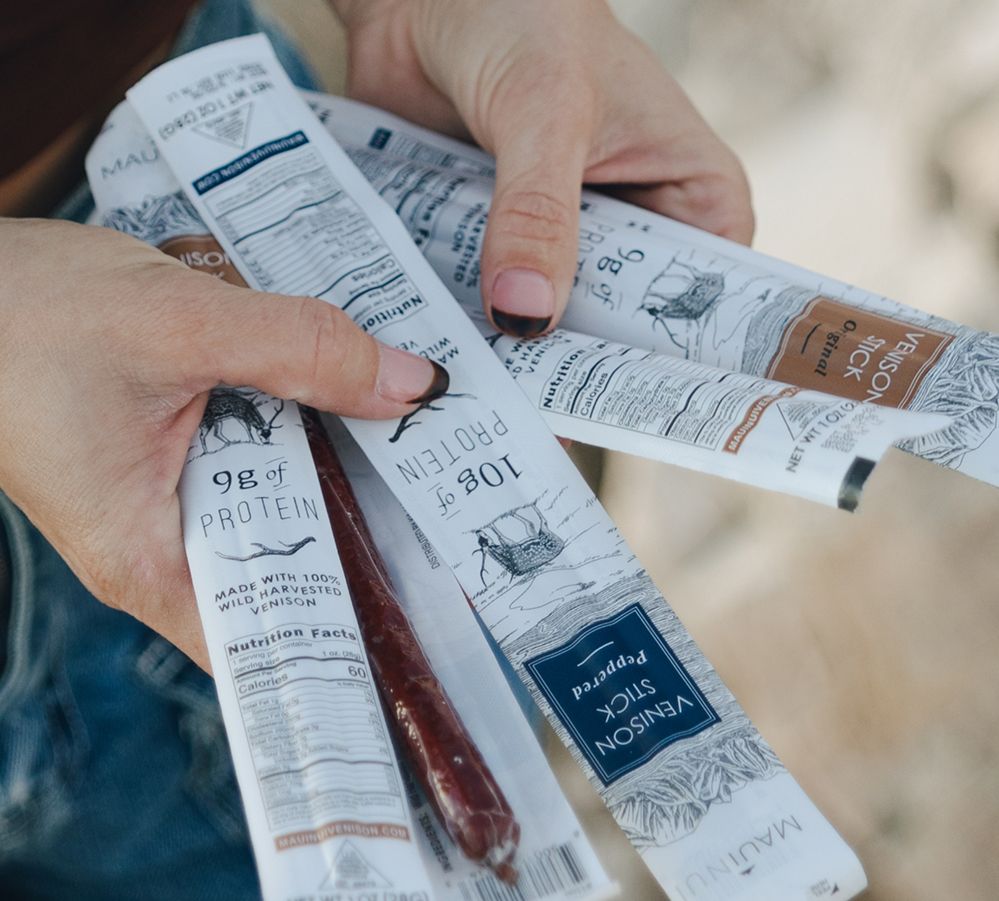
This is the factory floor of Maui Nui Venison, except the factory has thorns, gullies, weather, live animals that can leave, and a habit of destroying tires. The company surveys, harvests, butchers and sells Maui's free-ranging axis deer as steaks, ground meat, snack sticks, sausage, broth and organ supplements. It also moves a meaningful share of the harvest into local food banks and community freezers through a program called Holo 'Ai.
Calling it a meat company is correct in the same way that calling a newspaper a paper company is correct. The physical product matters, but the interesting asset is the system around it: landowner relationships, population data, USDA field compliance, night crews, Maui processing, national cold-chain fulfillment, subscriptions, chef credibility and a story strong enough to persuade customers to try venison.
The problem arrived on four legs
Axis deer came to Hawai'i in the nineteenth century and reached Maui in the 1950s. With no natural predators, the ability to breed year-round and a generous buffet of crops and native plants, their numbers climbed. A large herd can chew vegetation close to the root, damage farms and prevent native seedlings from surviving. Bare soil then leaves the mountain in heavy rain, carrying sediment toward streams and reefs. The damage moves from mauka to makai, mountain to ocean.
Conventional hunting can provide food and reduce some animals, but it does not automatically create a population-management program or a legal commercial supply. Wild game usually cannot simply be dropped at a processor and sold across the country. An inspector must see a healthy animal before harvest, verify humane dispatch and supervise the food-safety chain. A fixed slaughterhouse controls the animal. Maui Nui had to reproduce the control without confining it.
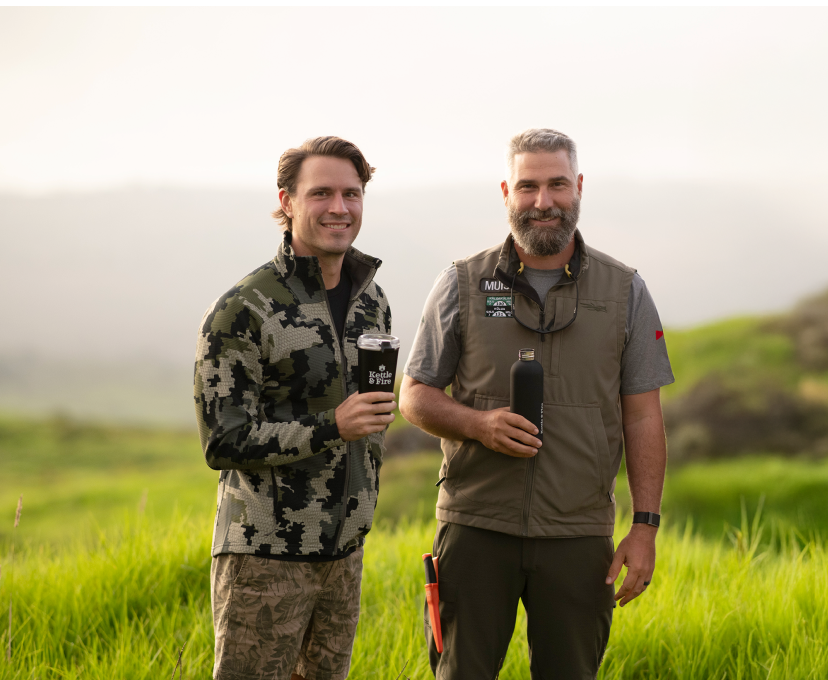
That regulatory gap was the first thing the founders attacked. Jake Muise had spent years working on axis deer management before he and his wife, Ku'ulani, built Maui Nui. Their first consequential product was not a tenderloin. It was a field protocol that could satisfy the Federal Meat Inspection Act while the deer remained entirely wild.
The trick is missing on purpose
Maui Nui's shooting standard contains a sharp piece of systems thinking. Crews aim so that a small error goes above the animal rather than into it. That produces intentional clean misses but reduces the chance of a wounding hit. Muise has said the field system operates at roughly 99.9 percent immediate rendering efficiency, compared with the 98 percent benchmark he cited for fixed facilities. The larger lesson is portable: do not optimize the visible success rate when the cost of a bad success is worse than a clean failure.
Harvesting at night has a second benefit. Deer at rest are less likely to experience a prolonged stress response, which matters ethically and affects meat chemistry, tenderness and flavor. Thermal binoculars let inspectors examine an animal without introducing bright light. Specialized UTVs then shuttle carcasses to mobile processing while crews race a narrow performance window.
“Our goal is to grow smaller.”Jake Muise, co-founder and CEO
The work is expensive in the most literal, unglamorous ways. In 2025 the operation logged 34,240 off-road miles, wore through 136 tires and 73 pairs of boots, retired six Polaris UTVs, used 568 pounds of ammunition and sharpened knives 2,489 times. The team shouldered about 1.45 million pounds of deer from field to floor. Maui Nui has not published a neat cost per animal, but its consumption ledger tells you where the money goes: skilled labor, inspection, vehicles, cold rooms, processing, maintenance and freight from an island.
Nearly five times the travel for roughly the same harvest. Lower density is ecological progress and an operational tax.
A premium brand attached to a ceiling
Maui Nui sells direct to consumers through Shopify, and its recurring 'Ohana and Snack memberships do more than smooth revenue. Members receive priority access and customization because fresh supply is limited. In 2024 the company reported more than 15,000 members, 27,600 new customers, 80,164 shipped orders and 24,550 local orders. That is real scale for a food source nobody can responsibly manufacture more of.
The catalog is a lesson in whole-animal economics. Premium cuts carry the romance, ground meat broadens everyday use, sticks travel without a skillet, bones become broth, organs become supplements, and collaborations introduce the protein through brands customers already trust. Patagonia Provisions sold smoked links. Anova paired cuts with sous-vide hardware. Kettle & Fire turned bones into a shelf-stable broth. Restaurants including Alinea, The French Laundry, Saison, Mama's Fish House and Kō made venison legible through chefs.
Who buys it? Athletes who count protein, families who want a convenient snack, cooks curious about wild game, ethical omnivores uncomfortable with confinement, and restaurants looking for food with a sense of place. The closest alternatives are premium beef, farmed venison, wild-game brands, meat-box subscriptions and local hunters. None bundle the same ecology, inspection and data operation. Maui Nui's moat is less a flavor than a stack of permissions and practiced routines.
What failed, and what changed
The company did not discover its model in one clean flash. The original management problem could not become food because no ready-made inspection framework existed. The team spent years building one. Later, COVID-19 exposed a different failure: Hawai'i could have food on the island and still fail to move it to residents. Maui Nui accelerated home delivery and reallocated harvest capacity into Holo 'Ai, sharing 62,429 pounds during the pandemic period.
Internal systems needed revision too. Muise has described early versions of the team's peer review as so blunt that they made grown men cry. Management changed the measurement and how feedback was delivered. The useful cultural point is not toughness theater. It is that a high-standard team treated a painful management tool as a faulty prototype, then iterated on it.
The Lahaina fires forced another change. In August 2023, Chef Hui asked for 3,500 pounds of ground venison to feed displaced families. Maui Nui could not harvest that amount alone in one night, so Muise did something he disliked: asked for help. Friends and neighbors arrived. The group harvested 100 deer, enough for 14,000 bowls of chili. The experience became a template for bringing mission partners into the work rather than treating them as spectators.
Five things worth stealing
- Solve the regulatory bottleneck before polishing the consumer brand.
- Design bad outcomes to fail safely, the way a high shot becomes a clean miss.
- Turn every part of a constrained input into a product with a different use case.
- Use subscriptions to allocate scarcity and forecast demand, not to fake abundance.
- Publish operating numbers that show whether the mission is changing physical reality.
The condition that breaks the model
Maui Nui is tempting to summarize as “eat an invasive species and save nature.” That slogan travels better than the business. The model needs dense animal populations, access to large connected properties, willing landowners, regulators prepared to supervise field harvest, local processing, customers able to pay premium prices and a community that regards the intervention as legitimate. Remove any two of those and the clever flywheel becomes an expensive hunt.
It also contains a built-in margin problem. As the deer become harder to find, miles and labor rise per animal. In 2024 the company reported 7,345 off-road miles and 15,788 deer. In 2025 it traveled 34,240 miles and harvested 15,514. The numbers are not directly comparable without route and acreage detail, but the direction is clear enough: Maui Nui worked much harder for roughly the same harvest. Its thermal surveys also recorded the first measurable population decline across managed areas in more than 18 years.
That is the company's most convincing achievement and its most awkward board slide. Ordinary businesses want unit costs to fall as volume rises. Maui Nui's ecological success can push unit costs up while future supply falls. Partnerships, prepared foods, stronger whole-animal utilization and premium pricing can soften the squeeze. They cannot repeal the mission.
“If you are the solution, you want to be needed less and less.”Ku'ulani Muise, co-founder and brand director
There is a clean beauty in that constraint. The company cannot quietly breed more deer when snack-stick demand spikes. It cannot separate sourcing from impact. Every order begins in a real pasture and ends with one fewer animal pressing on that place. Customers are not purchasing a vague percentage of proceeds for a future project. They are buying the useful output of work that has already happened.
Maui Nui fits somewhere between premium protein brand, wildlife contractor, climate adaptation company and community food utility. The categories blur because the problem never respected them. Its best idea is not that conservation can be delicious, although dinner helps. It is that a company can make its desired end state operationally inconvenient and keep publishing the evidence anyway.