Consider a certification exam that lets you look up the answer. In 2023, ITS, Pearson VUE, and Microsoft introduced secure access to selected online documentation during Microsoft certification exams. Candidates could consult approved resources while the rest of the web stayed outside the fence. For anyone raised on the sacred rule of closed books, this was a delicious little rebellion.
- Software behind certification and professional exams.
- Practical tasks, secure delivery, and recurring assessment.
- Acquired by Pearson in September 2026.
The reasoning was practical. Professionals consult documentation when solving problems. An exam that forbids the tools of the job risks measuring something beside the point. The hard part was allowing that freedom without letting the whole internet into the room. ITS helped build the boundary.
That boundary explains this Baltimore business better than the phrase “online testing.” Internet Testing Systems builds software for organizations that need to establish whether somebody knows enough, can perform a task, or remains competent years after qualifying. Its customers own the credentials. ITS supplies much of the equipment that makes those credentials possible.
A web company hiding inside the exam
Pat Ward started ITS in 1997, when paper still dominated testing. In the company’s telling, what bothered him about early computerized exams was their underlying architecture: proprietary markup instead of HTML, and missing relational databases. His opportunity was specific. Use the emerging web to make assessment systems more adaptable.
Today ITS reports delivering 26 million tests annually across 230 countries and territories, in 60 languages and dialects. More than 50 certifying organizations use its assessment solutions. Those are company-reported figures, but they establish the scale of the operation: this is infrastructure underneath other organizations’ names.
The products follow the life of an exam. Item Workshop handles question writing, review, permissions, versioning, and publishing. Internet Test Driver delivers assessments in person, remotely, or through a mixture of both. PracticeNow gives programs an official practice environment using their own content and rules. Observational assessment software coordinates evaluators, candidates, rooms, and video for oral and practical examinations.
The commercial model is business to business: configurable assessment software, licensing, implementation, and specialist services. Secure Browser can also be licensed by other test delivery systems. Buyers start with a demonstration or consultation. The purchase is therefore a program decision, involving delivery, integration, security, and support requirements.
What broke was the spreadsheet
The National Conference of Bar Examiners offers a useful view behind the curtain. Its account of developing NextGen bar exam grading describes early reliance on spreadsheets and manual workflows. Grader drift was difficult to spot. Calibration was absent during pilot and field test grading. Double grading every response was not feasible in those early stages.
The changes followed feedback from graders, focus groups, and surveys. Better rubrics and annotated examples came first. The ITS grading platform then added real-time oversight and continuous calibration for the beta test. A team leader could see progress and accuracy while grading was happening, rather than discover a problem after the paperwork had hardened.
This is a lesson other organizations can copy: instrument the handoffs. A new question format needs a new scoring workflow, training process, and way to detect disagreement. Buying a prettier screen would not have solved the earlier grading limitations. NCBE’s experience shows why assessment technology reaches well beyond the moment a candidate presses Submit.
- 01 / SCOREApply the rubric
- 02 / CHECKMonitor alignment
- 03 / REFINECalibrate and mentor
Show your work. Inside the work.
ITS also supports tests conducted inside actual applications, controlled labs, simulations, and observed activities. It reports delivering more than two million performance-based exams annually. With Certiport, its 2023 Autodesk Certified User update put the application and exam side by side, removing the need to toggle between them.
The appeal is easy to grasp. Asking someone to complete a task can produce evidence that a multiple-choice answer cannot. But the format must fit the skill. A lab adds little if the credential only needs straightforward knowledge checks. A realistic environment also demands careful task design and maintenance as the underlying software changes.
Continuous Certification asks a different question: why sample professional knowledge only once every several years? ITS supports smaller, recurring assessments with feedback and learning resources. Its 2024 NBCRNA partnership and work with other medical certification organizations place that idea in a practical market. Programs need a way to keep professionals engaged, assess knowledge over time, and administer the whole recurring process.
The distinction from a general quiz tool lies in this combination: question governance, different delivery methods, practical tasks, accommodations, and certification maintenance. Specialist vendors compete for parts of that workload. The buyer’s useful comparison is the complete operating process: which steps will still require spreadsheets, separate vendors, or custom engineering?
The buyer’s useful comparison is the complete operating process.
The robot gets a supervisor
SparkAI, launched in 2024, adds content generation and other AI assistance to ITS products. Item writers can generate drafts, rationales, and translations, then review and refine them. The company’s published philosophy gives humans the decision. That is a sensible condition for adoption: a plausible question can still be inaccurate, ambiguous, or unfair.
ProctorNow applies AI to another busy workflow: remote supervision. Its public product page positions it for low-to-mid-stakes programs and combines automated assistance with human oversight. That scope matters. A program should match monitoring, candidate support, and security controls to its own risks rather than assume one remote configuration suits every credential.
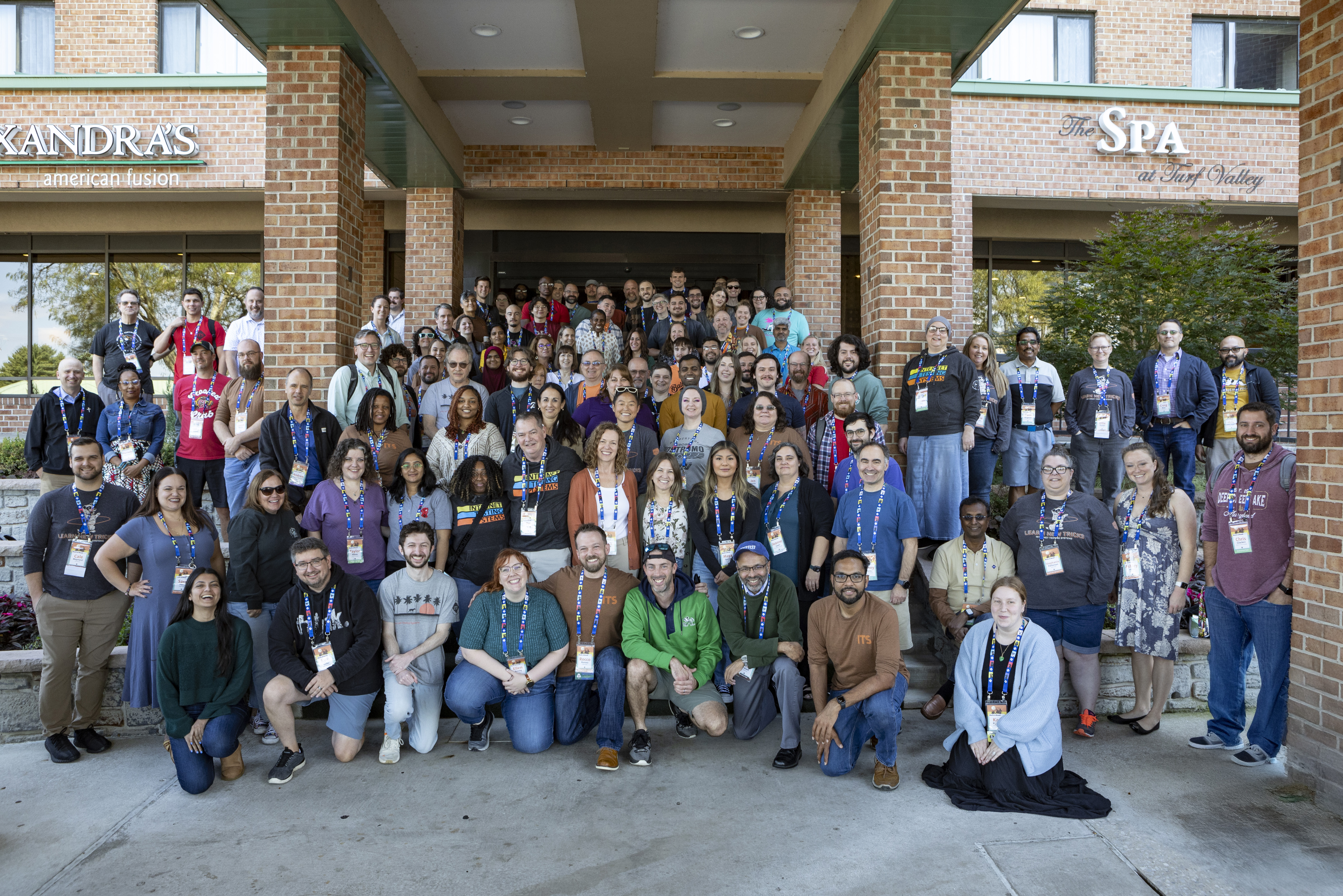
The people operating these systems have their own rituals. ITS describes a dog-friendly Baltimore office and an annual gathering called Bark & Bond. Its 2025 review records a twelfth consecutive Baltimore Sun Top Workplaces recognition. For a hybrid software company serving long-lived testing programs, keeping colleagues connected has an obvious practical use: complicated systems accumulate knowledge in people.
Sixteen years before the deal
On September 18, 2026, Pearson announced it had acquired ITS for its Professional Assessments business. The relationship already stretched back to 2009. Pat Ward called joining Pearson “a natural next step.” Pearson pointed to remote testing, performance-based assessment, and continuous certification as complementary capabilities.
The deal makes sense as an extension of work the two companies already knew how to do together. ITS had spent years accommodating the awkward details of real assessment: approved documentation, grader disagreement, practical tasks, recurring check-ins. Its lesson for other software businesses is unusually concrete. Find the operational detail everybody treats as a nuisance. Make it work. There may be a whole company inside it.