Consider the car that waits through another green light. From the driver’s seat, the explanation seems obvious: too many cars. From a traffic engineer’s desk, the queue could mean something else entirely. A timing problem. Faulty detection. An incident farther along the road. Seeing the line is the easy part. Deciding what to do about it requires a different view.
- What it sells: traffic sensors, cloud analytics and the people who put them to work.
- Who buys: transportation departments, cities, transit agencies and commercial operators.
- The proposition: understand the roads you have before deciding what to change.
That is the territory occupied by Iteris. The Austin company works between physical roads and digital information, selling hardware, subscriptions, engineering and ongoing operations. Its umbrella platform, ClearMobility, brings those activities together. For a public agency, the attraction is practical: shorten the journey from an unexplained queue to a useful intervention.
A road needs a nervous system
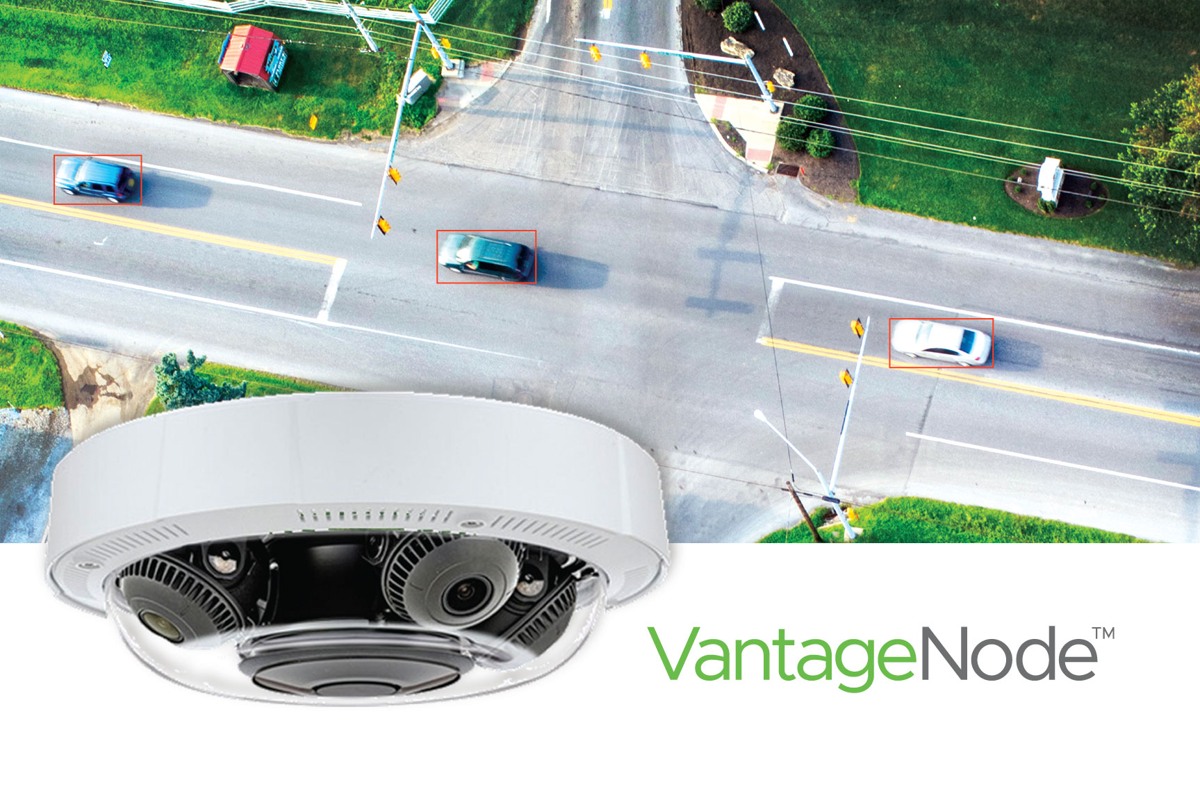
Start at the intersection. Iteris’s Vantage sensors detect vehicles, bicycles and pedestrians. Vantage Apex combines high-definition video, radar and AI algorithms. VantageNode, introduced in May 2026 for smaller, less complex intersections, puts four independently configurable cameras on one mount. Installation effort matters when a town has plenty of junctions and a limited budget.
Then comes interpretation. ClearGuide turns transportation data into maps, performance measures and reports. An engineer can compare travel times, investigate an unusual slowdown or assess conditions before and after a change. Its Signal Trends service uses probe data, so an agency can examine intersection performance without adding field equipment or connecting directly to a signal controller.
ClearAsset addresses another layer: the equipment itself. It tracks inventory and condition, monitors networked assets and supports maintenance workflows. A dashboard showing a problem becomes more useful when the agency also knows which device needs attention and how to arrange the work. Iteris sells that operational help alongside the software.
Illustrative workflow. The useful output is a decision.
The five-watt problem
There is a revealing detail in Iteris’s account of retiring Vantage Edge, an older detection platform. The detector rack allowed five watts per slot. Newer processors demanded more power and produced more heat. Space and interconnections imposed further limits. The ambitions of modern detection had encountered the dimensions of an old cabinet.
The company ended the Edge line in 2022 as newer platforms and customer requirements overtook it. Its engineering explanation also describes designing Apex to reuse existing camera power cabling. The lesson travels beyond traffic: an upgrade becomes easier to justify when it respects the installation already paid for.
That detail also sets useful limits. An agency needs to consider cabinet space, wiring and the bandwidth required by HD video. Buying more sophisticated detection does not remove those questions. In infrastructure, the installation is part of the product.
What the contracts actually buy
In April 2026, Iteris announced a five-year, $31 million contract supporting Florida’s District 7 regional transportation management center. Working with Lucent Group, its remit includes continuous operations, incident management and technical support. This is a staffed public service with technology inside it. The contract value buys years of work.
In Los Angeles County, the assignment is different. Iteris joined JMDiaz and LYT on LA Metro’s cloud-based transit signal priority program across 13 corridors and more than 320 intersections. Its role, worth over $2 million, covers design, integration, testing and support. The deployment uses LYT.Transit and existing vehicle-location systems. Iteris supplies expertise within a larger team.
Those examples explain the business model better than a subscription label alone. Hardware sales sit beside recurring software and data revenue, professional services and multiyear operating contracts. They also explain why neither announced figure should be treated as a price for one camera or one software account.
The physical side has teeth. Iteris reported that supply constraints and high raw-material costs hurt fiscal 2023 gross margins by approximately $16 million. Fiscal 2024 brought $172 million in revenue and $3.1 million in net income, following a $14.9 million loss. Cloud software still depended on components arriving at workable prices.
Borrowing eyes from the vehicles
Alabama offers a useful example of expansion through data. In March 2026, Iteris announced that the state transportation department would extend Signal Trends from 50 signals in one region to 1,149 across all five regions. HERE Technologies supplies traffic data supporting the broader program. The announcement describes expanded diagnostic reach; it does not establish a statewide reduction in delays.
North Carolina adds a different kind of observation. In September 2026, Iteris and Vizzion announced statewide use of dashcam imagery inside ClearGuide. Images from commercial vehicles help operators inspect incidents, weather and work zones, including roads beyond fixed-camera coverage.
“See events in locations where we do not have traffic cameras.”
Kelly Wells · NCDOT traveler information engineer
The idea is appealing because the cameras travel. Coverage still depends on where equipped vehicles go. The images supplement other information, while staff retain the work of interpreting events and organizing a response.

A bigger map, the same test
Iteris has company in this market. Econolite offers Autoscope video detection; INRIX sells signal analytics. Iteris’s distinguishing proposition is the breadth of the combination: detection, analysis, asset management and engineering or operational delivery. Its published culture emphasizes cross-functional problem solving, an understandable priority for work spanning so many disciplines.
The comparison an agency makes should therefore begin with its own bottleneck. A junction needing better detection presents a different buying problem from a district needing overnight incident coverage. Portfolio breadth helps when those needs overlap; a narrower tool may suit a narrower assignment.
Almaviva acquired Iteris for approximately $335 million in equity value in November 2024, taking it private. In July 2026, Iteris introduced the group’s Moova transit platform to North America, adding planning, dispatch, operations and passenger information to its integration story.
For an agency considering these tools, the repeatable discipline is straightforward: inventory what exists, establish a baseline, investigate the weak spots, make a change and measure again. Good information needs an operating team with the authority and resources to act. The driver waiting through that green light will experience the result in minutes, whatever the dashboard calls it.
Take another route
EXPLORE ITERIS
WATCH & TRY A DEMO