Ishaan Sutaria had spent five years helping sports videos find their audience. When he announced his departure from Wave Sports + Entertainment in 2022, he turned that allocation problem on himself. He had been thinking about the value of his time, where his work might have the greatest effect, and whether the next useful thing required staying in the same chair.
The company had just announced a $27 million financing round. His co-founder, Brian Verne, would continue as sole chief executive. Sutaria described his experience with affection and some relief: he had started at 25, learned a great deal, and wanted to build something else. First came a plan to travel for a few months. Even a founder who understands distribution occasionally needs to go somewhere without a content strategy.
That departure supplies an unusually revealing way into his career. The public milestones are money raised, followers accumulated and brands launched. His own explanation was about choosing a place to spend his effort. For someone whose business involved competing for other people’s attention, the question had finally become personal.
Before the billions, the spreadsheets
Sutaria studied at Swarthmore College, where his LinkedIn profile records attendance from 2009 to 2013 and participation in varsity men’s tennis. His academic background was economics and political science. Before Wave, he worked in analytics at Rocket Fuel and became chief analytics officer at Phenom, another company associated with Verne. His professional route into sports publishing ran through the numbers behind a business.
The early founder biography also lists work at VentureBeat and ISI Evercore, along with participation in 500 Startups’ Batch 16. These were useful vantage points for a future publisher: advertising, research, media and a startup already concerned with athletes. They place the later enthusiasm for measurable audience behavior in a concrete working history.
In 2017, Sutaria and Verne founded Wave. Their early operation had used the Bullpen name, and the ambition involved publishing across social channels. A young sports fan already had a screen, a favorite team and strong opinions. Wave needed to earn a place among those existing habits. Persuading everyone to develop an entirely new habit would have been a rather expensive opening move.
- 2013Swarthmore studies completed
- 2017Co-founds Wave with Brian Verne
- 2022Publicly announces co-CEO departure
- 2025Offtake enters Antler’s showcase
A sports network with several front doors
Wave divided its audience into recognizable interests. Buckets served basketball; Jukes addressed American football. Slapshot, Dingers and Haymakers gave other sporting obsessions their own places to gather. The architecture made room for the fan who cared deeply about one sport without requiring equal enthusiasm for the rest of the schedule. A basketball obsessive could remain a basketball obsessive. No remedial course in hockey was required.
By June 2020, that portfolio had more than 60 million followers and subscribers and was registering roughly three billion monthly content views. Mack Sovereign, its first employee and then senior vice president of content and strategy, described a collection of separate brands. Sutaria’s analytics background sat alongside editorial and creative work carried out by people who understood those individual communities.
There was a practical commercial foundation beneath the clips. Licensing agreements supplied material from leagues and other rights holders. An IMG agreement brought access to Euroleague Basketball and the World’s Strongest Man competition. That range widened the available programming beyond the familiar major American leagues. An entertaining feat of strength could have a life well outside the audience that watched the original event.
Wood-chopping gets a distribution deal
By July 2020, Wave had built 18 media brands and relationships with more than 65 leagues and rights holders. Its categories included wood-chopping, badminton and videos submitted by people playing sports at home. That is a pleasingly awkward guest list for anyone who imagines a sports network should have one dominant personality. Wave could accommodate several.
The company repackaged licensed and archival material for social channels and shared advertising revenue with content partners. This gave an older piece of footage another opportunity to earn attention. It also gave a rights holder a publishing partner with an existing audience and an understanding of the format in which that audience watched.
Each additional category gave the same business arrangement a fresh editorial test. A rights agreement could provide access to footage, but it could not make the footage interesting by itself. Someone still had to choose the moment, shape its presentation and put it in front of people who cared.
The financing was substantial, but the business underneath it was recognizable. Advertisers wanted access to fans; content owners wanted distribution; fans wanted something worth watching. Sutaria’s work belonged at the intersection of those interests. A clip was the visible object. The agreements, editing and sales around it made the object part of a company.
Equity + debt
Led by TZP Group
The feed is a rented stadium
By late 2019, Wave was producing more than 750 pieces of content daily, with 30 full-time editors and around 150 paid contributors. It had expanded from Instagram into Facebook, Snapchat and TikTok. Its small central newsroom worked alongside an international contributor network. The multiplication of outlets was accompanied by a multiplication of people finding things worth publishing.
The arrangement came with dependence on platforms whose algorithms Wave did not control. Its audience could be enormous while the means of reaching that audience remained someone else’s property. That tension helps explain why expansion across platforms mattered. For a publisher operating in feeds, an account’s following and a dependable route to every follower are different business assets.
Sutaria’s own account of the operation showed a willingness to revise the method. In a 2019 interview, he said Wave had been too slow to expand beyond Instagram. He described examining shares and engagement ratios, finding creators suited to particular communities, and developing recurring programs such as Next Up, which covered emerging high school athletes. The operational lesson was to keep listening after something worked.
“Shares are a very important currency,” he said. It is an appropriately compact sentence for the business he was in. A share carries a small personal endorsement: this deserves a friend’s attention. Measuring that response gave the company a way to test whether its editorial choices were traveling beyond the first viewer.
“Shares are a very important currency.”
Ishaan Sutaria · 2019
Who gets to work in the newsroom?
Sutaria also spoke publicly about the composition of the company. As a first-generation immigrant, he connected diversity of thought with more effective organizations. In 2020, he said that more than half of Wave’s 50 domestic employees were women or members of minority groups, and that the new funding would support further work on representation.
That adds a human dimension to a career often described through audience totals. A distributed publisher makes decisions about who contributes, whose perspective is useful and who gets hired to shape the result. Sutaria treated the makeup of the team as a business concern. The people doing the choosing were part of the product.
The point also fits the company’s broad sporting menu. Different audiences arrive with different references, expectations and jokes. A newsroom trying to speak to all of them has a practical reason to welcome more than one perspective. The argument can be made in values, in operations, or in both at once.
Money raised, then a chair relinquished
Wave’s July 2020 Series A brought in $32 million through a combination of equity and debt, led by CoVenture and GPS Partners. At that stage, Sutaria said the company had 42 employees, had reached profitability in the second half of 2019, and planned to hire more people. The financing supported ambitions ranging from new programming to additional ways of serving its sports communities.
The corporate identity changed to Wave Sports + Entertainment in 2021. A new 8,500-square-foot studio in Santa Monica gave the company more space for original programming. The operation built through social distribution was acquiring the physical equipment of a production business.
The $27 million Series B announced in February 2022 was led by TZP Group. Rich Battista became executive chairman, and the funding priorities included athlete-led originals and technology. Sutaria’s departure from the co-CEO role became public during this period, with Verne continuing to lead. In his own announcement, Sutaria said he wanted to put the experience he had gained toward something new.
The distinction between founding a business and running its next phase matters here. By April 2024, Wave was describing how its distribution network supported longer programs and recognizable sports personalities. That later chapter belonged to the team carrying the company forward. Sutaria’s story had already taken a different turn.
The next audience, one person at a time
In September 2025, Sutaria appeared in Antler’s U.S. portfolio showcase as the founder of Offtake, described as an AI-driven personalized content platform for intellectual property holders. His LinkedIn profile also places his newer work in an AI startup and lists the New York City metropolitan area as his location.
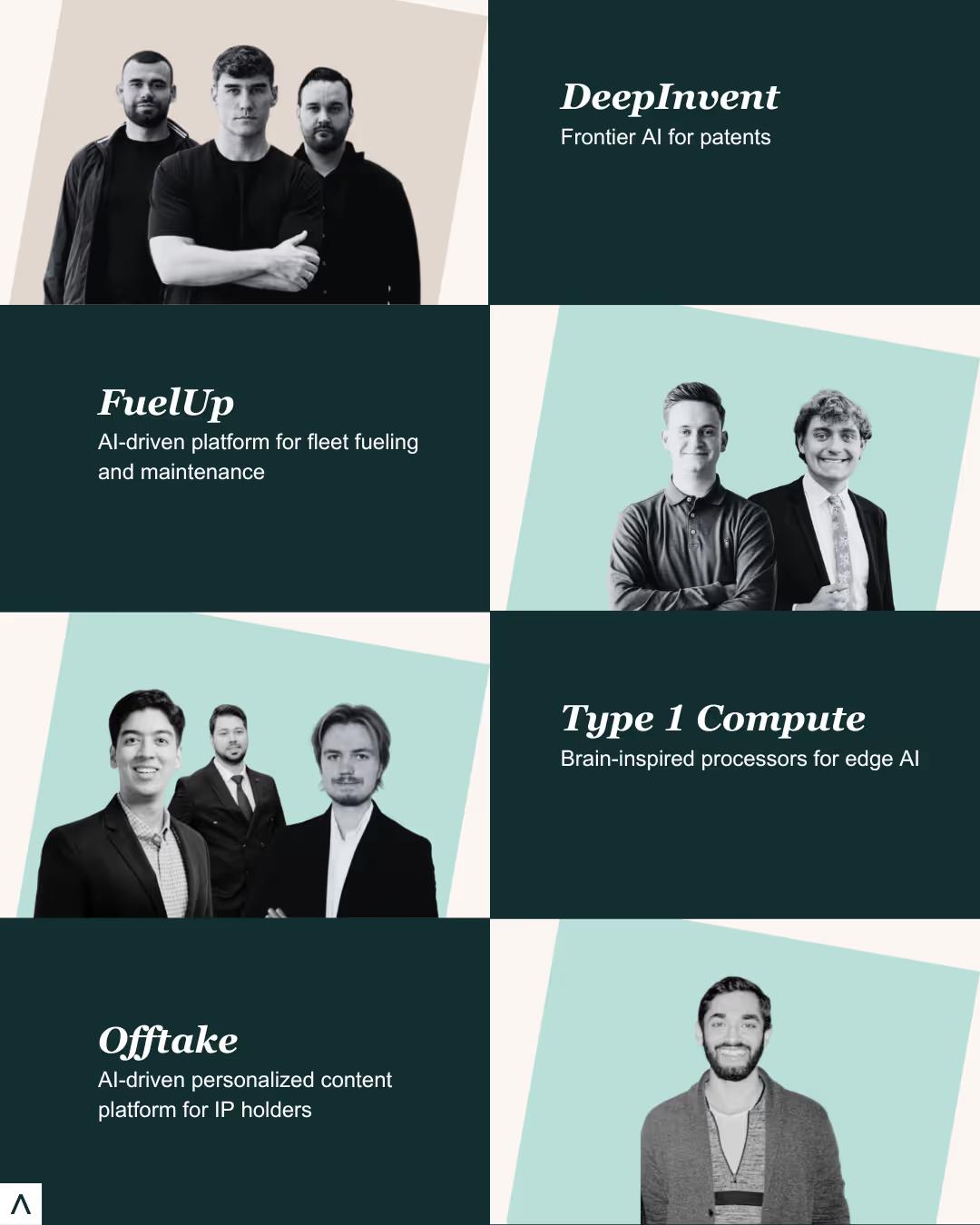
The connection with his previous business is clear at the level of the problem being addressed: valuable content, the people who own it, and the audiences who might want it. Wave organized distribution around fandoms. Offtake’s published description puts personalization into the proposition. That suggests a new approach to a familiar commercial question, although the next company will have to establish its own results.
Sutaria’s career so far offers two decisions worth placing beside each other. He helped build a publisher around the places fans already spent their time. Then he left a leadership role after asking where his own time could do more. The scale of the audience changed dramatically along the way. The hours available to the founder remained stubbornly finite.