The Quiet Architect of B2B's Infrastructure Layer
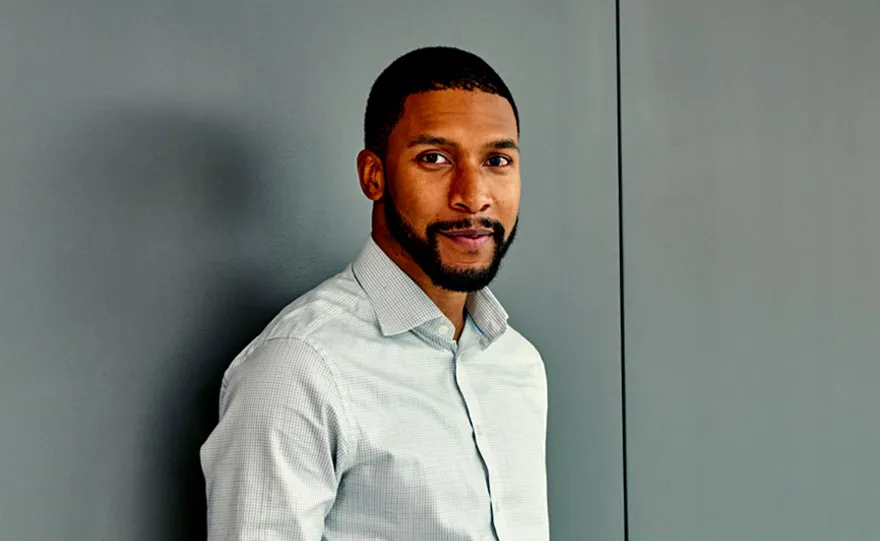
There's a specific type of deal Isaiah Boone likes. Not the splashy consumer app. Not the buzzy AI wrapper. The category he keeps returning to is the one that sounds boring until you realize it processes hundreds of billions of dollars annually: the plumbing of business. How companies move money. How they manage people. How they connect to the internet. The unsexy infrastructure that modern enterprises can't function without.
He's a Partner on Sequoia Capital's growth team - one of the most selective seats in venture capital. The growth team isn't writing the first check on an unproven idea; it's making multi-million dollar conviction bets on companies that have already demonstrated they can build and that need a partner to help them scale into category leaders. The stakes are different. The pattern-recognition required is different. And the track record required to sit in that chair is different.
Boone joined Sequoia in December 2020. In the five years since, his portfolio has quietly become a Who's Who of the companies reshaping how businesses operate. Ramp, the corporate spend management platform that's eating into the corporate card market. Rippling, the HR and payroll infrastructure juggernaut. Mercury, the business banking platform built for the way modern companies actually run. Meter, the company rethinking enterprise network infrastructure. Faire, the wholesale marketplace connecting independent retailers to brands. Island, the enterprise browser. Each one a bet that the infrastructure layer of business was being rebuilt from the ground up.
"The bank account is the nucleus of business finance, where critical workflows begin and end."- Isaiah Boone, on why Sequoia backed Mercury (2025)
Integrity First. Scale Second. Both Required.
Ask Boone what he looks for in founders and you get an answer that doesn't start with market size or revenue multiples. It starts with people. "I value working with people of integrity and a desire to make an outsized and lasting impact," he's said. That framing - integrity first, scale second - isn't boilerplate. It reflects a specific bet on team longevity.
What actually gets him excited is the team that has worked together for years. The co-founders who met in college and are still building together a decade later. The leadership team that has survived multiple growth spurts without splintering. "I'm particularly inspired by teams that have worked together for years, continuing to raise their own bar and build companies at scale." That's not a fluffy preference - it's a pattern. Companies with durable founding team cohesion tend to make better decisions under pressure, recruit more effectively, and execute more consistently.
His investment writing reflects the same rigor. The Meter thesis, co-authored with Sequoia's Ravi Gupta in 2022, digs into the operational complexity of deploying reliable enterprise internet infrastructure at scale - not the kind of market sizing exercise that fills pitch decks, but a ground-level analysis of why the problem is harder than it looks and why Meter's approach cracks it. The Mercury piece from 2025 opens with the insight that the bank account has become the underappreciated nucleus of business finance, the place where every financial workflow begins and ends, yet where the user experience has lagged years behind the rest of the software stack.
From Lick-Wilmerding to Sand Hill Road
Boone grew up in San Francisco, attending Lick-Wilmerding High School - a school known for its arts and crafts philosophy, its hands-on technical curriculum, and its emphasis on students who build things. He played basketball there, graduating in 2012. Not the typical pipeline school for a future Sequoia partner, which perhaps explains something about how he thinks.
He went east to Pomona College, one of the Claremont Colleges in Southern California, where he earned a Bachelor of Arts in Mathematics and Statistics with a 3.75 GPA. Mathematics gives you something that MBA programs can't always manufacture: comfort with uncertainty, facility with models, and the discipline to distinguish signal from noise. That quantitative foundation runs through everything Boone does as an investor.
After Pomona, he moved into investment banking at RBC Wealth Management, where he worked on financial advisory and client portfolio management. Not glamorous, but educational - the kind of foundational work that teaches you how institutional money actually moves and how to think about risk-adjusted returns without the venture capital optimism bias.
The next move was to Leonard Green & Partners, one of the premier private equity firms, where he spent two years as an associate evaluating investment opportunities. Private equity gives you a different lens than venture: you're underwriting at higher prices, with less runway for error, and with a model that requires companies to generate real cash flows. That discipline - the PE instinct for financial rigor - is relatively rare in venture, and it's part of what makes Boone's approach distinctive at a firm that isn't afraid to write large growth checks.
Sequoia came calling in December 2020. He's been there since, working across the firm's growth portfolio with a focus on enterprise applications, infrastructure, commerce, and marketplaces.
The Path
Seven Companies. One Coherent Bet.
Look at Boone's portfolio and a thesis emerges: the infrastructure of business is being rebuilt by software companies that think like platforms. Each of his investments occupies a critical chokepoint in how modern businesses operate.
Ramp and Yokoy both sit in expense management, but they address different geographies and go-to-market strategies. Mercury and Rippling together cover the full financial and HR stack for a modern company. Meter handles the physical network layer. Island secures the browser - the new enterprise perimeter. Faire connects the long tail of retail. Together, they form a picture of an investor who believes that every layer of business operations is being upgraded by software-first companies.
Why Sequoia, Why Growth, Why Now
Sequoia Capital has backed Apple, Google, Oracle, Cisco, Yahoo, YouTube, Instagram, WhatsApp, Airbnb, Stripe, and DoorDash - a portfolio so concentrated in world-changing companies that it reads like a technology history textbook. The growth team's mandate is to extend that legacy by finding the next generation of companies that will still be standing and leading in twenty years.
The growth stage - typically Series B and beyond, at valuations that require conviction rather than option value - is one of the hardest places to invest. The companies you're backing have traction, which means the obvious insight has already been priced in. The alpha comes from understanding why the best companies will extend their leads, why the market is bigger than the consensus thinks, and why this team specifically can capture it. That's where Boone's combination of quantitative training and private equity discipline pays off.
Sequoia runs what it calls a "fund reinvestment model" - a structure that allows it to hold positions across a company's full lifecycle rather than being forced to sell at IPO. For founders, that means a partner who is aligned with long-term outcomes, not quarterly marks. For Boone, it means he can invest with the horizon that his philosophy demands.
"I'm particularly inspired by teams that have worked together for years, continuing to raise their own bar and build companies at scale."- Isaiah Boone, Sequoia Capital
The PE Lens in a VC World
Most venture capitalists come up through venture capital. They learn the asset class from inside the asset class, which gives them fluency in venture convention but sometimes limits their ability to stress-test assumptions about unit economics, capital efficiency, and real business fundamentals.
Boone's background is different. Two years at Leonard Green & Partners meant evaluating businesses on PE terms: real cash flows, defensible moats, leverage sensitivity, management quality under pressure. When you then move into growth-stage venture, those instincts don't disappear - they sharpen. They make you a better counterparty in board conversations about profitability timelines, about when to spend and when to conserve, about whether growth is efficient or just fast.
It also makes him a better partner for founders navigating the transition from high-growth startup to durable company. The companies in his portfolio - Ramp, Rippling, Mercury - are all at that inflection point. They've built something real. Now they have to build something lasting. That's exactly the kind of problem a PE-trained, Sequoia-backed investor is positioned to help solve.
Who Isaiah Boone Is
Public profiles and portfolio pages tell you where someone has been. They don't always tell you who they are. From Boone's writing and what's visible in his public work, a picture emerges of someone who leads with substance over spectacle.
His articles are notable for what they don't do: they don't hype the company, they don't tell you the investment is obvious in retrospect, and they don't make the investor the protagonist. They explain the problem, explain why the problem is harder than it looks, and explain why this company's approach is the right one. That's the investor equivalent of showing your work.
The Long Game
The companies Boone has backed are all still private, still growing, and in most cases still far from their maximum scale. Ramp is expanding its product suite beyond corporate cards into the broader finance stack. Rippling is building what could become the operating system for HR and IT. Mercury is growing from a startup bank into a full-service business financial platform. Meter is expanding its network infrastructure footprint.
That's the Sequoia growth playbook in action: make the bet at Series B, stay in through the full lifecycle, provide support across company building stages, and be still sitting in the boardroom when the company goes public or reaches the kind of scale that changes an industry.
For a Bay Area native who grew up in San Francisco and built his career across the institutions of capital - RBC, Leonard Green, Sequoia - Isaiah Boone is playing the long game. His portfolio is a coherent bet that the infrastructure of business is being rebuilt, and that the builders doing it right will be the enduring companies of the next decade.
The math, as a Pomona statistics major might say, looks right.