Iqbal Kassam arrived in Britain with £200. He bought a car, enrolled in college in 1972, and drove a taxi in London to pay his way. The appeal was practical: a regular job put a ceiling on the hours he could turn into income. Driving gave him more room to work. Before the family office, the acquisitions and the industrial companies, there was a student arranging his own means of getting through school.
The detail is useful because it makes his later career less mysterious. Kassam has moved between countries and industries, but his account of entrepreneurship keeps returning to a question of available room. What opportunity exists beyond the resources already in your possession? A car could become an education. Much later, family capital could become an enduring home for businesses whose founders wanted to retire.
Born in Nairobi, with family roots in India, Kassam grew up watching his mother work to support the household. In a 2026 conversation with Luke Hansen-MacDonald, he described her frugality and sense of responsibility. These were lessons in the daily arithmetic of making things possible. His route subsequently took him through Britain and back to Kenya before he emigrated to Canada in the early 1980s.
Asked to describe himself, he offered a rather less ceremonial answer than his job title: “I'm a lifelong learner.” It is a small phrase with a substantial claim behind it. A successful owner can afford to stop being a student. Kassam has built parts of his organization around the decision to keep studying.
A banker learns to buy
In 1983, Kassam purchased Equitable Group. He ran the federally chartered financial institution until 1990. That date matters: his connection to the business stretches back to an earlier institution in the history of today's Equitable Bank. The modern bank's scale belongs to a much longer corporate story, with other people and many subsequent decisions involved.
His business record also includes managing and holding a major stake in Seel Mortgage Investment Corporation, and acquiring businesses that he later took public, including Toronto's Stephenson's Rental Services. Banking, mortgage investment and equipment rental gave him experience with several versions of the same owner’s problem: how to put capital to work inside an operating business.
Kassam holds an MBA from the University of Warwick. He is also a Harvard Business School alumnus and a graduate of the Institute of Marketing. These educational connections sit beside, rather than replace, the operating experience. The biography contains both classrooms and transactions. Neither alone explains the enterprise he is building today.
At Zynik, where he is founder, chairman and CEO, the investment emphasis has settled on manufacturing and industrial businesses sustained by skilled labor. The selection is revealing. These companies depend on people who can turn specifications into parts, maintain complicated systems and carry technical judgment from one job to the next. Ownership has to reckon with that accumulated knowledge.

The equipment comes with people
Zynik traces its beginnings to Kassam's owner-operator work in 1983. Its present identity is a family office with permanent capital, acquiring and operating industrial businesses across North America. The word permanent is central to the offer. The organization says it buys with the intention of keeping its companies, preserving their cultures and investing through business cycles.
That promise gives a retiring founder something concrete to consider alongside price. A company can contain decades of working relationships, a local reputation and employees who know how to solve problems the manual never anticipated. Selling it means deciding who will have authority over those things. Kassam's proposition asks the seller to think about what happens after the signatures.
The acquisition interests are specific: tooling, production manufacturing, foundries, complex engineered systems and essential building services. There is room for adjacent industrial businesses, but the common thread is technical depth and skilled work. This is a shopping list with a thesis behind it. A capable workforce is part of what the buyer is seeking to preserve.
Zynik offers flexible handovers, including arrangements for owners who want to stay involved for a period. It also describes investment in equipment modernization, training and leadership development. An infinite ownership horizon is an ambitious phrase. Its practical meaning must be worked out in ordinary decisions about machinery, people and the next customer order.
A foundry with a family history
On July 7, 2026, Southern Cast Products in Meridian, Mississippi, joined Zynik's foundry platform. Fred and Sissie Wile founded the business in 1979. Fred had previously worked for ESCO in Oregon and managed its foundry in Newton, Mississippi. In 2014, leadership passed to their son Daniel. The business arrived with a family history already several chapters long.
Southern Cast Products makes steel castings for mining and other industrial applications. Its parts range from 50 to 4,000 pounds. Molding, melting, heat treating and testing are part of its in-house work. Such a description has reassuring weight to it: here is a business in which the product is emphatically physical, and the people making it need to understand the material.
For Kassam, the acquisition fits a stated interest in companies with histories worth carrying forward. For the Wiles, it represented a choice of successor owner. Neither perspective erases the work ahead. A long-term commitment begins with a transaction, then has to survive the much less photogenic business of running a foundry.
The thesis gets more specific
The other additions in 2026 show the industrial focus taking several forms. GPI Composites of Schofield, Wisconsin, joined Zynik's engineered systems platform within RPS Industrial Group in February. Founded in 1973, GPI makes fiberglass-reinforced plastic tanks, vessels, scrubbers, piping and custom equipment. Its expertise is particularly relevant where corrosion resistance matters.
In June, AarKel Tooling Technologies acquired Windsor-based Superior Tool and Mold, established in 1993. Superior designs and manufactures injection molds for automotive, industrial and consumer applications. The work complements the tooling capabilities already inside the group. Growth here involves adding another team with particular technical knowledge and established customer relationships.
Also in June, RPS Industrial Group acquired Stevenson Sprinkler & Fire Protection in Jordan Station, Ontario. Its work includes designing, installing, inspecting and maintaining sprinkler systems across Southern Ontario. Manufacturing and industrial services meet in this portfolio through their dependence on trained people doing exacting work.
These businesses make Kassam's thesis easier to see than a broad investment label would. A corrosion-resistant vessel, an injection mold and a sprinkler installation have different customers and operating demands. Each requires expertise that an owner has good reason to develop and retain. The shared ownership sits above those differences; it does not make them disappear.
A classroom inside the portfolio
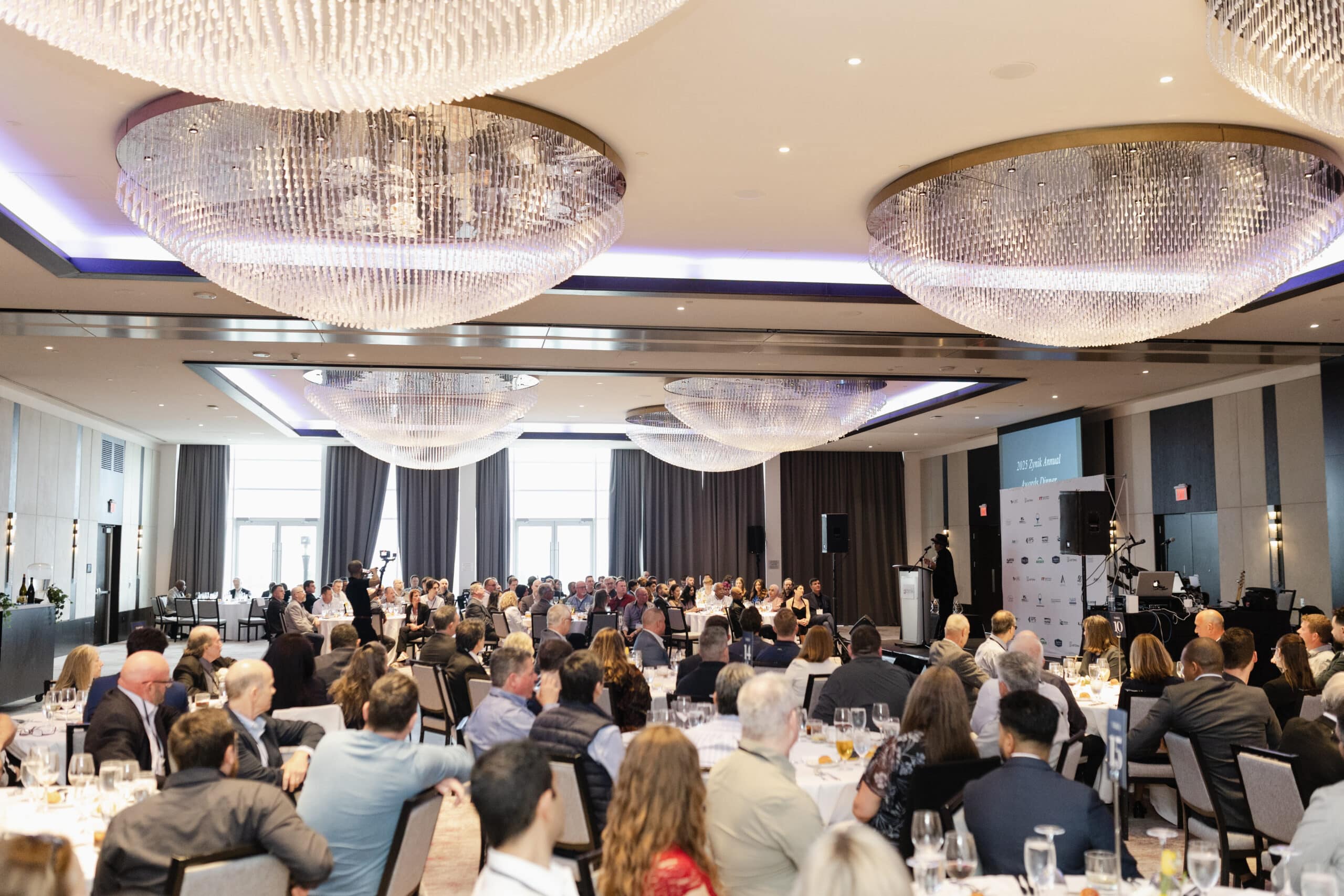
Once a year, Zynik pauses for a two-day seminar. Leaders, colleagues and associates, including past associates, gather to examine business cases with Harvard faculty and industry leaders. The event has run for more than 15 years. In an organization that talks about lifelong learning, this is an appointment in the calendar rather than a decorative sentence.
The case method is an apt choice for a collection of operating companies. A tooling executive and a building-services leader may confront different products, but both have decisions to make about customers, people and investment. Discussing another company's problem offers a way to test judgment before one's own problem insists on an answer.
Kassam's 2026 seminar reflection named Harvard Business School professors Das Narayandas and Dennis Campbell among the participants. Kevin Nolan of GE Appliances also joined to discuss a case from personal experience. Kassam's public account emphasizes being challenged by the discussion. The founder still presents himself as someone with things to learn.
There is a pleasing inconvenience to this approach. A room full of experienced businesspeople must temporarily surrender the comfort of knowing what they are doing. Their reward is the possibility of returning to work with a better question. Kassam's taxi once paid for his education; his organization now makes time for education inside the working year.
The next generation has homework
The Zynik Founder Scholarship extends that interest beyond the workplace. Eligible children and grandchildren of current, past and retired associates can receive financial support for skilled trade certifications, college diplomas and undergraduate degrees. The range of study matters. The program recognizes several routes into an adult working life, including the trades on which the portfolio depends.
In April 2026, Nick D'Oria, who leads the Service ITM team at Western Fire Protection, wrote to Kassam after both his son and daughter received scholarships. His letter described the significance for the family and the financial burden the support would ease. For a parent, the company’s education policy had become something with two names attached to it.
Kassam's response was brief: “Moments like this are exactly why we exist.” A scholarship offers a particularly direct test of his stated purpose. The recipient is someone outside the daily business, but closely connected to a person whose work sustains it. The benefit can continue into a future the employer will never entirely see.
Zynik also recognizes long service through its Lifetime Dedication Award, including associates who have spent more than 40 years at its companies. Its prosperity-sharing programs include bonuses and profit sharing. Taken together, these practices address different points in a family's working timeline: earning, learning, helping children study and being remembered for years of contribution.
“I'm a lifelong learner.”
Iqbal Kassam
Staying still takes work
Within the portfolio, Weber Manufacturing's role in Canada's Project Arrow offers another view of continuity. Weber supplied work on rear seating components, CNC machining and master model development for the electric-vehicle project. An established industrial business can participate in something new through the skills it has accumulated. Long ownership leaves plenty of room for changing work.
Kassam's own idea of succession includes a family constitution and a purpose he says his children support. Even the company name carries that connection: his wife coined Zynik using family initials. It is an intimate detail for an organization that now owns businesses far beyond the family's home city of Vancouver.
The question his career poses is what an owner chooses to do after gaining the resources he once lacked. He has chosen factories, technical teams, classrooms and the families around them. Permanent ownership is a statement of intent. The interesting part comes every day afterward, when somebody must decide how to make staying useful.