A hospital meeting room can have a large screen, a working camera and still be a thoroughly bad place to hold a meeting. Someone cannot hear. Someone cannot share an image. The consultant joining remotely has become a tiny, impatient rectangle. Meanwhile, the people assembled to discuss patient care are discussing the equipment.
That gap between owning video technology and being able to use it is where Involve Visual Collaboration earns its place. The Warrington company designs, installs and supports audio-visual systems for organisations including hospitals, councils and businesses. Its healthcare work brings the proposition into sharp focus: connect the people, make the clinical material visible and keep the service usable after the installers leave.
There is a pleasingly blunt item in account manager Rob Farnol’s list of NHS user demands: “To not notice the AV”. It is an ambitious brief for a business that sells AV. It also explains why this company’s story is better told through rooms and appointments than through a catalogue of screens.
29 rooms, and a reason to replace them
At Mid Yorkshire Hospitals NHS Trust, the old equipment had become an obstacle. Involve’s October 2022 case study described ageing, unsupported systems across the video-conferencing estate. Digital programme manager Gareth Cinnamon said: “We had no support agreement for the existing equipment”. The trust was relying on its own staff to keep things going.
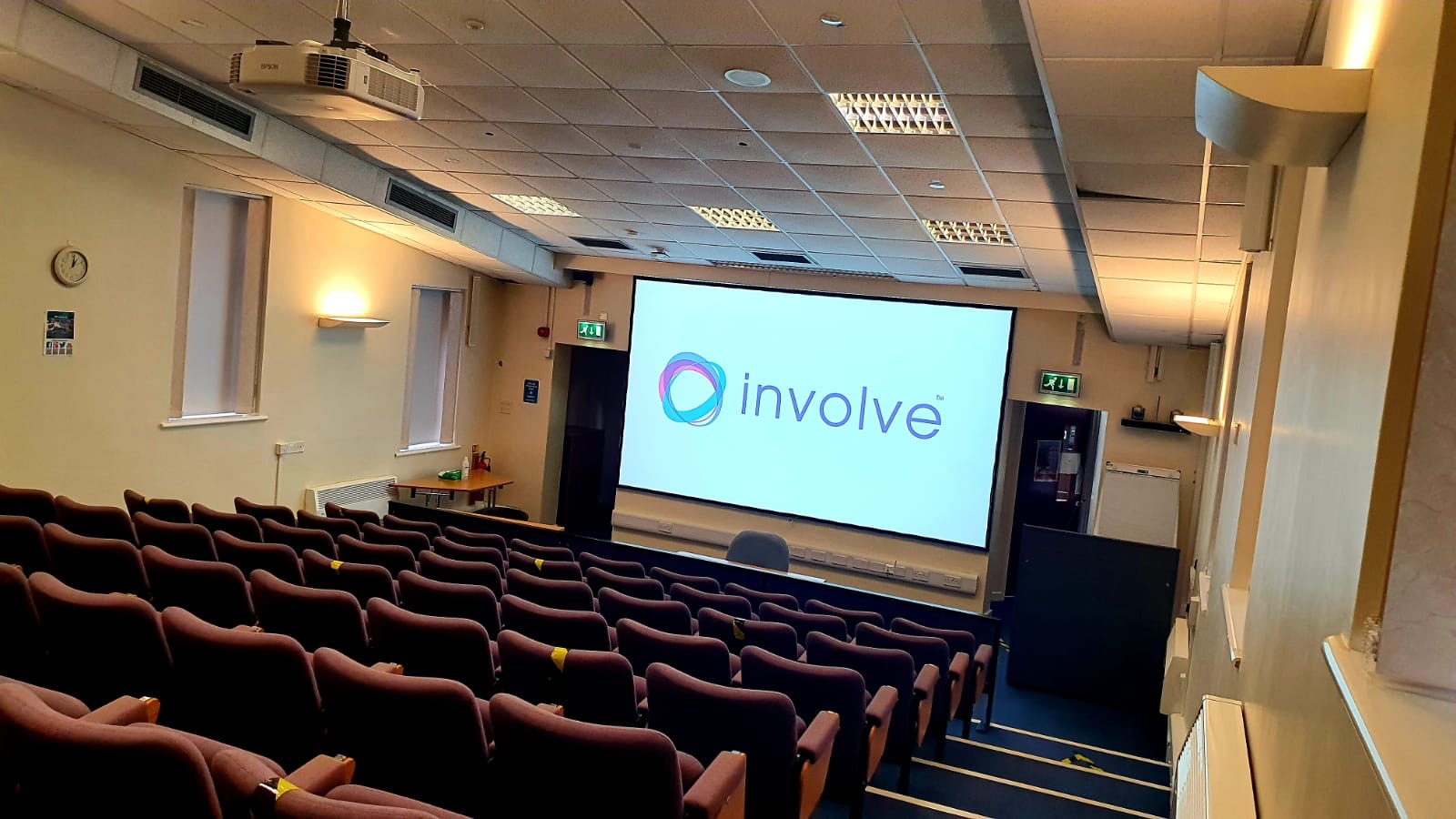
The replacement brief combined several needs: better sound and video, a better lecture-theatre experience, and compatibility with Microsoft Teams and medio.link. Involve’s project covered 29 rooms across three sites, including two education centres, two lecture theatres and specialist multidisciplinary team rooms. The spaces also received bring-your-own-device connectivity.
The account does not pretend the implementation was effortless. Cinnamon described it as difficult, while crediting stakeholder discussions and training. He reported smoother MDT meetings and reassurance from available support. The useful lesson is in that combination: a room overhaul is an equipment purchase, an organisational change and a maintenance decision all at once.
The screen is the easy bit
Involve’s MDT offering sits where ordinary conferencing meets specialist clinical work. A multidisciplinary team may need remote colleagues, medical images and several sources of content in the same discussion. The company’s specifications include medical displays and connections to clinical workstations, microscopes, visualisers and medical cameras, alongside conferencing equipment.
It also addresses the awkward inheritance of existing rooms. Its medio.link service offers connectivity between video systems and Microsoft Teams, including services within the Health and Social Care Network. That matters to a buyer who wants to use a newer meeting platform without treating every installed device as disposable.
This gives Involve a particular market position. Microsoft is both part of its delivery toolkit and an alternative a customer might consider deploying internally. Involve’s contribution is the design, integration and operational support around the platform. A small, straightforward meeting space and a hospital room handling several clinical inputs call for different levels of intervention.
A conceptual map of Involve’s offering. Each part needs to work for the appointment to work.
A waiting room worth buying
The same logic applies to consultation software. In March 2020, Involve added Attend Anywhere to its portfolio as NHS video appointments expanded. It brought healthcare communications experience and extended helpdesk availability to a partner platform. The company said it had been providing secure video services to the NHS since 2009, well before pandemic restrictions made remote appointments an everyday concern.
One later contract makes the commercial argument unusually concrete. In December 2024, platform owner Induction Healthcare announced that Ireland’s Health Service Executive had selected Attend Anywhere through its partnership with Involve. Rollout was scheduled from January 2025, initially focusing on the acute sector.
The announced term was two years, with an optional third, and a minimum of 1,500 licences. Induction attributed the selection over generic Teams and Zoom solutions to waiting-room functionality, security features and administrative ease. That is the partner’s explanation of the decision, but it identifies the relevant comparison: managing a clinical queue involves more than admitting people to a meeting.
Published HSE tender value for the clinical video contract signed in November 2024.
initial announced term1,500
minimum announced licences
The procurement notice puts the tender value at €717,750 and records three electronic tenders. Separately, Induction said the deal would generate at least £0.3 million in annual recurring revenue for its platform business. Those figures describe different things. Neither is a price list for an Involve room, nor a measure of Involve’s annual turnover.
The person on the other end
Access can fail even when a connection succeeds. Surrey County Council found that subtitled digital content was insufficient for its Deaf employees after meeting its Deaf network. Its response, described in a 2022 case study, was to commission ongoing British Sign Language translation and subtitles from Involve Interpreter.
The work included internal communications. Following the response to those translations, the council also began using in-person BSL interpreters at events. Here the change of mind is visible: staff feedback altered what counted as accessible. The practical move other organisations can copy is to ask intended users to test the communication format before declaring the job finished.
A different access problem appears in the Lighthouse mental health service. Involve reported in May 2025 that the Hampshire and Isle of Wight initiative with Solent Mind used MEDIO Consult for out-of-hours video support. People could reach trained peers remotely, alongside the service’s in-person offer.
The deployment included an arrival notification when somebody entered the virtual waiting room. Involve’s account reported more than 100 users a month. The feature sounds modest until the person waiting needs a response: someone must know they have arrived. Keeping the face-to-face option also makes the service a choice, rather than a demand that every user become comfortable on camera.
Who answers when the room goes quiet?
Involve sells projects and the services that follow them. A customer can buy consultancy, hardware integration and commissioning, then pay for support, training or communications services. Interpreting adds another service line. That mix makes the company an integrator and service provider with software offerings, rather than a business explained adequately by counting subscriptions.
Involve Assist covers maintenance, monitoring and technical help. Its published MDT materials describe remote resolution where possible, with engineering attendance for problems that need it. They also set out hardware replacement, updates and service reviews. For buyers, the practical questions are about the coverage actually purchased: when help is available, what gets replaced and how quickly someone can attend.
Handover deserves the same attention. In a May 2023 account, Involve described lead-engineer training at project close and an Academy session at Great Ormond Street Hospital. It treats familiarity with the equipment as part of adoption. A room that only its installer understands has a limited working life between visits.
“To not notice the AV”
Rob Farnol’s brief for the NHS user experience, July 2024
Farnol’s argument about cost goes beyond an installation invoice. He described an unnamed trust’s room with a consumer television, inaccessible cabling and confusing controls, supplied by a business that had subsequently disappeared. It is a supplier’s cautionary account, not a published cost study. But it puts a sensible procurement question on the table: what will this room cost to keep useful?
Healthcare gets its own name
Involve’s corporate history predates the current enthusiasm for virtual care. Incorporated in 1989, the legal entity previously traded as Martin Dawes Office Automation and Martin Dawes Solutions before taking the Involve name in 2012. Today, its broad catalogue still includes corporate meeting spaces and public-sector collaboration, while MEDIO gives its healthcare work a dedicated identity.
The MEDIO site reports more than 400 NHS room installations and 1.5 million consultations. These are company-reported cumulative figures, presented without a measurement period. They suggest a substantial delivery history, while measuring different activities: an installed room and a completed consultation should never be added into one grand total.
The scope is expanding. A May 2025 partnership with Advantech added operating-room video management and medical-grade devices, including PCs, tablets and mobile carts. The announcement also included access to GCX mounting products. It takes Involve closer to the clinical equipment environment, where equipment placement and connectivity remain consequential questions.
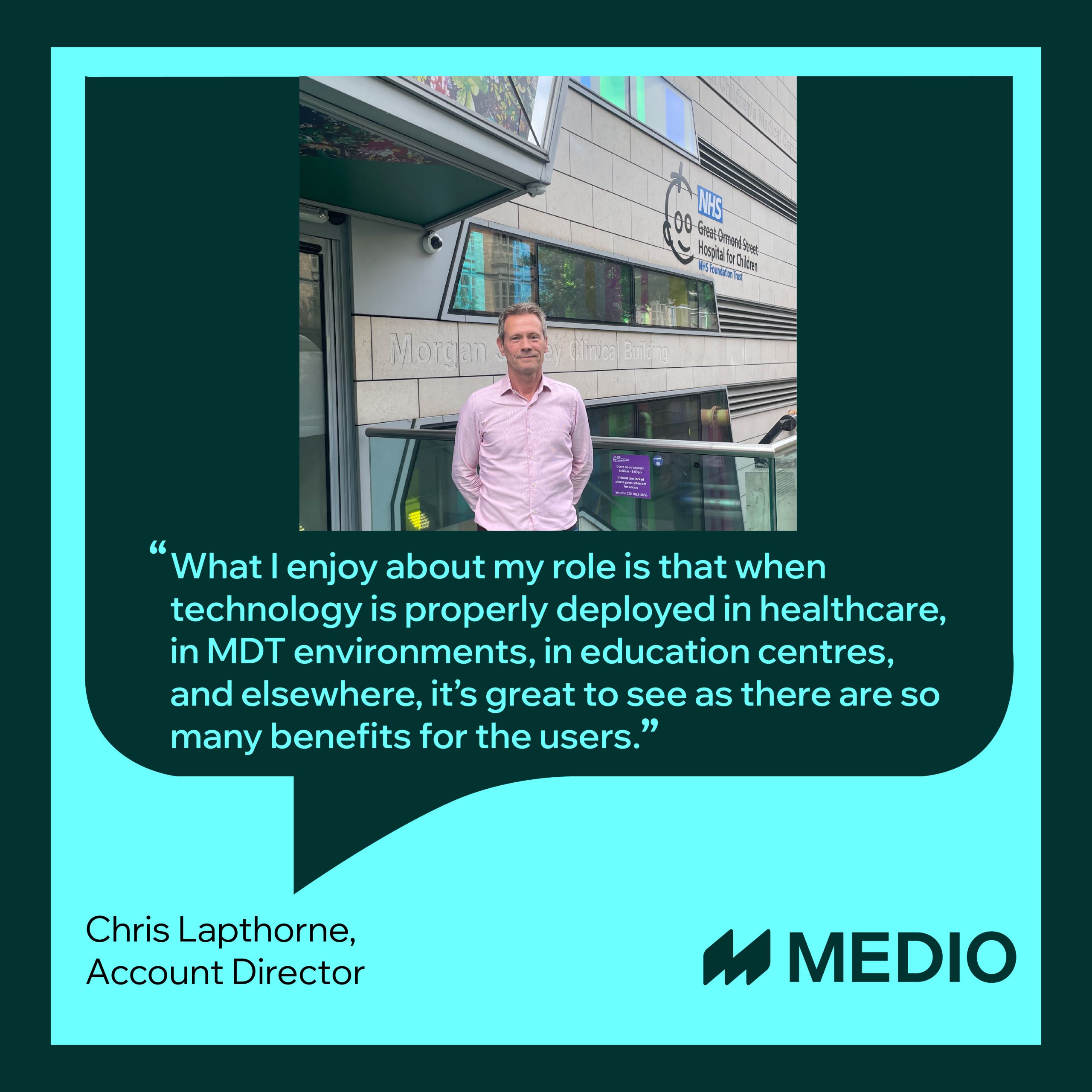
Account director Chris Lapthorne supplied a personal explanation for that healthcare focus in a May 2026 interview. His move into the sector coincided with his mother’s death from cancer. He described wanting technology to improve care, and recalled projects at Great Ormond Street and the Royal Marsden’s Oak Cancer Centre. It gives a human scale to a portfolio otherwise described in room types.
The internal culture has its less solemn details, too. In 2021, 61 staff joined a virtual journey towards Bondi Beach, recording 13,415 miles over 90 days. They missed the destination. The same company account documented mental health first aiders and manager training. Even a collaboration specialist needs ways to keep its own people connected.
Buy the appointment, then specify the kit
For a prospective customer, the most useful starting point is an ordinary working session. Who joins? What must they see? Who needs interpretation? What happens when the first connection fails? Mid Yorkshire’s room refresh and Surrey’s accessibility work both show the value of making those requirements explicit before equipment or formats become fixed.
There are limits to this approach. A simple room may need little custom integration. Remote participation depends on usable connectivity, suitable devices and people who can access the service. Video cannot make every appointment appropriate for remote delivery. The relevant buying decision is how much specialist design and support the actual work requires.
Involve’s strongest proposition is therefore specific: it takes responsibility for several of the practical jobs between buying communications technology and using it reliably. Its best advertisement may be the meeting in which nobody mentions the system at all. The clinicians have something else to discuss.
Follow the work
Explore Involve’s services, the MEDIO healthcare portfolio and project news and staff interviews.
Follow Involve on LinkedIn, X or Facebook. For care-home services, visit Immedicare.