Consider the tube. For an engineer, it connects a pump to an infusion site. For someone wearing it, it is another thing to arrange around clothes, exercise, sleep, and the ordinary business of having a body. Insulet’s founding insight was to take that inconvenience seriously. A part that looked necessary to the machine could still be a nuisance to the person.
- A wearable Pod removes external insulin-pump tubing.
- Replacement Pods turn daily convenience into recurring sales.
- A shelved product and 2026 corrections expose the hard parts.
John Brooks’s son was diagnosed with type 1 diabetes at three. Brooks wanted another way to deliver insulin. On a five-hour flight, he and a business partner sketched a disposable delivery system on a napkin. Insulet began in 2000. The useful detail is the starting question: how could insulin delivery fit a child’s life more comfortably? The engineering followed that objection. For a founder, that ordering is useful: begin with a recurring frustration that customers can describe, then ask which accepted parts of the product are actually imposing it.

02The pump moves onto the body
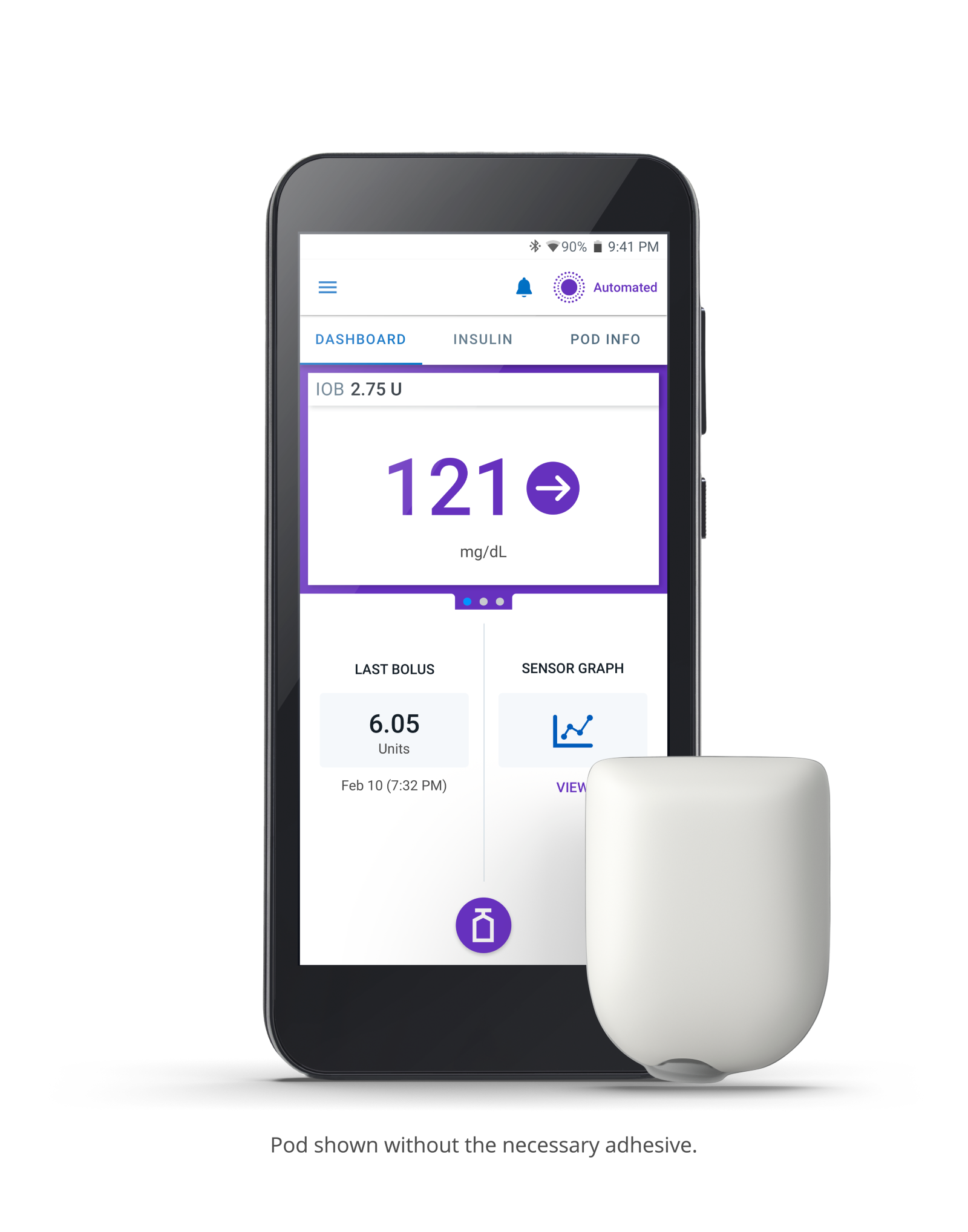
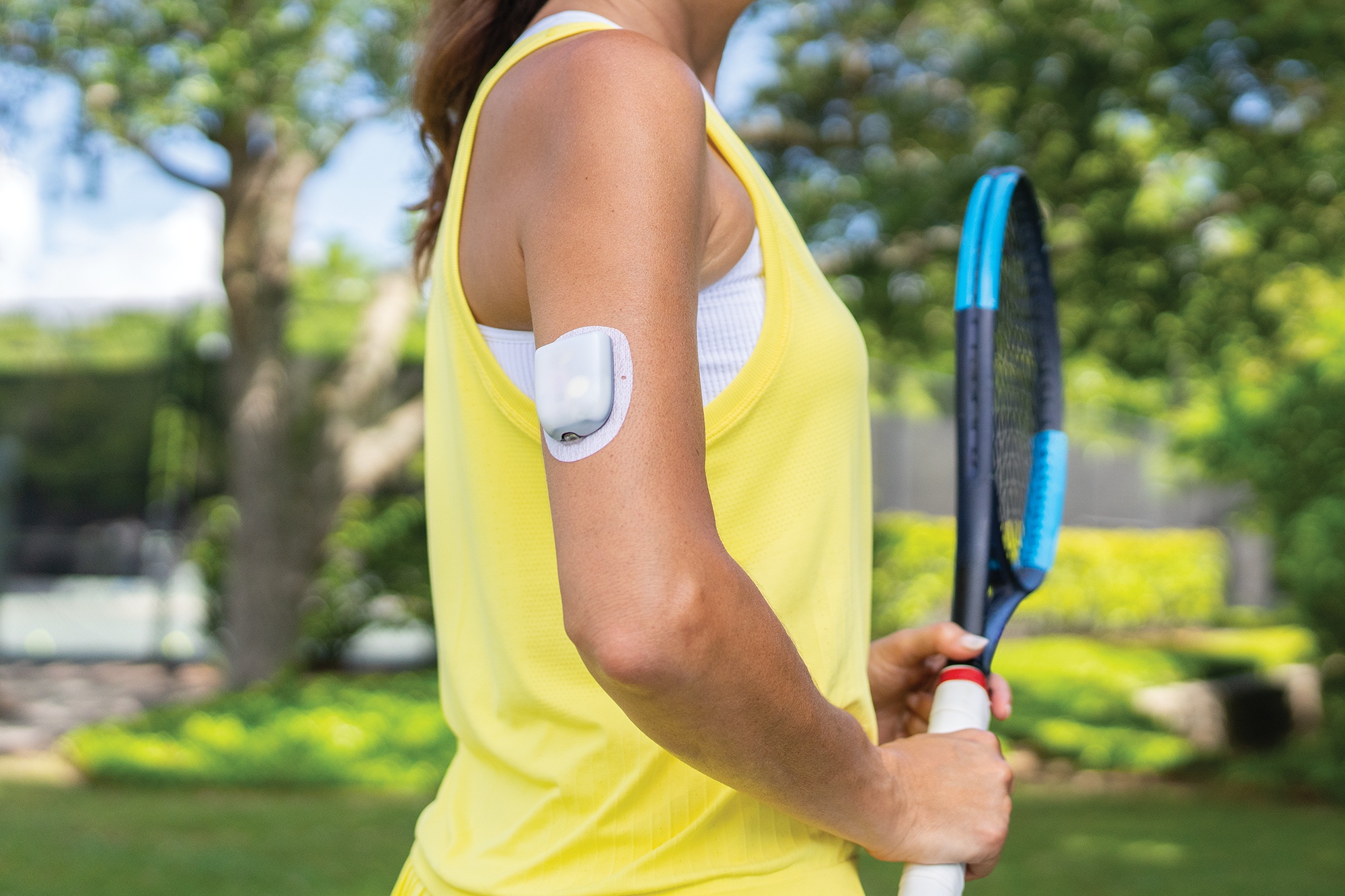
Insulet’s answer is Omnipod: an adhesive Pod containing an insulin reservoir and delivery mechanism. A small cannula enters under the skin automatically. There is still something beneath the skin; “tubeless” does not mean non-invasive. What disappears is the external tube running to a separate pump. Each Pod carries up to 200 units and provides up to 72 hours of delivery.
Omnipod DASH uses a handheld controller to manage programmed insulin delivery. Omnipod 5 adds an algorithm inside the Pod, using readings from a compatible continuous glucose monitor, or CGM, to adjust delivery every five minutes. A compatible phone or supplied controller handles the interface. The control logic travels with the wearer, rather than depending on a phone being beside the Pod for every automated adjustment.
The current U.S. customer population includes people with type 1 diabetes aged two and older and adults with type 2 diabetes. These are prescription devices, with training and clinical oversight. Omnipod 5 still requires users to manage mealtime boluses. Its convenience comes from reducing repeated work, rather than making diabetes disappear. That distinction matters when a product is described as automated.
03The pharmacy is part of the invention
The commercial design is nearly as interesting as the plastic one. Insulet sells replacement Pods, creating revenue each time someone replenishes supplies. In the United States, pharmacy access and pay-as-you-go purchasing reduce the large initial commitment associated with buying a durable pump. For a customer considering a different routine, the route to obtaining the device matters alongside its features.
What does it cost? Insulet says a majority of Omnipod 5 customers pay $30 or less monthly for Pods, based on paid commercial and Medicare claims during 2025, including assistance programs. That is a claims-based copay observation, not a universal price. Insurance changes the bill. Insulin and compatible CGM supplies are separate, so the Pod copay is not the full cost of treatment.
The resulting business has considerable scale: $2.7081 billion in 2025 revenue, up 30.7%, and more than 600,000 estimated active Omnipod users at year-end. Building it remains expensive. Insulet spent $301.1 million on research and development and $191.6 million on capital expenditures in 2025. A disposable device still requires lasting investment in software, factories, and clinical evidence.
“A world where diabetes demands less every day, everywhere”
INSULET’S STATED VISION
04The $13.5 million change of mind
Then came a revealing detour. Omnipod GO was designed as a basal-only Pod for certain people with type 2 diabetes. Insulet ran a commercial pilot. Meanwhile, its Omnipod 5 type 2 trial produced encouraging results, and the FDA expanded SmartAdjust’s indication in August 2024. A product intended for one population had become useful to another.
Insulet chose to pursue type 2 growth through Omnipod 5 and stopped plans to commercialize GO. It recorded a $13.5 million inventory-component charge in 2024. That is the disclosed write-down, not the entire development bill. The lesson for another product team is specific: test a separate product against what the existing platform can now accomplish, and be willing to retire the separate product.
2024 inventory-component charge after the decision against commercializing Omnipod GO.
05Five more hours in range
The clinical case deserves its own arithmetic. In an Insulet-funded, nonrandomized study of 305 adults with type 2 diabetes, average HbA1c fell from 8.2% to 7.4% after 13 weeks using Omnipod 5. Time in the target glucose range rose from 45% to 66%; the investigators reported an additional 4.8 hours daily in range using unrounded data.
Those findings appeared in JAMA Network Open in 2025. The study had no randomized comparison group, so it cannot establish every advantage over another treatment. It does explain why type 2 diabetes became a serious expansion opportunity. By August 2026, however, management had reduced its U.S. Omnipod annual growth outlook, citing what it was learning while scaling in type 2. Clinical promise and commercial adoption keep different calendars.
06A tiny tear, a large obligation
Convenience has a physical weak point. In May 2026, Insulet announced a correction covering roughly seven million Pods across specified lots after identifying possible cannula tears and insulin under-delivery. It reported 24 serious adverse events and no deaths associated with the issue at that announcement. This was separate from a March correction. Insulet said it had implemented corrective actions and offered replacements without charge.
The manufacturing problem is an essential part of this company’s story. An algorithm cannot compensate for insulin that leaks outside the body. Nor does external tubing removal eliminate adhesive problems, supply interruptions, or incompatible device combinations. Anyone assessing the system needs a workable coverage arrangement, compatible equipment, training, and the ability to respond to alerts. The smallest component can determine whether the whole experience works.
07Keep the useful part. Lose the burden.
Insulet competes with Tandem and MiniMed pump systems, other automated delivery approaches, and the familiar routine of injections. Its distinctive offer combines an on-body disposable pump, automation, and a purchasing model built around replenishment. Dexcom and Abbott supply compatible sensor options, letting Insulet concentrate on delivery. Compatibility still varies by market and device combination.
The company also calls customers “Podders” and has a Podder Alliance Network employee group. These details make its patient focus concrete. The transferable idea is to study the work surrounding a product: wearing it, buying it, replacing it, remembering it. Brooks began with a child’s daily inconvenience. Insulet’s continuing test is whether each new feature leaves the wearer with less to do.