Consider the work hidden inside lunch. Someone who uses insulin must think about carbohydrates, the insulin already active in their body, and what their glucose is doing. Lunch arrives once. The decisions keep arriving. MiniMed’s proposition begins with that mismatch: a person has other things to do, while diabetes keeps asking for attention.
- MiniMed connects glucose sensing, insulin delivery and dosing software.
- Its pumps automate adjustments; meals and maintenance still need human work.
- Fully independent since October 2026, it now competes on the whole daily routine.
The company’s 780G system can deliver automatic correction doses up to every five minutes. Its Meal Detection technology responds to rising sensor glucose when someone underestimates carbohydrates or occasionally misses a meal dose. The important word is occasionally. Users still need to take mealtime insulin. This is assistance with an unforgiving job, rather than permission to forget the job exists.

A pancreas, assembled in pieces
Alfred E. Mann founded MiniMed in 1983. The original project made insulin delivery wearable, helping replace repeated injections with a pump supplying insulin through an infusion set. The problem was never simply getting a smaller motor into a smaller box. A pump needed to know how much insulin to deliver, and when.
That required another instrument: a continuous glucose monitor, or CGM. Put sensing beside delivery, then connect them with an algorithm, and the machine can respond to changing glucose. In September 2016, the FDA approved MiniMed’s 670G, the first hybrid closed-loop system. “Hybrid” preserves an essential distinction: background insulin could adjust automatically, while the wearer still handled meal doses.
Repeat. Keep the person involved in meals and maintenance.
MiniMed’s expertise sits across those connections: fluid delivery, sensing, dosing software and the clinical work of making them safe together. CareLink adds another connection, letting people and care teams review diabetes data. Each component matters. So does the experience of getting them to cooperate on an ordinary Tuesday.
The part a clever algorithm cannot repair
There is a less photogenic chapter. In December 2021, Medtronic disclosed an FDA warning letter concerning its Northridge diabetes facility. The findings covered risk assessment, corrective action, complaint handling, recalls and adverse-event reporting. The inspection followed recalls involving older pumps and a remote controller.
These were quality-system failures. A dosing algorithm cannot compensate for a company mishandling complaints. Medtronic committed internal resources and outside experts to corrective actions. In April 2023, the company announced that the FDA had lifted the warning letter, days after U.S. approval of the 780G. The episode makes a useful demand of any technology story: examine the organization around the invention.
A smaller pump. A bigger circle.
In March 2026, MiniMed announced FDA clearance for Flex, a screenless pump controlled from a smartphone. The company describes it as about half the size of the 780G. Its pitch is easy to understand: check a phone instead of reaching for a pump. The current U.S. system offers a choice between compatible Simplera Sync and Abbott-made Instinct sensors.
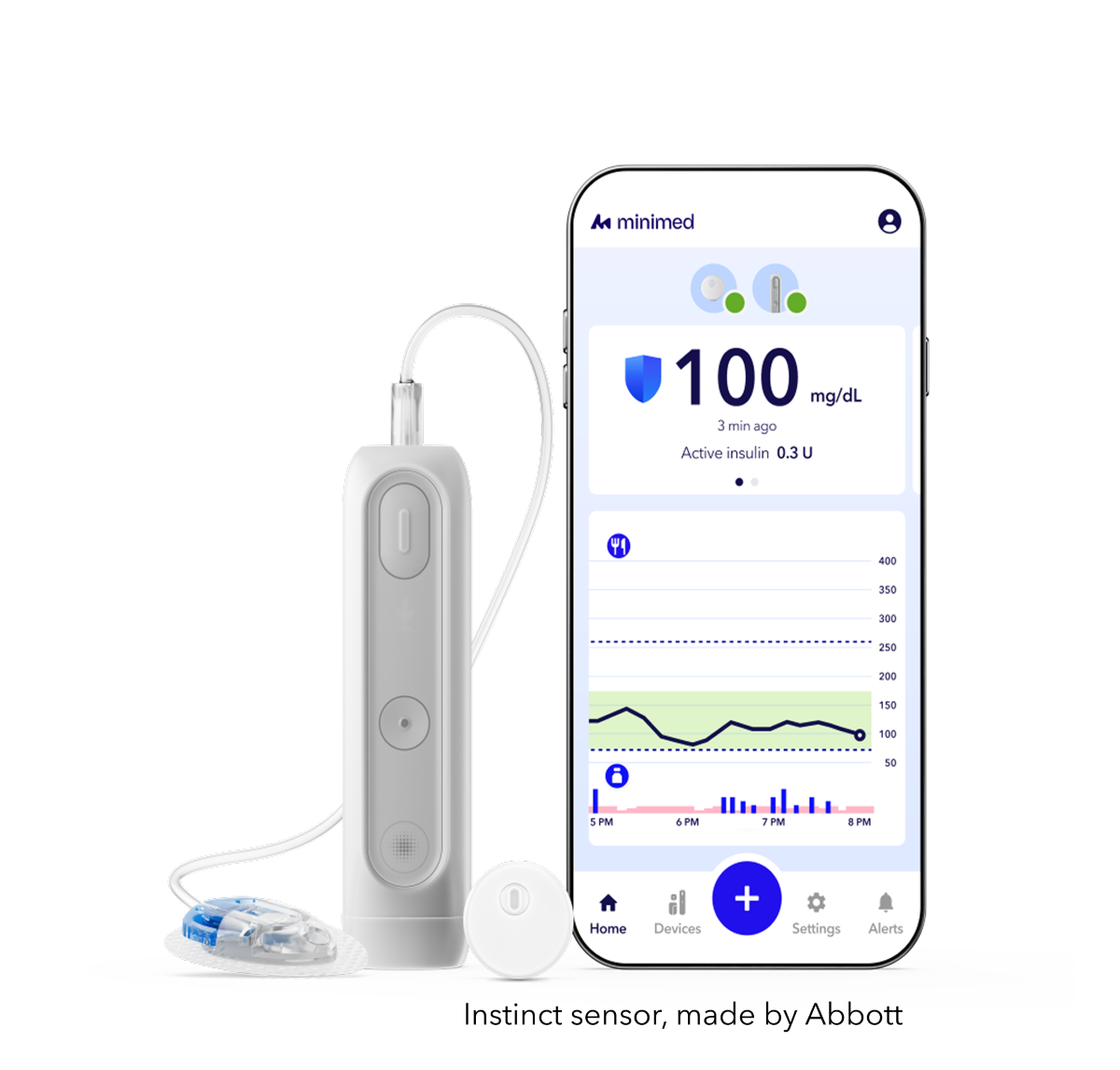
The Abbott relationship is revealing. Announced in 2024, it brought an outside glucose-sensing platform into MiniMed’s dosing systems alongside its own sensor technology. The public rationale was more choice and access. An integrated experience, in other words, can include a component made elsewhere. Instinct offers up to 15 days of wear; changing the sensor less often removes another recurring chore.
Competitors make different bargains. Insulet’s Omnipod 5 offers a tubeless Pod. Tandem offers Mobi and t:slim X2 pumps with Control-IQ+ and compatible sensors. MiniMed’s case rests on its combination of SmartGuard, pump and pen options, sensors, infusion equipment and support. Automatic dosing alone does not settle the contest. Tubing, controls and a person’s preferred routine all get a vote.
The price of keeping it running
A pump purchase begins an ongoing relationship. Sensors expire. Infusion sets and reservoirs need replacing. MiniMed reported approximately $3.1 billion in fiscal 2026 revenue; about 82% came from CGMs, other consumables, software and services. The durable device is the visible object. Much of the business follows it home.
CGMs, other consumables,
software and services
For the patient, there is no single useful sticker price. MiniMed advertises a $499 Flex transition for eligible customers with an in-warranty pump. That is a transition offer, not the total cost of treatment. Sensor copay assistance advertises as little as $60 a month for eligible commercially insured users with pharmacy coverage. Government-funded coverage is excluded from that assistance program. Insurance details change the arithmetic.
Nor does everyone want a pump. MiniMed Go connects the InPen smart insulin pen, a compatible CGM and an app. It tracks doses, calculates suggested doses and supplies alerts; the person still gives the injection. In October 2026, MiniMed reported better glucose outcomes among people who responded more often to Smart MDI alerts. That association does not prove the alerts caused the difference. It does expose the practical question: can someone act on the information?
Eligibility also sets boundaries. Current U.S. Flex labeling covers type 1 diabetes from age seven and insulin-requiring type 2 diabetes in adults. SmartGuard carries daily insulin-dose limits. A compatible phone and the ability to manage the equipment matter alongside the algorithm. Choosing the system is a clinical and practical decision.
Independence is the next experiment
Medtronic acquired MiniMed in 2001. The business returned to public markets in March 2026, raising $560 million gross through its IPO. Full separation followed on October 15; Medtronic no longer held an equity stake. Que Dallara, who led Medtronic Diabetes from 2022, now leads MiniMed as CEO.
The IPO supplied capital, but its headline proceeds were not all available for new products. MiniMed retained approximately $309 million after related transactions. The distinction matters when assessing what independence actually gives a business: resources, obligations and decisions it must now make for itself.
“Put that independence to work.”
Que Dallara · October 2026
For another product builder, the copyable idea is precise: find a repeated burden and remove some of its repetitions. Then inspect everything needed to keep that improvement working. Here, that means prescriptions, training, compatible devices, reliable sensors and affordable supplies. If those pieces fail, the loop loses its promise. MiniMed’s next chapter will be judged in the small intervals between meals, meetings and sleep.