BREAKING ViCentra closes $85M+ Series D to scale Kaleido●3,500+ users across Europe wear the patch pump●Doses as small as 0.5 microliters●Kaleido 2 launching in Europe in 2026●Hybrid closed loop with Diabeloop + Dexcom●Named to TIME's World's Top HealthTech 2025●US market entry in preparation●BREAKING ViCentra closes $85M+ Series D to scale Kaleido●3,500+ users across Europe wear the patch pump●Doses as small as 0.5 microliters●Kaleido 2 launching in Europe in 2026●Hybrid closed loop with Diabeloop + Dexcom●Named to TIME's World's Top HealthTech 2025●US market entry in preparation●
Company Profile // Medtech // Utrecht, NL
Kaleido.
The insulin patch pump that wants to shrink diabetes back down to size - and quietly disappear into a life.
Insulin Patch PumpDiabetes CareHybrid Closed LoopMade in the Netherlands
FIG 1. The Kaleido patch pump on a body that has somewhere to be. Roughly the size of a matchbox, available in ten colors, and built to be forgotten.Photo: ViCentra / hellokaleido.com
Dispatch from Utrecht
A medical device that refuses to look like one
Who they are, right now
Walk into a pharmacy and the insulin pumps mostly look the same: beige, boxy, clearly clinical, clearly something you have to wear rather than something you want to. Kaleido decided that was a design failure, not a law of nature. The result is a patch pump the size of a matchbox, sold in ten colors, that clips to the body and then politely gets out of the way.
Behind it sits ViCentra, a Dutch medtech company in Utrecht that has spent more than a decade arguing that diabetes hardware should be held to consumer-product standards. In September 2025 the argument got a lot more credible: an $85 million Series D (later extended toward roughly $98 million), more than 3,500 users across Europe, a place on TIME's list of the world's top HealthTech companies, and a next-generation device, Kaleido 2, queued up for a 2026 launch.
"It's the smallest, thinnest, lightest, most precise insulin patch pump in its class."
Tom Arnold, CEO of ViCentra
That is a confident sentence for a device that has to fit four jobs into something you could lose in a coat pocket: hold the insulin, dose it with precision, survive a shower, and not announce itself to a room. The interesting part is how hard each of those is to do at once - and why nobody had quite managed it before.
The Problem
Insulin is precise. The devices delivering it, less so.
The tension everything else hangs on
Roughly nine million people live with type 1 diabetes. Their day is a quiet arithmetic of carbohydrates, glucose readings, and insulin doses that, if you get them wrong, hurt you in either direction. The tools meant to help have historically been a compromise: pumps that are accurate but bulky, discreet but dumb, smart but tethered to a clinic's idea of what a patient should tolerate.
The standard insulin pump asks a lot. It is visible. It is fiddly. It treats every wearer as a medical average rather than a specific person with a specific body, a specific commute, and a specific opinion about whether they want a beige box on their belt. For something worn every hour of every day, "good enough, clinically" turns out to be a high price.
"We design for people, not patients."
ViCentra's operating principle
The phrase sounds like a slogan until you notice it is also a spec sheet. Designing for a person means the device has to be small enough to forget, precise enough to trust, and personal enough to choose. Those are three different engineering problems pretending to be a marketing line.
The Founders' Bet
Two engineers who had skin in the game
Diabetes was not abstract to them
ViCentra was founded in 2013 by two design engineers with backgrounds in pump technology - and, more to the point, with diabetes inside their own families. CTO and co-founder Tim Oakes, an award-winning design engineer, has a father with type 1. Co-founder Joseph Cefai helped start the company before exiting in 2016. Years later, CEO Tom Arnold joined carrying 25 years of medtech experience and a daughter with type 1 diabetes of his own.
That detail matters because it explains an otherwise odd bet. Most medical-device companies optimize for the doctor and the reimbursement code. ViCentra's founders bet that if you instead optimized for the person wearing the thing - their dignity, their wardrobe, their wish to not think about diabetes for one afternoon - you could build something people actually wanted, and that the clinical results would follow rather than lead.
Founder
Tim Oakes
Co-founder & CTO. Award-winning design engineer whose father lives with type 1 diabetes. The pump's small form factor is largely his problem to have solved.
CEO
Tom Arnold
25+ years in medtech, and a daughter with type 1. Leads the scale-up, the funding, and the push toward the US market.
Co-founder
Joseph Cefai
Helped found ViCentra in 2013 and exited in 2016, leaving behind the early bet that diabetes hardware could be held to consumer standards.
2013
Founded
3,500+
EU Users
0.5µL
Smallest Dose
~200
Employees
$85M+
Series D
The Product
Small, precise, swappable - pick all three
What the device actually does
Kaleido is a reusable patch pump measuring about 50 x 35 x 12.5mm. A unique internal pumping mechanism is what lets it be that small while still dosing insulin down to half a microliter - a fraction of a single raindrop. There is a small handset, a companion app, a bolus calculator, meal announcement, and insulin-on-board tracking. There are also multiple tubing lengths, body-patch options, and ten color shells, because the company stubbornly believes a wearer should get to choose how their pump looks.
The newer trick is what happens when Kaleido stops working alone. Paired with Diabeloop's self-learning algorithm and a Dexcom continuous glucose monitor, it becomes a hybrid closed-loop system: the CGM reads glucose, the algorithm decides, the pump delivers, and the whole loop runs from a smartphone. The wearer announces a meal; the system handles a surprising amount of the rest.
"A pump small enough to forget you're wearing it, smart enough that you mostly can."
The Kaleido pitch, in one line
Hardware
The patch pump
Matchbox-sized, reusable, waterproof, and customizable. Ten color shells, swappable tubing, and a body patch that disappears under clothes.
Precision
0.5µL dosing
A bespoke pumping mechanism delivers insulin in increments as small as half a microliter - precision usually reserved for far bulkier devices.
Software
App + handset
Bolus calculator, meal announcement, insulin-on-board, and activity logging - the daily diabetes math, moved onto a screen you already carry.
Automation
Hybrid closed loop
Diabeloop's self-learning algorithm + Dexcom CGM turn Kaleido into an automated insulin delivery system run from a phone.
Milestones
How Kaleido got here
2013
ViCentra is founded in Utrecht
Two design engineers with diabetes in their families set out to build the insulin pump they wished existed.
2016
Co-founder Joseph Cefai exits
The early team transitions as the company moves from concept toward a manufacturable device.
2019-23
Kaleido reaches users across Europe
The compact, colorful patch pump rolls out, building toward more than 3,500 active users.
2023
Hybrid closed loop with Diabeloop & Dexcom
Kaleido integrates a self-learning algorithm and CGM, moving automated insulin delivery onto the smartphone.
2025
$85M+ Series D and a TIME nod
Led by Innovation Industries, the round funds manufacturing scale-up. TIME names ViCentra among the world's top HealthTech companies.
2026
Kaleido 2 and the US in view
Next-gen pump with Diabeloop's DBLG2 and Dexcom G7 set to debut in Germany and the Netherlands, with US entry in preparation.
The Proof
The numbers behind the confidence
Where the money and the users are
Conviction is cheap; a Series D is not. The 2025 round was led by deep-tech investor Innovation Industries, with Partners in Equity, Invest-NL, EQT Life Sciences, Health Innovations, ROM Utrecht Region and others alongside. The capital has one job: turn a beloved European device into a manufactured-at-scale product that can cross the Atlantic.
Series D, by the round
Reported financing, 2025-2026 (USD, approximate)
Initial close
$85M
Extension
+$13M
Total raised
~$98M
Bars scaled to the ~$98M reported Series D total. Figures are approximate and drawn from public reporting.
The other proof is human. More than 3,500 people in Europe wear Kaleido today, and the partnerships read like a short list of who matters in automated diabetes care: Diabeloop for the algorithm, Dexcom for glucose sensing, and engagement with diabetes organizations like JDRF. A device this small only earns trust by being right thousands of times a day.
Partner
Diabeloop
Supplies the self-learning DBLG1/DBLG2 automated insulin delivery algorithm that turns Kaleido into a closed-loop system.
Partner
Dexcom
CGM integration (including Dexcom G7) feeds real-time glucose data to drive automated dosing decisions.
Community
JDRF
Engagement with the diabetes research and advocacy community keeps real users close to the design loop.
"Shrink diabetes back down to size."
ViCentra's stated mission
The Mission
Minimise the impact, every single day
Why the small stuff is the whole point
ViCentra's mission is to "shrink diabetes back down to size and minimise the impact it has on the lives of people who live with it every day." It is not a cure, and the company is careful not to pretend otherwise. It is a quieter ambition: make the relentless, hourly labor of the disease a little lighter, a little less visible, a little more yours.
That is why the color shells are not a gimmick and the small form factor is not vanity. When a device shrinks, the disease it manages psychologically shrinks with it. A pump you can forget is a pump that lets you think about something else - which, for someone managing glucose around the clock, is close to the entire point.
Why It Matters Tomorrow
The next move is bigger and farther
Closing the loop, opening a market
Kaleido 2 is positioned as the smallest, lightest, lifestyle-oriented insulin patch pump in its class, debuting in Germany and the Netherlands with Diabeloop's newly CE-marked DBLG2 algorithm and the Dexcom G7. Behind it is the harder, less glamorous work the Series D pays for: manufacturing at scale and a credible path into the United States, where the market is enormous and the incumbents are entrenched.
The skeptic's question is fair. Plenty of well-designed medical devices have raised well and stalled at the border between European charm and American scale. Whether Kaleido clears it will depend less on the color shells and more on the unglamorous things - supply chains, reimbursement, regulatory clearance - that decide which clever devices become common ones.
But return, for a second, to that pharmacy shelf of identical beige boxes. The wager ViCentra made in 2013 was that the box did not have to look like that, and that a person with diabetes deserved a device chosen rather than tolerated. Thirty-five hundred users and an $85 million round later, the matchbox-sized pump in ten colors is no longer a hopeful sketch. It is on bodies that have somewhere to be - and, with any luck, on bodies that have stopped thinking about it at all.
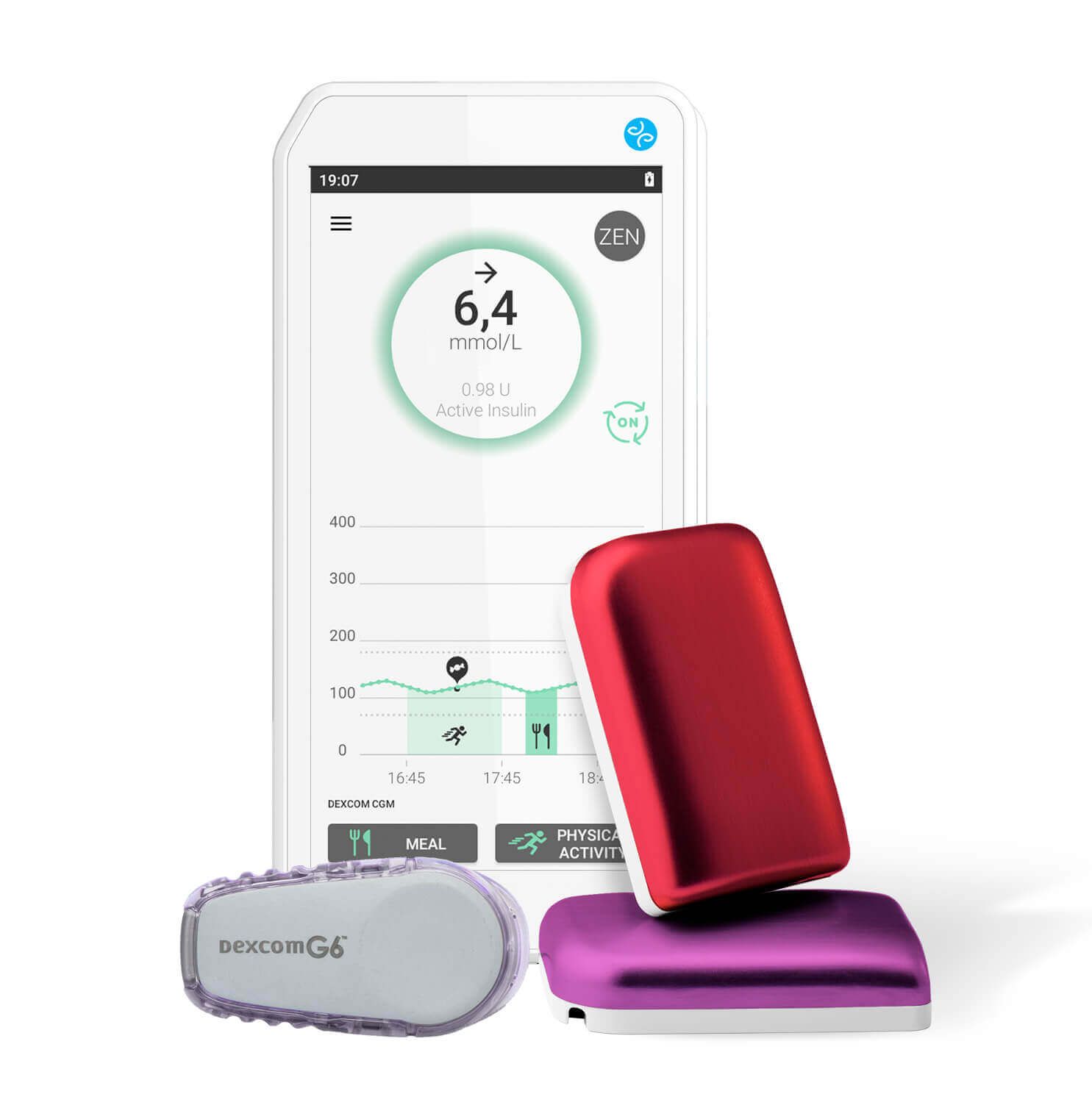 FIG 1. The Kaleido patch pump on a body that has somewhere to be. Roughly the size of a matchbox, available in ten colors, and built to be forgotten.Photo: ViCentra / hellokaleido.com