At Chobani’s yogurt plant, the cleaning schedule lived on a whiteboard. Operators had 150 possible washes to arrange across 18 cleaning lines. Priorities changed. Shifts changed. A wash could be overlooked. Anyone elsewhere in the plant who wanted to know the plan had to walk to the control room. The board did its job until the job became too large for the board.
- Inductive Automation makes Ignition, software for connecting industrial equipment, data, and people.
- Its standard licensing charges by server and selected capabilities, with unlimited users and tags.
- Independent integrators turn the platform into applications, from water-system monitoring to cleaning schedules.
- The useful question: what could your team build if sharing the result did not require another seat license?
Chobani’s automation department proposed Ignition. Tamaki Control, the integrator, began with a scheduling component and used Python scripting and SQL to make washes easy to add, remove, and rearrange. Once that worked, the team added event tracking. An unscheduled wash could enter the schedule automatically; later washes moved back. Historical wash times helped refine estimates.
This is an unusually good introduction to Inductive Automation. Nobody began by announcing that yogurt needed a digital revolution. People needed to stop walking across a factory to consult an increasingly unreliable whiteboard. The software supplied a way to do that, then a way to do more.
One live schedule. Changes visible beyond the control room.
An invoice becomes a design problem
Steve Hechtman had spent 25 years as a control-system integrator before starting the company. Integrators occupy an awkward position: a customer has a physical problem, but the available software decides how expensive solving it will be. Hechtman’s account of those years is full of irritation with installation, activation, migration, and licensing. His frustration concerned the work around the work.
Steve and Wendi-Lynn Hechtman founded Inductive Automation in 2003. Ignition followed in 2010. Its commercial proposition addressed a recurring irritation: software that meters the growth of an application. A tag is a named data point, such as a temperature or pump status. A client is an interface someone uses. Charge for enough of either and a useful engineering question acquires an accounting chaperone.
For standard Ignition, the company sells a server license with selected modules or suites. The license permits unlimited clients, tags, projects, and designers. An engineer can offer another person a screen without treating that person as a fresh licensing transaction. The distinction sounds dry until you imagine how many small requests arrive after a system starts working.
“There are no licensing limits on screens, no licensing limits on tags.”Chris VanRemoortel, Bixby International
The commercial design invites a particular kind of behavior: build something useful, let more people see it, and extend it when they ask better questions. That is an interpretation of the model, rather than a guarantee of every project’s success. Removing a fee does not supply the imagination or engineering needed to spend the freedom well.


The middle of the factory
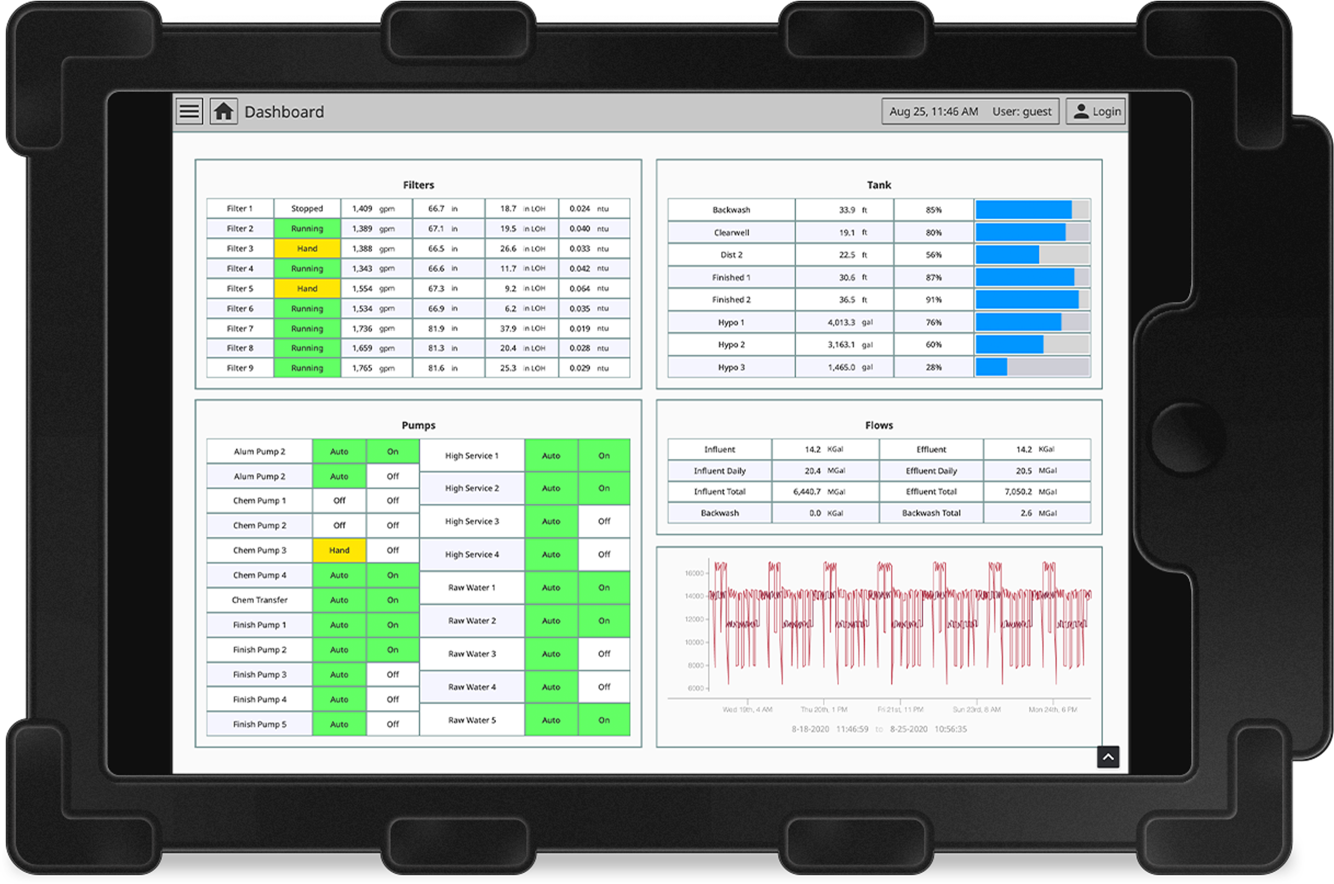
Ignition sits between industrial equipment and the people who need to understand it. SCADA means supervisory control and data acquisition: gathering readings, displaying conditions, and allowing authorized operators to supervise processes. HMI, the human-machine interface, is the screen through which they do it. A historian keeps the past available for analysis. Alarms call attention to conditions requiring a response.
Inductive Automation packages those functions as an application-building platform. Its Gateway is the server hub. The Designer supplies components, data binding, drawing, and scripting tools. Connections to controllers and SQL databases bring production information into applications. OPC UA and MQTT provide routes for industrial data, with MQTT functionality available through partner modules.
PLCs · sensors
connect · build · deploy
Perspective builds HTML5 interfaces for browsers and mobile devices, with Workstation offering plant-floor deployment. Edge brings collection and visualization closer to equipment. Manufacturing execution applications can use Sepasoft’s modules for functions such as traceability, downtime analysis, and batch procedures. The platform gives developers a common place to assemble these pieces; the finished application still has to be designed.
The market already contains capable alternatives: AVEVA System Platform, Rockwell Automation’s FactoryTalk View SE, and Siemens WinCC Unified. Browser access, connectivity, and dashboards appear across the category. Ignition’s appeal lies in how its modular tools, cross-platform deployment, open interfaces, and standard licensing work together. Existing equipment, staff expertise, and the cost of replacing a working system can make another choice perfectly sensible.
The arithmetic of a replacement
Fort Smith, Arkansas, offers a concrete buying decision. Its utility department had five legacy Wonderware SCADA systems across water and wastewater operations. Versions, naming conventions, and interface colors differed. Information stayed at individual facilities. Brown Engineers consolidated them into one Ignition system, with consistent screens across four treatment plants.
According to the company-published case study, the replacement cost two-thirds of the proposed old-software upgrade. That comparison describes this project; it is not a universal discount. The department also gained remote diagnosis and easier movement of operators between plants. A consistent meaning for red, green, and yellow is hardly glamorous. It becomes consequential when someone changes workplaces mid-shift.
The distinction matters when reading Ignition’s price list. As of October 2026, the Application Building suite is listed at $13,500 and the Industrial Historian suite at $3,500. These are selected software components, not installed-system quotations. Standard and Edge licenses are perpetual; Cloud Edition uses ongoing usage-based charges. Support, additional modules, hardware, and engineering belong in the budget.
Nor does “unlimited” stretch a processor or network indefinitely. Inductive Automation explicitly acknowledges server capacity limits. A larger deployment may require more gateways, better storage, redundancy, or a different architecture. Edge editions have their own scope. A procurement team should ask which license and configuration the promised freedom actually refers to.
The people who make the platform useful
An industrial software company can sell a toolkit and still need many hands to deliver the result. Inductive Automation’s independent integrators supply those hands. The company says its network exceeds 5,500 firms. Free Inductive University training, the Ignition Exchange resource library, forums, and public SDK examples help people learn and reuse work.
Its stated culture favors independent thinking, teamwork, and customer empowerment. Free educational resources are observable expressions of that position. The company also describes itself as independently owned and self-funded. Those claims help explain its chosen identity, although customers ultimately encounter the culture through support calls, documentation, and what happens when a deployment gets difficult.
The Chobani sequence is worth copying. Start with one workflow whose shortcomings people can describe. Put a basic version in their hands. Test it before adding automation. Then connect live events and historical information that improve decisions. Treat adoption as part of the engineering: a shared schedule must be understandable to the next shift, not merely elegant to its developer.
That approach depends on reliable equipment data, suitable communications, and people able to maintain the application. At Park City Water, the previous system’s 15-minute polling obscured the present; the improvement included faster telemetry alongside Ignition. Buying software alone would not have made the old communications faster. The dependency is a useful reminder to inspect the whole route from sensor to decision.
More data, another database
Ignition 8.3, released in September 2025, expanded historian and event-stream capabilities, redesigned the Gateway, and added security and development features. These are the less photogenic parts of an industrial application. They determine how data travels, where it survives, and how much trouble maintaining the system creates.
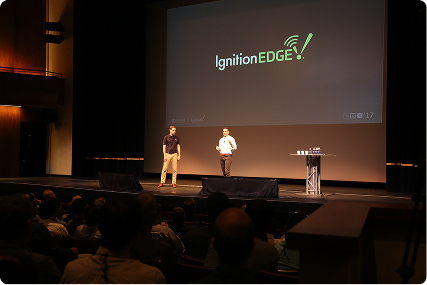
At ICC in September 2026, Inductive Automation previewed Ignition 2027. Announced plans included Catalyst, a framework for working with AI inside Ignition, an Enterprise Historian for TimescaleDB, and improved deployment and design tools. Tiger Data became a Strategic Partner; a Beckhoff collaboration was also announced. These were previews and announcements, which deserve a different tense from a released product.
The trajectory makes sense. Give factories more latitude to collect information and the database underneath becomes a larger part of the story. Yet the test remains pleasingly ordinary. Can the operator see the wash? Can the next shift understand the screen? Can the team add the next useful idea without turning a small improvement into a purchasing expedition? The whiteboard set a modest standard. Meeting it properly required a rather substantial business.
Open the control room
Explore the platform, try a demo, or hear the people building it.