The first version came with a password. Imran Amed was keeping friends and family informed about his attempt to enter fashion, a world he admired and was still learning to understand. His proposed business was an incubator for young designers. He would bring the commercial knowledge; they would bring the clothes. It lasted eight months.
Then came a small administrative change with rather large consequences. In January 2007, Amed removed the password from his blog. He made a banner in PowerPoint, called the site The Business of Fashion and continued writing. Fashion, an industry exquisitely sensitive to who is allowed through which door, could now read along without an invitation.
There is something pleasing about PowerPoint having a supporting role in this origin story. Amed had left management consulting to find work in a creative industry. The office software apparently came with him. So did a useful professional habit: looking at a complicated business and trying to explain how its parts fitted together.
The sofa in his London flat became an unlikely editorial headquarters. The project did not begin with the machinery of a magazine launch. It began with someone noticing things, writing them down and allowing other people to respond. Before there was a company to run, there was a conversation worth continuing. The distinction would matter for years.
A childhood with more than one channel
Amed was born in Calgary on 20 April 1975. His parents, of Indian heritage, had moved to Canada from East Africa. The family story crossed borders before his own career did. He grew up within the Ismaili Muslim community, carrying several cultural reference points into a Canadian childhood.
He was also a child performer, trained in music, drama and public speaking. At school, he moved between the academically inclined, the theatre crowd and the sporty children. His recollections describe someone interested in several kinds of people, long before bringing different kinds of people together became part of his job.
On Saturdays he watched Tim Blanks present Fashion File from the family basement. The television offered a view of people whose difference was part of their appeal. Years later, in 2015, Amed would hire Blanks as BoF’s editor-at-large. A childhood viewing habit had become a working relationship. Few job offers come with quite that much backstory.
His formal education followed a more conventional route: a commerce degree at McGill University, completed in 1997, followed by an MBA at Harvard Business School in 2002. These were substantial credentials. They also supplied an orderly progression, each achievement making the next one easier to imagine. Fashion would require a less obedient use of the map.
“just because you’re good at something doesn’t mean that you should continue to do it.”
Imran Amed · 2015
The useful things he brought from consulting
Amed’s early career included Deloitte Consulting and, after Harvard, McKinsey & Company. London became his base, while assignments took him into different countries and businesses. Banking, property and other commercial worlds trained his attention on how organisations worked. He could analyse the machinery. Finding an industry he cared about was another question.
He explored creative work, meeting people in television, music and fashion. The designer incubator was an attempt to make his existing skills useful to people whose talents were different from his own. Its failure left him with an education that no degree had provided: direct encounters with the practical difficulties of building a fashion label.
The blog gave that education somewhere to go. He paid $100 for a Typepad account. He wrote about strategy, deals and the commercial forces behind the images, while independent consulting helped support him. A daily email gave readers a reason to return. It was a modest distribution method with a very clear proposition: here is something that may help you understand your working day.
The timing helped. Fashion was having to reckon with digital distribution and a public conversation beyond its usual channels. Amed’s questions about technology and business were becoming harder to dismiss. His outsider status gave him gaps to investigate, while his business training gave him a way to organise the answers. The resulting voice had a practical purpose.
Six years before the funding round
BoF began in 2007. Its $2.5 million seed round, led by Index Ventures, came in 2013. Those dates leave six years that the tidy startup anecdote tends to fold away. During that stretch, Amed was writing, consulting, teaching and responding to the opportunities the site generated. Interest in the blog arrived before a durable organisation did.
He later described a small operation with an assistant, contributors, a part-time editor in New York and outside developers. The volume of requests kept growing. Eventually he had to decide whether to stop, carry on in that fragile form, or commit to building the business. For someone who enjoyed being a generalist, choosing one undertaking was itself a change.
In February 2013, a team of four established BoF as a proper business. Paid subscriptions followed in 2016. The Financial Times led a Series B investment in 2019, accompanied by a collaborative partnership. Amed was now applying commercial judgment to his own publication, facing the kinds of choices he had spent years explaining to other people.
The company expanded into professional membership, recruitment, events and intelligence. Each offers a different use for the same accumulated knowledge. A reader can follow a story, look for a job, attend a discussion or use an analysis at work. Building those services demands attention to the unphotogenic parts of publishing. Nobody puts subscription infrastructure on a mood board, but it helps pay for the reporting.
- The blog opens to readers
- $2.5m seed round, led by Index Ventures
- Paid subscriptions begin
- Financial Times leads Series B
The invitation comes with a question
Recognition arrived from several directions. McGill gave Amed its Desautels Management Achievement Award in 2014. Glasgow Caledonian University appointed him an honorary professor of fashion business in 2015. The CFDA’s Media Award in Honor of Eugenia Sheppard followed in 2016. In 2017 he received an MBE for services to fashion; an honorary doctorate from Central Saint Martins followed in 2018.
Awards can certify arrival. They do less to settle the daily problem of covering an industry that also supplies your readers, advertisers, event guests and investors. LVMH, whose businesses are part of BoF’s beat, is a minority shareholder. That relationship makes editorial judgment a continuing responsibility. Access is useful to a reporter; so is the ability to disappoint the person who granted it.
Amed has described an ambition to make leaders reconsider how their industry works. The subjects extend from commercial performance to labour and the environment. The publication’s events carry the same breadth: VOICES has brought figures such as Malala Yousafzai into a fashion gathering. His interest in people beyond the immediate business gives those conversations a wider frame.
There is an appealing tension in his position. A former outsider now helps decide who receives attention. The BoF 500 is an index with consequences for visibility, and a gathering point for the community around it. Keeping the door open takes deliberate work once you have acquired the ability to stand beside it.
“My curiosity usually starts with people.”
Imran Amed · 2024
The room gets bigger
India occupies a particular place in Amed’s account of finding support. He has credited people there with welcoming him when gaining access elsewhere was difficult. That attachment sits alongside his Canadian upbringing, East African family history and London working life. The international outlook is grounded in relationships, rather than being merely a convenient description for a media business.
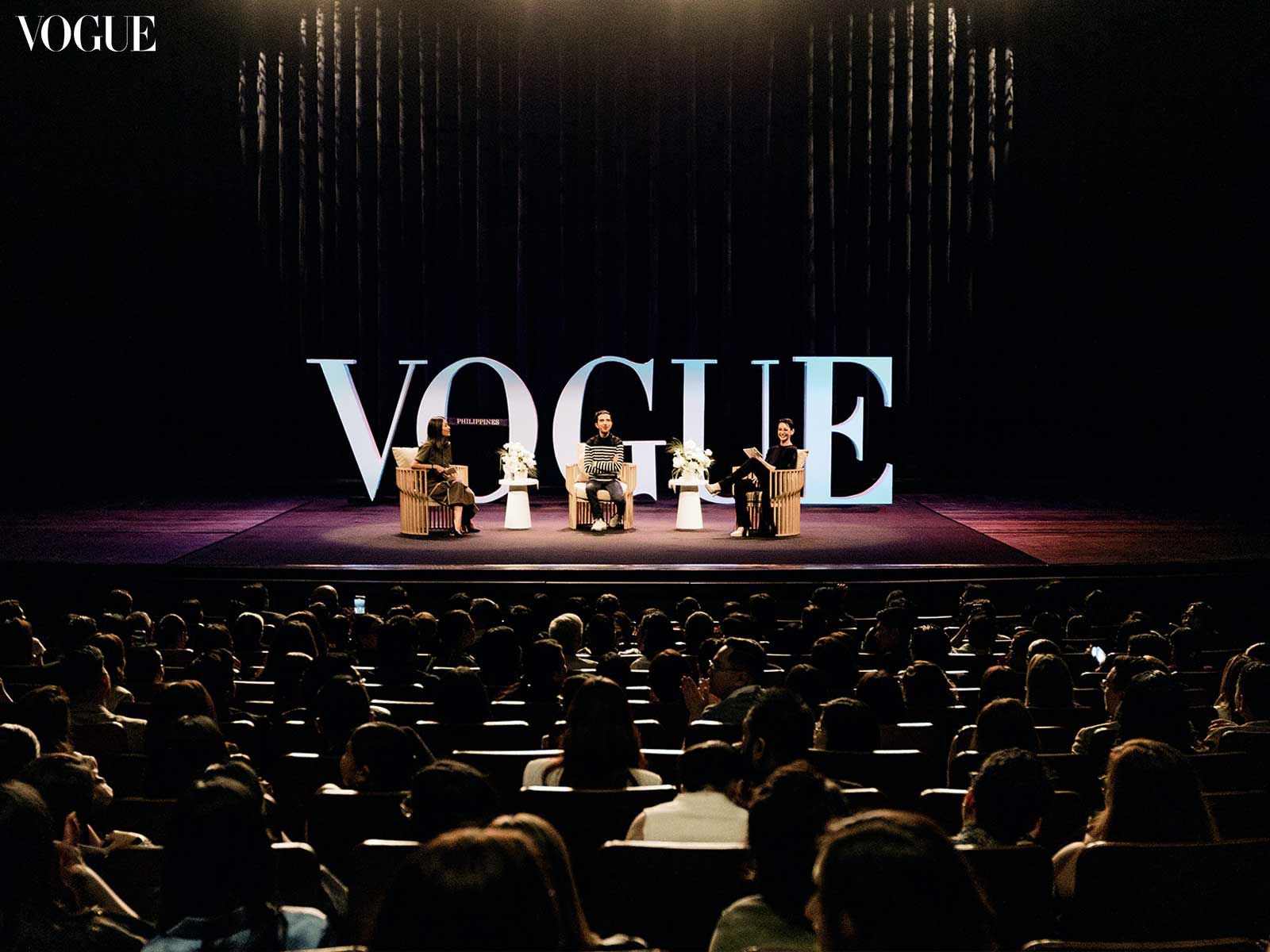
In July 2024, he appeared in Manila with Vogue Philippines editor-in-chief Bea Valdes and fashion director Pam Quiñones. The discussion connected his personal route into the industry with the business questions facing people in the room. Here was someone explaining a career that, at the beginning, had been difficult even for his family to decipher.
His mother, he recalled that year, had wondered why he was always on email. He was writing. The misunderstanding is funny because the activities looked much the same from across the room. BoF eventually offered a more visible explanation, including a careers service that helped younger people show their own parents that fashion contained actual jobs.
Amed’s stated measure of satisfaction is similarly practical: hearing that something his team produced helped someone in their career or business. It brings the ambition back to an individual reader. A useful paragraph can travel farther than the writer expects. It can also be easier to explain at home than the abstract promise of a creative career.
Still asking, nineteen years later
By October 2026, the conversation was continuing across familiar formats. The BoF 500 added 100 members in its latest class. Amed’s podcast featured Marc Jacobs on 2 October, followed on 9 October by a seasonal review with Tim Blanks of the Spring/Summer 2027 shows. The subjects change; the habit of bringing creative decisions into a business discussion remains recognisable.
That continuity matters more than a simple account of ascent. Amed’s work still depends on paying attention to people and explaining what their decisions mean. The scale has changed considerably since he was writing in the evenings, but scale alone cannot answer the question that made the early blog worth reading: what is happening here, and why should someone else care?
His career gives that question a personal dimension. The education and consulting years supplied skills that found an unexpected use. The incubator supplied lessons despite failing. The blog supplied an audience before it supplied a business. Looking back makes the sequence seem orderly. Living through it required continuing before the shape was clear.
The password was a small thing to remove. It changed who could join him while he figured things out. Nearly two decades later, the most interesting part of Amed’s story is still that first public gesture: an unfinished understanding of fashion, offered to anyone willing to read and answer back.