Every powerful person in Hollywood claims not to read gossip. Every powerful person in Hollywood reads The Ankler.
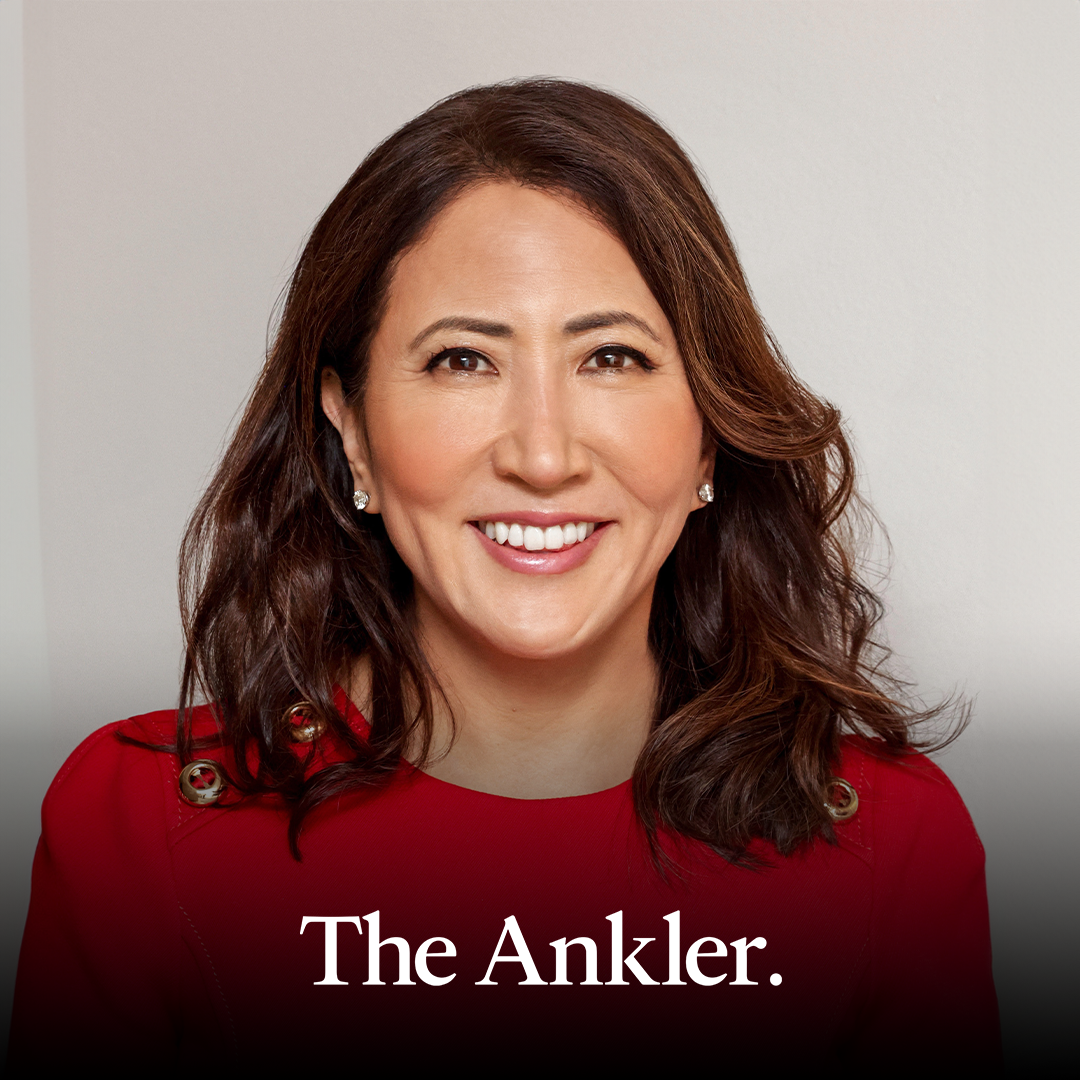
Start with what she is doing right now. Janice Min is the CEO, editor-in-chief and co-owner of Ankler Media, the company she built with the writer Richard Rushfield out of a subscriber-funded newsletter about the business of entertainment. She took a scrappy dispatch that Hollywood insiders passed around like contraband and turned it into a company with podcasts, live events, a growing masthead, and - by the close of 2024 - annual revenue growth of nearly 3,000 percent. In early 2025 she said out loud that she expected the operation to reach roughly ten million dollars in annual revenue.
That is a strange sentence to write about a newsletter. Newsletters are supposed to be side projects, the thing a laid-off journalist does while looking for a real job. Min did the opposite. She took the format the industry underestimated and treated it like the main event. Ankler Media was admitted to Y Combinator, the Silicon Valley accelerator better known for shipping software than shipping scoops about studio politics.
To understand why that bet worked, you have to know what she did before it. For most of two decades, Janice Min was the person who decided what celebrity culture looked like. As editor-in-chief of Us Weekly from 2003 to 2009, she took a distant also-ran and grew its circulation from roughly 800,000 to 1.9 million copies a week. She is the editor behind "Stars - They're Just Like Us," the deceptively simple franchise of paparazzi photos - a celebrity pumping gas, a celebrity carrying groceries - that quietly rewired how a generation related to fame.
People who worked across from her described a kind of gravitational pull. She has been called "Oprah-esque" in her power over celebrity culture, which is the sort of compliment that sounds like hyperbole until you count the magazines that copied her. At her Us Weekly peak she reportedly earned around two million dollars a year, an unusual number for a magazine editor and a signal of how much revenue her instincts generated.
Then, in 2009, she walked away. Not to a bigger title - to her house. She spent about ten months at home with her family before the next act, an interlude that looks, in hindsight, less like a pause than a running start.
The next act was a rescue. In 2010 she was named editorial director of The Hollywood Reporter, a trade publication that had gone gray and thin. Four months later she relaunched it as a glossy weekly built around deep feature reporting and ambitious photography. The New York Times called the result a "stunning transformation." Web traffic multiplied. The magazine won National Magazine Awards for General Excellence in 2015 and 2016, and in 2014 she won an Emmy for a Hollywood Reporter special. She rose to co-president and chief creative officer of the combined Hollywood Reporter and Billboard group before stepping away in 2017.
There was a detour that did not pan out - a stretch at Quibi, Jeffrey Katzenberg's short-form video venture, where she was brought in to run daily news programming. She left in 2019, before Quibi launched and quickly folded. It is the rare line on her resume that ends in someone else's failure, and it seems to have taught her something about betting on your own judgment rather than someone else's platform.
Because what she built next was entirely hers. The Ankler had started as Rushfield's independent newsletter, a sharp-tongued read for people inside the industry. Min saw the same thing in it that she had seen in Us Weekly years earlier: a format the establishment dismissed that was actually the future. She joined in 2021, and together they expanded it into Ankler Media - a portfolio of newsletters and podcasts covering the money, power and anxiety of Hollywood with the confidence of someone who has sat in the big chair at legacy titles and has no interest in going back.
The through-line across all of it is not gossip. It is a refusal to be embarrassed by what audiences actually want. Min built a career noticing that the coverage everyone claimed to be above was the coverage everyone consumed - and then making it smarter, sharper and more valuable than the people looking down on it thought possible.