The Story
The man your parents stream their dramas through
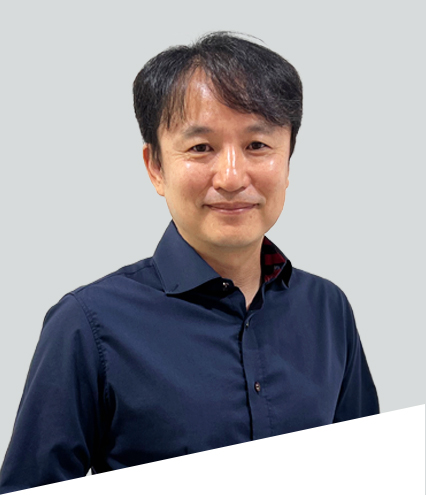
Somewhere in a living room in Los Angeles, a grandmother is watching a Korean variety show the same night it aired in Seoul. She is not pirating it. That small fact - legal, same-day, in her language - is the thing Jed Jeong built a company around. He is CEO of KOOLi Inc. and Head of OTT at ODK Media, the company behind OnDemandKorea, and his bet was simple to say and hard to do: the diaspora deserves the real thing, on time, without breaking the law.
OnDemandKorea is the first and largest legal Korean streaming service in North America. It reaches over 70% of the Korean-American population. Those are not the numbers of a side project. They are the numbers of an institution - the kind that quietly becomes the default way a community keeps its connection to home.
Jeong did not start in California. He started in Korea's early internet era, at Daum, one of the country's leading internet companies, during the years when digital media was being invented rather than optimized. He served as Convergence Service Lead at Daum Communications and went on to run DaumTV as its CEO. By the time he turned to the American market, he had already spent a career watching how people actually want to consume video - and how often the legal options fail them.
One service, then four
The interesting part is what came after the first win. ODK Media did not stop at Korea. The same model - serve an underserved diaspora with its own content, legally and well - got replicated. OnDemandChina. OnDemandViet. OnDemandLatino. What started as a single legal Korean OTT service became a multinational streaming portfolio, and around it Jeong's team layered the unglamorous infrastructure that makes streaming actually work: digital magazines, e-commerce, content metadata production, and an international content IP distribution network.
That last piece matters more than it sounds. Anyone can license a drama. Far fewer can build the metadata pipelines, the distribution rails, and the rights relationships that let Asian content move across 36+ countries. ODK Media calls itself the Asian media hub of North America. The phrase is marketing; the plumbing behind it is not.
The generation problem
A diaspora streaming service has a clock running against it. The first generation wants content from home. The second generation, raised in English, may not. Jeong has been candid that the harder audience is the 1.5 and second-generation Korean Americans - people who are culturally Korean and American at once, and who are not served by simply importing Seoul's programming with subtitles.
In March 2024, OnDemandKorea moved on exactly that. It announced a partnership with Korean American Story, a nonprofit dedicated to creating and preserving the stories of the Korean American experience, to stream content made for that audience rather than translated for it. It is a small announcement with a large idea behind it: to last, a diaspora platform has to stop being a window back home and start being a mirror.
A lesson from the Daum years
To understand Jeong's instincts, it helps to remember where he learned them. Daum was one of the companies that built the Korean internet - a place where the rules of digital media were being written in real time rather than inherited. As Convergence Service Lead, he sat at the seam where television and the internet were colliding, and as CEO of DaumTV he had to turn that collision into a working product. That is an unusual apprenticeship. Most American streaming executives came up inside an industry that already existed. Jeong came up inside one being invented.
The habit that carried over is a comfort with serving audiences before the market agrees they are worth serving. Korean internet companies grew by betting on behaviors that had not yet shown up in a spreadsheet. OnDemandKorea is the same wager in a different country: a conviction that a specific, loyal, underserved audience is a better foundation than a vague pursuit of everyone. The diaspora was not a fallback for Jeong. It was the thesis.
Why it works
Streaming is brutally competitive when you are fighting Netflix for the general audience. It is a different game entirely when you are the only legal, comprehensive option for a specific community that genuinely wants what you have. Jeong picked the second game. ODK Media operates from offices in Fullerton, California; Seoul, South Korea; and Ho Chi Minh City, Vietnam - a geography that maps neatly onto where the content is made and where the audiences live.
His training fits the work. Jeong holds a Bachelor of Science from Seoul National University, Korea's most selective university, and completed an Expert Training Course at Cornell University. The combination - Korean technical roots, American executive polish - is the same blend he sells to subscribers: one foot in each world, fluent in both.
The company states its ambition plainly: to be the number one Asian media hub in the global entertainment market, and to entertain, empower, and connect its community. Read coldly, those are the kind of words that hang in every lobby. Read against what ODK Media has actually shipped - four diaspora platforms, a distribution network, a catalog cleared for legal viewing in 36+ countries - they start to look less like a slogan and more like a checklist already half complete.
He is not a household name, and that is rather the point. The founders who get profiled tend to chase the largest possible audience. Jeong did the opposite. He found a community the giants ignored, gave it something it could not get legally anywhere else, and then quietly proved the model worked well enough to copy four times over. The grandmother watching her variety show on time has no idea who he is. She does not need to. The service simply works - which is the highest compliment an operator can earn.
The case for legal
It is easy to forget how recently "watch Korean TV in America" meant a maze of dubious sites, broken links, and files of unknown origin. For a community of millions, the legitimate path barely existed. Jeong's first contribution was not a clever algorithm or a flashy interface. It was legitimacy. OnDemandKorea launched as the first legal Korean OTT service in the United States, which meant rights cleared, creators paid, and a viewing experience that would not vanish overnight. In a category where the competition was often piracy, being the lawful option was itself the product.
That choice shaped everything downstream. Legal content requires relationships with broadcasters and studios, which require trust, which takes years to build. ODK Media spent those years. The payoff is a catalog and a reputation that a fast-follower cannot simply clone, because you cannot pirate a licensing relationship. The company describes itself as having established an integrity standard in online media - a phrase that reads as boilerplate until you remember the swamp the service was built to drain.
The infrastructure nobody sees
Subscribers see a play button. Jeong sees a supply chain. Behind OnDemandKorea sits content metadata production - the painstaking work of tagging, describing, and structuring thousands of titles so they can be searched, recommended, and licensed. There is an e-commerce arm. There are digital magazines. And there is an international content IP distribution network that moves Asian content across borders to other buyers, turning ODK Media from a single storefront into a wholesaler of culture.
This is the part that separates a streaming app from a media company. Apps live and die on subscriber churn. A distribution network earns money whether or not any single platform wins, because it sits underneath the whole market. By building both the consumer service and the rails beneath it, Jeong gave ODK Media two ways to win from the same content - and a reason to exist even as the streaming wars reshuffle the players above ground.
The portfolio
Four platforms, one idea. Each serves a diaspora the mainstream streamers treat as a rounding error.