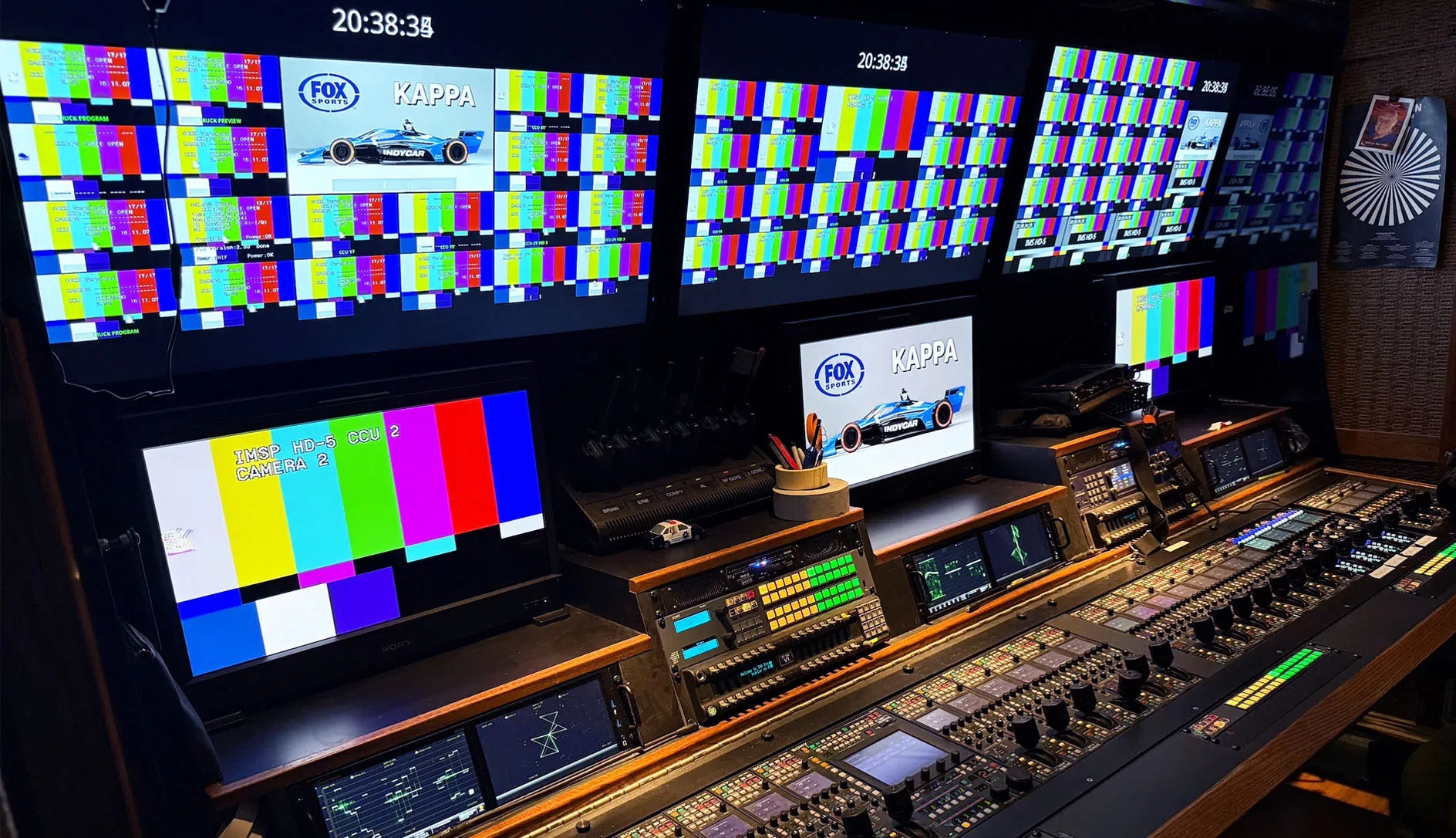
The awkward thing about upgrading a racing broadcast is that the cars will start without you. In December 2024, IMS Productions approached integrator BeckTV about moving its production trucks to an IP-based infrastructure. The original timetable stretched over five years. With Fox Sports becoming IndyCar’s broadcast partner for 2025, the work suddenly had a much shorter runway.
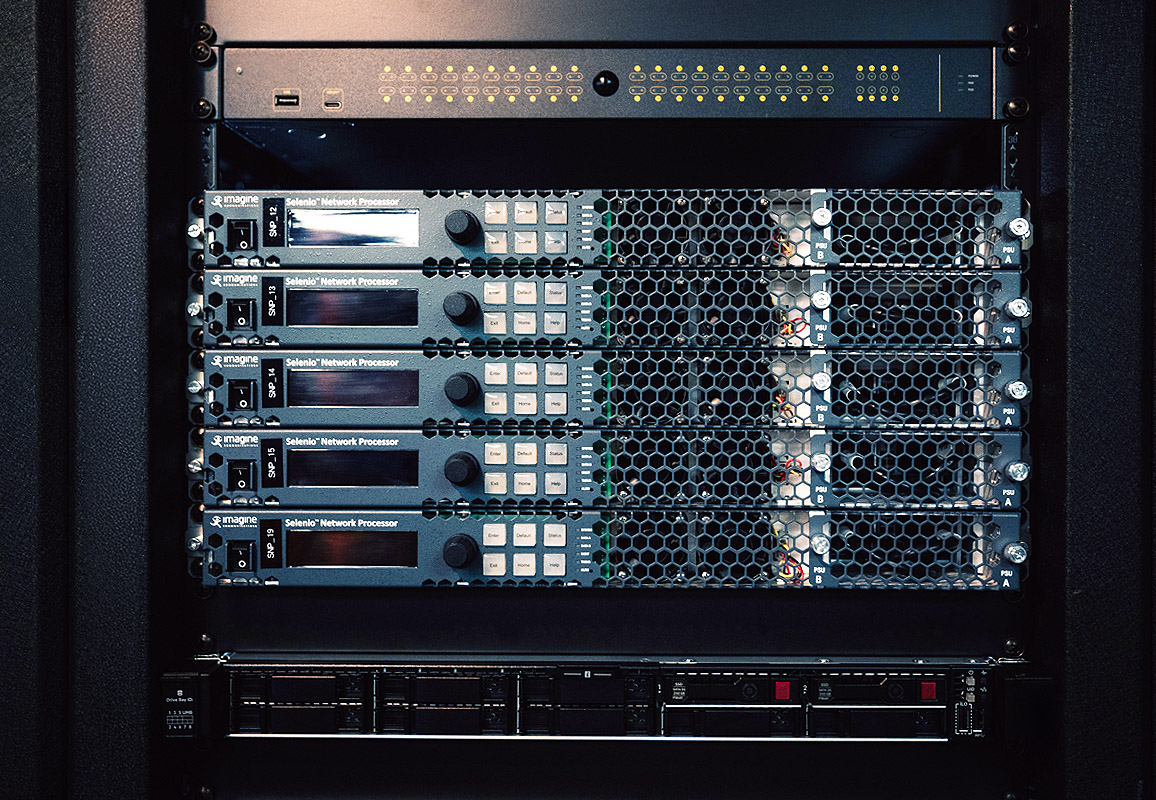
Five mobile units were upgraded in two months. Imagine Communications supplied the Selenio Network Processor, or SNP, and Magellan control technology. The interesting detail is what stayed: the audio system remained baseband. Modernization, in this case, meant getting different generations of equipment to cooperate before the first green flag.
- Move the picture: process video and connect existing broadcast equipment to IP networks.
- Run the channel: automate the sequence of programs, branding and commercials.
- Sell the break: manage advertising campaigns and optimize limited airtime.
A bridge with a broadcast deadline
Imagine occupies the machinery layer of television. Its customers include broadcasters, network groups, sports producers, video distributors and enterprise media teams. They buy tools for processing signals, originating channels and managing advertising. A viewer usually encounters the result without encountering the supplier’s name.
The name has a history of its own. The original Imagine was a video-processing startup founded in 2005. Harris Broadcast acquired it in January 2014; that March, Harris’s media software and networking business took the Imagine Communications name. Today’s portfolio therefore combines a startup identity with a much older broadcast engineering inheritance.
That position helps explain the company’s preference for bridges. SDI, the established broadcast connection, and IP, which moves media over networks, coexist in customer facilities. The SNP provides functions including synchronization, conversion and gateways between environments. A broadcaster can change parts of its operation while continuing to use equipment that already earns its keep.
For a buyer, the useful question is specific: which incompatibility is slowing the operation? Perhaps incoming pictures use different formats. Perhaps operators need to watch many sources at once. Perhaps a facility needs to connect older equipment to a new network. Imagine’s expertise sits in these practical details, where a small mismatch can become a very visible problem.
The channel is a sequence of promises
Once the pictures are compatible, somebody must put them in order. Playout means turning a schedule into an actual channel: the right program, the right graphics, the right commercial, at the right time. Imagine’s Versio Integrated Playout combines channel functions; Aviator Orchestrator manages resources across on-premises and cloud environments.
The appeal is operational. A media business can consider where a channel should run without treating every location as a separate island. But moving workloads still involves storage, networking, control and people. The software provides mechanisms for coordinating those pieces. Whether a migration makes economic sense depends on the customer’s workload and existing investment.
Three connected jobs. Different purchasing decisions.
This is also where competition needs careful framing. Grass Valley offers playout and automation alternatives. WideOrbit supplies advertising traffic and billing systems. Imagine spans both technical operations and monetization, but a customer can compare suppliers one workflow at a time. Breadth creates opportunities for coordination; it does not settle every procurement decision.
The commercial break has a packing problem
A television ad break contains a fixed amount of time and a surprising amount of negotiation. Campaign commitments, audience estimates and placement rules compete for the same spaces. GamePlan, Imagine’s optimization engine, helps allocate linear television advertising inventory. Its cloud service can run alternative scenarios in parallel.
Consider the distinction between buying a slot and buying an audience. The second requires translating a promise about viewers into placements across a schedule. Software can do more of that repetitive matching. Humans can retain control of premium placements while automating other inventory. The value comes from using available airtime more effectively and reducing manual work.
Australia’s Seven Network selected Landmark Sales and GamePlan as part of a multi-vendor Total TV trading system. Separately, Imagine’s partnership with Operative connects order management to advertising execution, while Salesforce integrations connect sales workflows. These arrangements put Imagine inside a larger operating stack, with integrations carrying much of the practical value.
The business model follows that complexity. Imagine sells hardware and software alongside support, consulting and training. GamePlan’s Optimization-as-a-Service offers hosted operation with specialists or a customer-operated service with coaching. For buyers, a useful cost comparison includes integration, operating effort and support alongside the product itself.
The admission worth reading
In February 2026, CEO Steve Reynolds published an unusually direct account of Imagine’s shortcomings. Some initiatives had been technically ambitious before they were ready operationally. He identified weaknesses in quality processes, priorities and resource allocation.
“At times, Imagine set ambitious expectations that our delivery didn’t fully meet.”Steve Reynolds · February 2026
His described response was concrete: more automated testing, validation in environments resembling customers’ systems, cross-functional teams and executive sponsorship of major deployments. This is management’s account of the changes. Still, the admission identifies something a feature list misses: a broadcast product includes the organization responsible for making it work.
That makes the transferable lesson fairly plain. Define the operational dependency before choosing the replacement. Preserve useful equipment where the interfaces allow it. Test the handoffs. An optimizer also needs usable campaign data and sensible rules; it cannot manufacture audience demand. A faster migration requires integration expertise and a realistic operating plan.
Someone has to own tomorrow
On July 1, 2026, Lumine Group announced its acquisition of Imagine Communications. In a subsequent interview, Reynolds described customers’ concerns about supplier continuity and the attraction of Lumine’s permanent-ownership model. Long-lived broadcast systems make the owner’s time horizon part of the buying conversation.
The product agenda continues. At IBC2026, Imagine announced XVR demonstrations covering real-time graphics, MXL interoperability and AI-assisted playout with human oversight. The test for those capabilities will be familiar to anyone in a production truck: whether they help an operator deliver the next picture, under the conditions of an actual show.
Follow the signal
Explore the tools, meet the company and watch the work.