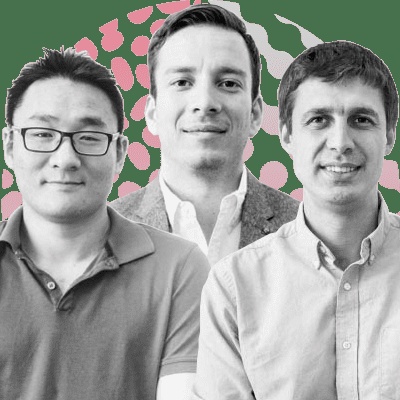
Ildar Shar went to a Starbucks meeting as a client. Vitaly Pecherskiy was there to discuss his account. The conversation soon wandered into technology, innovation and starting a business. Over the following five months, the relationship became a friendship, and the friendship acquired a rather consequential project: the two would leave their jobs and build a company together. Coffee has financed many imaginary enterprises. This one made it out of the café.
Pecherskiy tells that story about the beginnings of StackAdapt, the advertising technology company he built with Shar and Yang Han. It offers a useful opening to Shar’s career because the encounter began with an ordinary piece of work. There was an account to review, an industry to understand and, eventually, a problem that seemed too interesting to leave alone. The business came after the conversation.
By the start of 2024, Shar had spent a decade as StackAdapt’s CEO and was moving into a board role. That year he founded FirstPrinciples, a research organization concerned with AI and fundamental science. The scale of the question had changed considerably. Helping advertisers reach an audience was one assignment. Helping researchers understand the nature of reality was another. His next chapter would require a different kind of patience.
Three founders, one practical complaint
Before StackAdapt, Shar worked at Mindshare. Pecherskiy was at Xaxis, the programmatic trading arm of WPP. Their shared complaint was about the machinery of digital advertising: ads were failing to engage people, and the available approach left advertisers dissatisfied. They understood the problem from inside the agency world, where a promising campaign still had to survive the tools used to buy and distribute it.
The two initially started a service business introducing organizations to programmatic advertising. Their intention, however, was to build a product. Han brought another kind of experience: he had returned to Toronto after working on equity trading platforms in New York. The three founders combined advertising knowledge with software expertise. StackAdapt’s founding work began in 2013; its platform launched in 2014. Shar served as CEO through 2023.
Native advertising supplied the early focus. These were placements designed to fit into the surrounding website, rather than sit apart as conventional banners. Programmatic buying made those placements available through automated transactions. In November 2014, Shar was already writing about the differences between in-stream native ads and content discovery widgets, explaining the product’s territory to the people expected to buy it.
The early company also had the usual shortage of spare hands. Pecherskiy later recalled taking responsibility for graphic design because there were no resources for marketing materials. He was amused, in retrospect, by both the results and his confidence in them. It is a small, revealing detail about the enterprise Shar was running: before a startup has departments, it has colleagues volunteering for jobs they may eventually learn to delegate.
Fifteen seconds worth paying for
One early StackAdapt experiment put a precise number on a familiar frustration. In a May 2016 article shared by Shar, the company described attention-based pricing: advertisers would pay for engagement when someone spent at least 15 seconds with their content after clicking. The arrangement shifted attention toward whether a person actually read what the advertiser had made. A preview appearing on a screen could only answer part of that question.
The model also moved some risk to StackAdapt. A user who clicked and promptly left would not produce the same payable engagement. Pecherskiy explained the commercial logic in the announcement, including the need to price the attention appropriately. The appeal was easy to understand. Writing an article, paying to distribute it and discovering that nobody stayed to read it is an expensive way to acquire a very small audience.
Another early record is less glamorous and more concrete. In April 2015, FedDev Ontario listed $250,000 for StackAdapt alongside $500,000 from the MaRS Investment Accelerator Fund. The project was expected to create 11 jobs and maintain 16. Shar described the funding as support for hiring across sales, business development, marketing and engineering. The work of making a product commercially useful was already inseparable from building the team around it.
The post-click reading time that qualified as a payable engagement in StackAdapt’s attention-based model.
A growth chart, and a pile of cards
By November 2019, StackAdapt placed 21st in Deloitte’s Canadian Technology Fast 50, with reported revenue growth of 843 percent between 2015 and 2018. Shar credited its performance-focused product, investment in machine learning and AI, and ability to recruit and retain talent in Toronto. He also saw an advantage in arriving later: the company could build with newer technology without carrying an older product along with it.
The following year brought another Fast 50 appearance, ranked 23rd, with 754 percent revenue growth over the different window of 2016 to 2019. Those two percentages describe overlapping periods; they are not successive annual growth rates. Together, they show the company expanding during Shar’s tenure. The recurring explanation was product development, people and the technical foundation beneath the advertising platform.
In 2022, StackAdapt received Deloitte’s Enterprise Fast 15 recognition. In 2023, it appeared in the Enterprise-Industry Leaders category and earned a place in G2’s Best Software Awards for the fourth consecutive year. Shar’s comments kept returning to the product and its users. These distinctions belonged to the company and its team, with Shar leading the business through that period.
Beside those public milestones sits a more personal ritual. Shar posted that one of his favorite holiday activities was sending handwritten thank-you notes to customers. He enjoyed seeing the pile of cards grow each year. A software business can automate enormous amounts of work and still leave its CEO with a pen. The pile offers a pleasingly physical image of growth: more customers meant more people to thank.
His interest in words extended beyond correspondence. In 2014 he invited his LinkedIn community to contribute favorite quotations, explaining his affection for short, memorable thoughts that provide encouragement in difficult moments. The resulting collection mixed business, perseverance and humor. Alongside his articles on advertising formats and fundraising, it showed a founder interested in how people keep themselves going while the practical work continues.
Handing over the chair
On November 7, 2023, StackAdapt announced that Pecherskiy would become CEO on January 1, 2024. The incoming chief executive was already a co-founder and COO. Han remained CTO, while Shar would continue to support strategy on the board. The transition kept all three founders connected to the company while changing the way two of them contributed.
Shar publicly expressed confidence in Pecherskiy’s understanding of the business and his leadership. He also made clear that his own connection to StackAdapt would continue. The distinction mattered: relinquishing the daily executive job did not mean withdrawing from the organization he had helped build. His new seat came with an explicit commitment to its strategic direction.
By then, Shar described StackAdapt as a global team of more than 1,000 people. Its present company description lists more than 1,200 team members worldwide. That later figure belongs to StackAdapt’s continuing development, including the period under Pecherskiy. Shar’s decade as CEO is a substantial chapter in the business; the company’s story carries on beyond the handoff.
“remain deeply involved in StackAdapt’s strategic direction”
Ildar Shar · November 2023
The next question is considerably larger
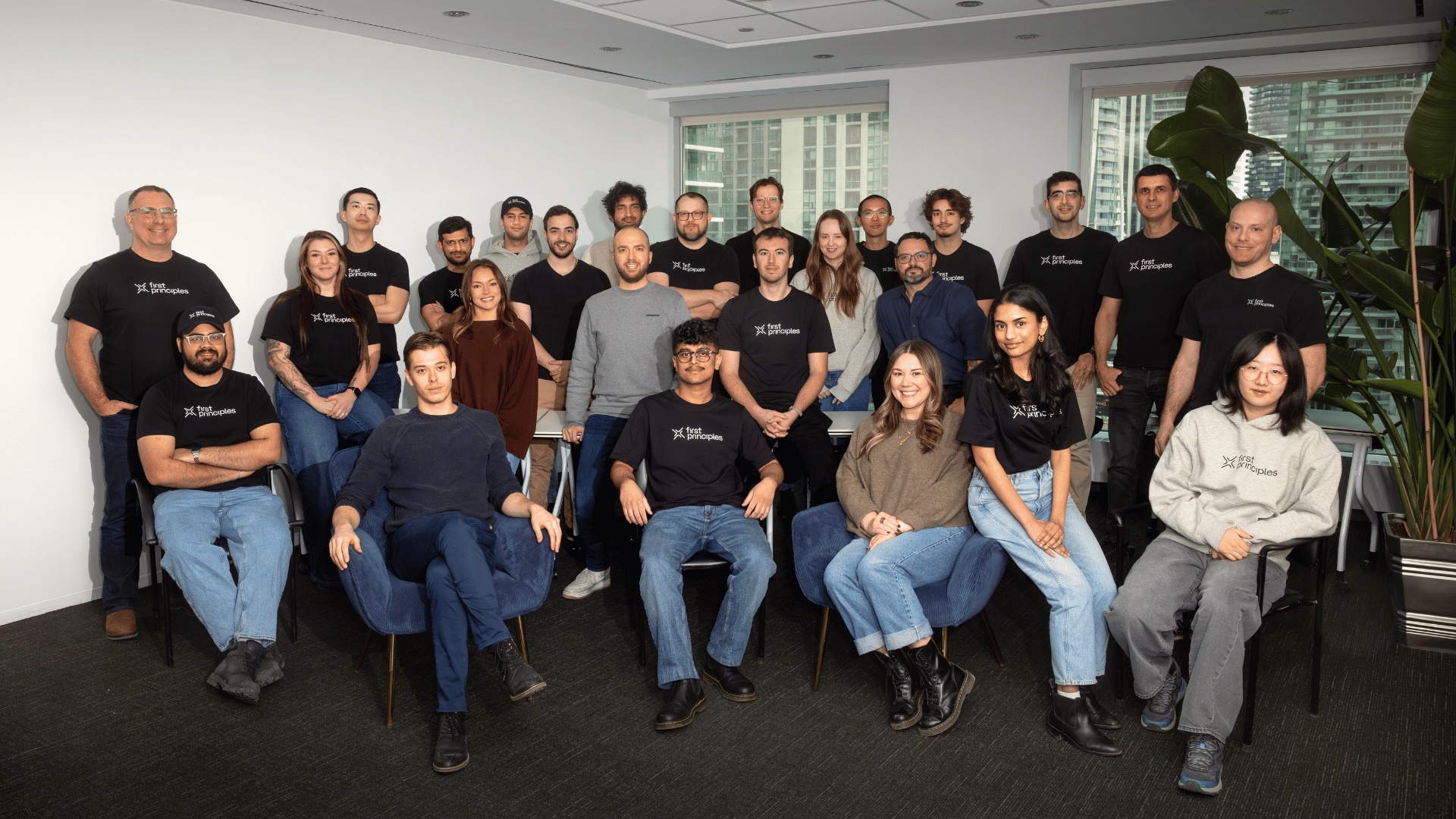
FirstPrinciples began in 2024. Its stated mission is to understand the fundamental nature of reality, and its organizational ambition combines the pace of a technology startup with the purpose of a nonprofit. Shar brought entrepreneurial experience to a lifelong curiosity about the universe. The organization brought together engineers, physicists and AI researchers to work on the process of scientific discovery.
The change also reached the kinds of people he was recruiting. An early public hiring announcement included a research director, science writer, software engineer, designer and partnerships role. Building a research organization involved scientific work, software and communication from the outset. A good question needs people who can investigate it, people who can build the tools and people who can make the work intelligible to others.
In September 2025, FirstPrinciples presented an early AI Physicist demonstration at the Open Science Fair at CERN. Matthias Le Dall and Nawar Ismail introduced the system. Shar highlighted the team’s conversations about openness and trust. The questions included access to computing resources, proper attribution and preserving scientific standards of evidence. Those are practical conditions for research, even when the research concerns fundamental questions.
The organization also opened its internal learning sessions to a wider audience through FirstPrinciples Talks. Shar described a series bringing together people working where AI and physics meet. This is a recognizable part of his second venture: assembling a community around a problem, rather than treating a software demonstration as the entire project. The conversations now extend well beyond an account review at Starbucks.
A deadline for curiosity
On January 5, 2026, FirstPrinciples announced a philanthropic grant from the John Templeton Foundation for its AI Physicist initiative. The organization set out a goal for 2035: an autonomous system capable of developing a theoretical framework that unifies, or goes beyond, quantum mechanics and general relativity through human and machine collaboration. That is a stated research ambition. Its announcement describes an early stage of work, with infrastructure and initial research modules established.
Theo Collaborator gives the project a more immediate working surface. FirstPrinciples describes a research environment in which users can plan an investigation, revise assumptions, inspect intermediate reasoning and rerun the parts that change. Its proposed benefit is continuity: a scientist should be able to alter a method without throwing away the whole workflow. The grand objective therefore comes with some decidedly everyday software concerns.
Those details make the connection to Shar’s earlier career easier to see. At StackAdapt, the founders began by noticing what made advertising work awkward. At FirstPrinciples, the team is examining what makes AI-assisted research awkward. The fields demand different evidence and expertise. In both, Shar has chosen to organize people around tools that are meant to make complex work easier to carry out.
It is an unusual progression, from the economics of audience attention to the foundations of physics. The scenes are wonderfully ordinary: a coffee meeting, an understaffed startup, a growing stack of thank-you cards, a planned leadership transition, a team gathered to discuss its next steps. Shar’s ambitions live among those scenes. The universe supplies the question. There are still people to hire, assumptions to inspect and meetings to attend.
- 2013Founding work begins at StackAdapt
- 2014The advertising platform launches
- 2024CEO handoff; FirstPrinciples begins
- 2035FirstPrinciples’ stated research target
Keep the conversation going
Explore Shar’s StackAdapt biography, his LinkedIn profile and Twitter/X account. Visit FirstPrinciples and its Theo Collaborator page.
For more of the story: Pecherskiy’s account of the founding meeting, the CEO transition announcement and the January 2026 grant announcement. Watch talks and interviews on the FirstPrinciples YouTube channel.