Consider the swimming pool. You get out feeling virtuous, then discover that your hair feels like something used to scrub a saucepan. Most people buy another conditioner. A South Korean company called MAKEMAKE built a business around the problem. In September 2026, igniteXL Ventures joined its financing round. The product was swim care. The investment question was how many other people had been tolerating the same small misery.
- Global pre-seed and seed investing in beauty, wellness and technology.
- A $10 million debut fund announced in 2021.
- A network connecting consumer insight with US and Korean industry expertise.
This is a useful introduction to Claire Chang’s firm. Beauty can sound like an undifferentiated aisle of jars. Look closer and it becomes a collection of unanswered questions: whose skin was considered, whose routine was studied, whose discomfort was too ordinary to attract attention? igniteXL’s argument is that those questions can produce businesses.
First came the introductions
Before she managed a fund, Chang helped entrepreneurs navigate unfamiliar territory. She had moved from Seoul to the United States at twelve. Her later work with Korean startups made the difficulties of entering another market tangible: language, relationships, the assumptions inside a pitch. An introduction could save a founder from spending months approaching the wrong person.
In 2018, her SVBeautyTech accelerator partnered with Draper University on a three-week program for nine companies. Its participants included skin-analysis, personalized skincare and fashion-search businesses. The program took 1% to 3% equity. Even then, the interesting work happened between disciplines: a promising prototype needed a customer, a distribution strategy and a convincing reason to exist.
“Beauty is about so much more than just the product.”Claire Chang, speaking about SVBeautyTech in 2018
The accelerator also exposed the limits of advice. Founders could leave better informed and remain underfunded. Chang’s later explanation was unusually plain: “They needed capital, context, and connections.” That observation changed her role. She began building a fund around the founders and markets she already understood.
The check had to come from somewhere
The debut fund, launched in 2020, announced a $10 million close in November 2021. Its backers included individuals from established venture firms, alongside cosmetics-industry companies Cosmax and CTK USA Holdings. These relationships mattered to the proposition: a beauty founder might need somebody who understood production as much as somebody who understood a financing spreadsheet.
Debut fund capital announced in November 2021.
Money for investments, distinct from the firm’s revenue.
Fundraising itself proved vulnerable first. After an initial close, the pandemic interrupted further fundraising; Chang deployed capital before resuming the raise. She also described the difficulty of persuading investors when her career did not resemble the customary finance-to-venture route. The experience gave the fund’s interest in unconventional founders a practical reference point.
The business is equity investing. Founders receive capital and support; the fund seeks returns from ownership in their companies. That creates a different relationship from buying consulting hours. A helpful meeting has to contribute, eventually, to a company worth owning. For founders, the price includes dilution and the obligations of taking outside investment.
A skincare company makes the map bigger
Uncover gives the cross-border thesis a face. The Kenya-founded skincare business serves African consumers, combining consumer knowledge with products developed through Korean expertise. In July 2024, igniteXL and EQ2 Ventures co-led its $1.4 million Seed II round. The financing was for Uncover as a whole, rather than the size of igniteXL’s individual check.
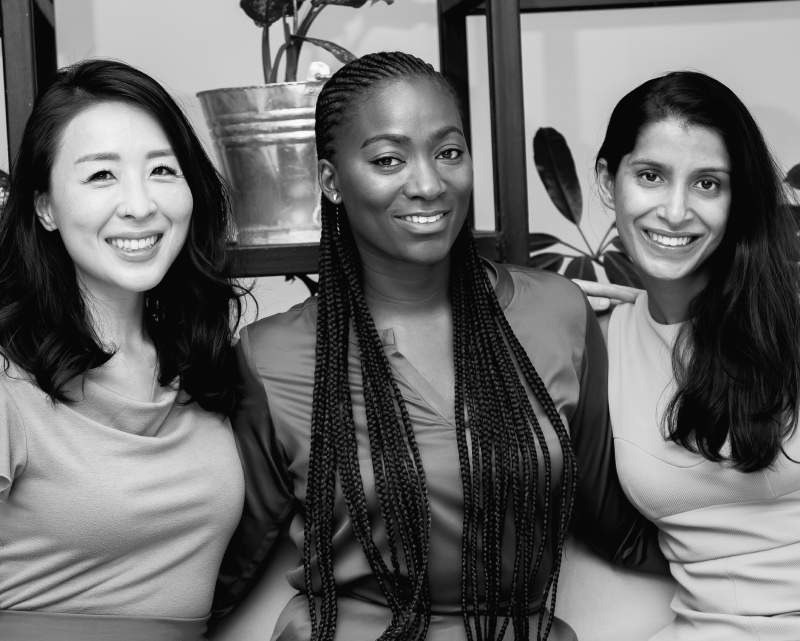
Co-investor Altree Capital reported in March 2024 that Uncover had passed a $1 million revenue run rate and had a digital audience above 160,000. Those are dated operating signals, rather than a verdict on investment returns. They nevertheless make the thesis testable: an overlooked customer group has to become people who actually buy.
Elsewhere in the portfolio, Bubble addresses young skincare consumers, while Musely delivers prescription skincare through telehealth. The range explains the firm’s position between consumer investing and health. It can consider a brand, a delivery model or a technical improvement, provided the connection to how people care for themselves is persuasive.
From the lab to the shelf
The 2026 K-Beauty to Global cohort makes the offer more concrete. Its published plan called for up to ten companies, each receiving $100,000 to $150,000 in exchange for equity. The curriculum addressed retail, cash flow and international expansion. Applications for that spring cohort are closed; the program page directs other founders toward general investment review.
problem
evidence
production
distribution
A public account of one session stressed formula ownership, packaging, regulation and supply chains. The implication for founders is wonderfully unglamorous: design these decisions together. A product can photograph beautifully and still leave its maker exposed if the formula belongs elsewhere or the economics collapse when a retailer places an order.
The small problem is the starting point
There is something founders can copy here without raising a fund. Start with knowledge earned close to a customer. Identify exactly which relationship would remove the next obstacle. Then ask whether the product’s performance and economics support expansion. A network becomes useful when somebody can explain what the next introduction is supposed to accomplish.
The conditions matter. This approach depends on industry connections that solve actual operating problems. A company outside beauty and wellness would need a different network. A brand without repeat demand cannot borrow it from an investor. And crossing a border adds decisions about compliance, inventory and positioning that enthusiasm alone cannot settle.
Which brings us back to the pool. MAKEMAKE’s September round totaled KRW 3 billion, with Amorepacific, Signite and Bluepoint Partners also participating. A swimmer’s irritated scalp had become a financing proposition. That is the habit of attention igniteXL offers: stay with an everyday complaint long enough to ask whether a better business could begin there.