Somewhere in a law office, a perfectly good clause is being typed again. The wording already exists. A colleague used it last week. But finding the right version, knowing who changed it, and putting it into today’s document takes work. That small administrative nuisance is a useful way into iFour Technolab’s business. The company builds software for the things that happen between knowing what to do and actually getting it done.
- The work: custom business applications, Microsoft Office add-ins, cloud services, analytics and AI integration.
- The buyers: businesses with particular workflows, plus teams that need extra development capacity.
- The useful idea: improve the job inside a familiar tool before asking everyone to learn another one.
The clause hiding in plain sight
For ElderDocx, which serves attorneys, iFour developed a Microsoft Word add-in for assembling and managing legal clauses. Its published case study describes a central library, an editor, reusable clauses and a history of changes. Lawyers could work with those components within Word. The problem was specific: drafting knowledge existed, but keeping it organized and reusable was difficult.
The architecture supplies an interesting wrinkle. This Microsoft-facing application used Angular and the Office JavaScript API, with TypeScript, AWS and Auth0 behind it. A familiar desktop workspace can sit on top of a much less familiar collection of services. The interface tells only part of the story.
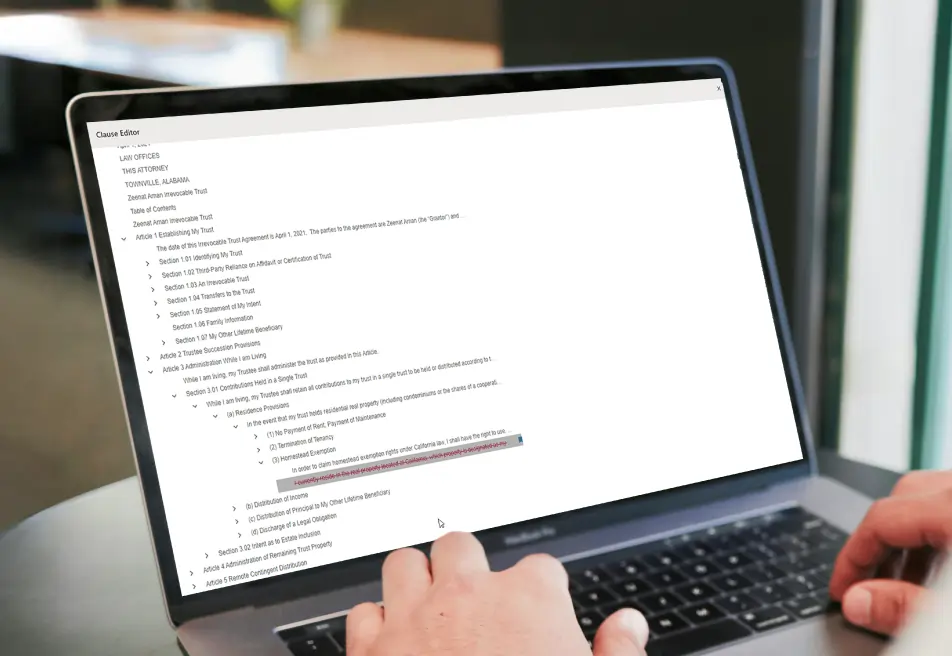
That is the thread worth following through iFour’s offerings. Its service menu is broad, covering .NET applications, web and mobile development, Azure, Power BI and automation. The Office work gives that breadth a concrete purpose: connect the software people open with the rules and information their business needs.
Excel has a memory problem
Consider a US consulting firm in another iFour case study. Analysts depended on Excel, but manually tracking files and comparing versions became a bottleneck as the business grew. Formula tracing took time. Changes were difficult to inspect. The spreadsheet could calculate; the surrounding process struggled to explain what had happened.
iFour’s answer was SpeedCell, an Excel add-in with automatic archiving, file comparisons and visualizations of cell dependencies. It also included license administration and access controls. These details matter because calculation, permission and accountability are different jobs. Putting them together is the development assignment.
The transferable lesson is straightforward. Before replacing a tool, identify the missing operation around it. Is the problem calculation, revision history, approval or access? Each answer suggests a different scope of work. Calling all four “an Excel problem” makes the brief less useful.
The payslip that runs backwards
Australian payroll offered a different puzzle. The ordinary calculation begins with gross earnings and arrives at take-home pay. iFour describes a client whose users needed to begin with the net amount and work backwards. Manual spreadsheets and systems designed for the other direction made that awkward.
The resulting application calculated gross pay from net pay, supported different pay frequencies and addressed changing tax-year rules. Its published stack included React, Node.js and React Native. This was a web-and-mobile assignment shaped by a local accounting requirement, rather than an Office extension.
Trust also shaped the buying process. In a separate company-published testimonial, Australian bookkeeping executive Sam Lentini described moving his search from the open internet into his BNI business network, where he received an introduction to iFour. That account captures a practical buying consideration: a referral can help a buyer choose whom to work with.
The bill depends on who owns the work
iFour occupies the services side of the software market. Businesses can commission development or hire dedicated people and hourly capacity. A named application in its portfolio is evidence of client work; it should not automatically be read as an iFour subscription product available off the shelf.
Clutch’s listed minimum project size.
Its listed hourly rate is below $25.
Actual reviewed engagements vary. A higher-education client reported about $5,000 in spending, while Clutch identifies $50,000-$199,999 as the most common project band across ten reviews. Those figures describe different scopes and historical engagements. They cannot price a fresh brief.
The education client also handled business analysis, project management and documentation while iFour supplied development staff. That division matters. Hiring engineers does not settle who defines the requirements. Clutch’s review synthesis also flags room for stronger visual design. Buyers wanting a distinctive consumer interface should review design work as carefully as technical credentials.
The competitive question is therefore more specific than whether iFour can write code. An internal team brings everyday access to users; a packaged application brings an existing feature set. An outside development partner offers capacity and customization, but needs a clear handoff. For a Microsoft-heavy organization, iFour’s repeated work with Office extensions and business applications is a relevant starting point for that conversation. The buyer still has to establish the acceptance criteria, the data boundaries and who will maintain the result after launch.
The clearest fit is a business with an identifiable workflow, access to knowledgeable users and someone able to make decisions. If a standard product already handles the job, or nobody can own the requirements, custom development becomes harder to justify.
Let them into the room
Founded in 2013 by Bharat Parmar, Vinod Satapara and Ajay Patel, iFour brings together commercial, Microsoft-stack and delivery experience. Its team biographies describe those complementary backgrounds. The company now presents itself as a Microsoft Solutions Partner, with services extending into AI and cloud consulting.
Its August 2026 hackathon gives that positioning a human scale. The company reported 45 employees across nine teams, including marketing, sales and technical participants. Projects ranged from physiotherapy coordination to food rescue and recruitment screening. The three announced cash prizes totaled ₹60,000.
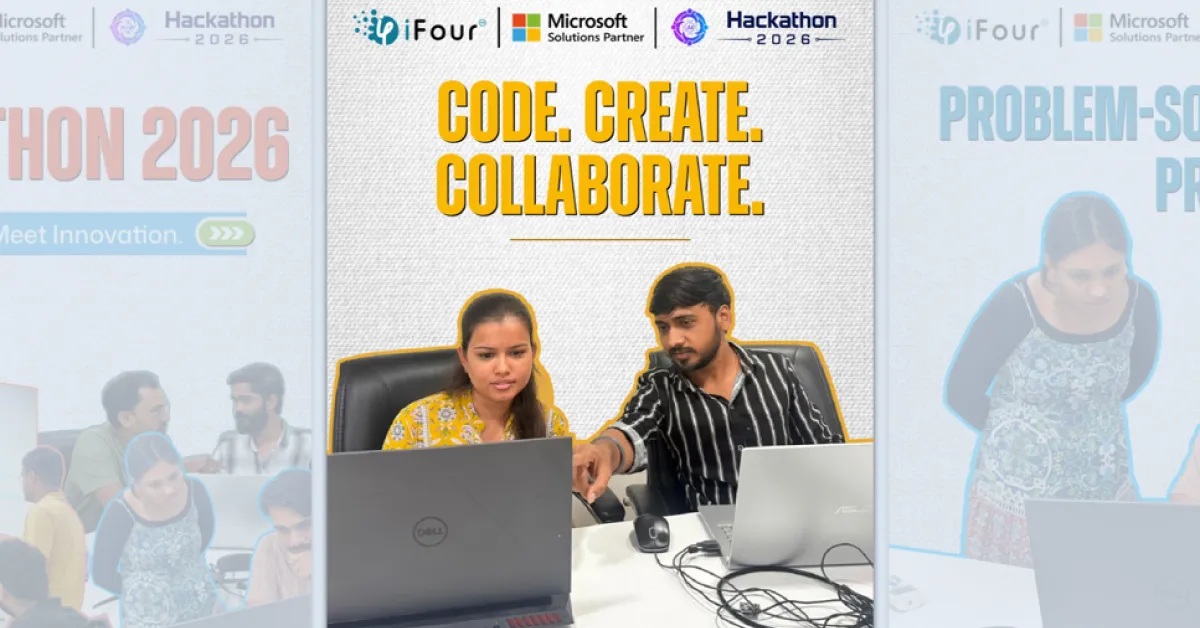
“A Hackathon should not end when the winners are announced.”
Ajay Patel / Director / August 2026
A prototype still needs testing, ownership and maintenance before it becomes dependable software. But inviting the person who understands the daily irritation into the build is a sensible beginning. The lawyer hunting a clause and the bookkeeper reversing a calculation already know where the work gets stuck. Listening closely gives a software project somewhere useful to start.
The work, in their own words.