In Ecuador’s Amazon, an ingredient can have everything going for it except a buyer. Consider macambo, a relative of cacao. Knowing that something grows in a forest does not tell you how to turn it into a dependable income. Someone must develop a product, test demand, connect producers to kitchens and persuade the next buyer to return. For a conventional investor, that can look like an inconvenient amount of preparation.
- IDB Lab backs early ventures and the markets around them.
- Its tools include equity, loans, grants and practical connections.
- The hard part is adoption: getting people to buy, use and repeat.
This is the territory occupied by IDB Lab, the innovation and venture arm of the Inter-American Development Bank Group. Its business is helping entrepreneurial solutions reach people and places that investment markets underserve. The ambition sounds abstract. The work can be as concrete as finding a restaurant willing to put an unfamiliar ingredient on a menu.
A forest is not a distribution channel
The Canopy Bridge Food Lab, developed through EcoDecisión, combines culinary research, product development and relationships with chefs and restaurants. The project described in May 2026 has a total investment of $1 million, including $500,000 from IDB Lab. It aims to support 600 small producers in Napo and Pastaza and strengthen 10 bioenterprises. Those are intended beneficiaries, rather than a report of completed results.
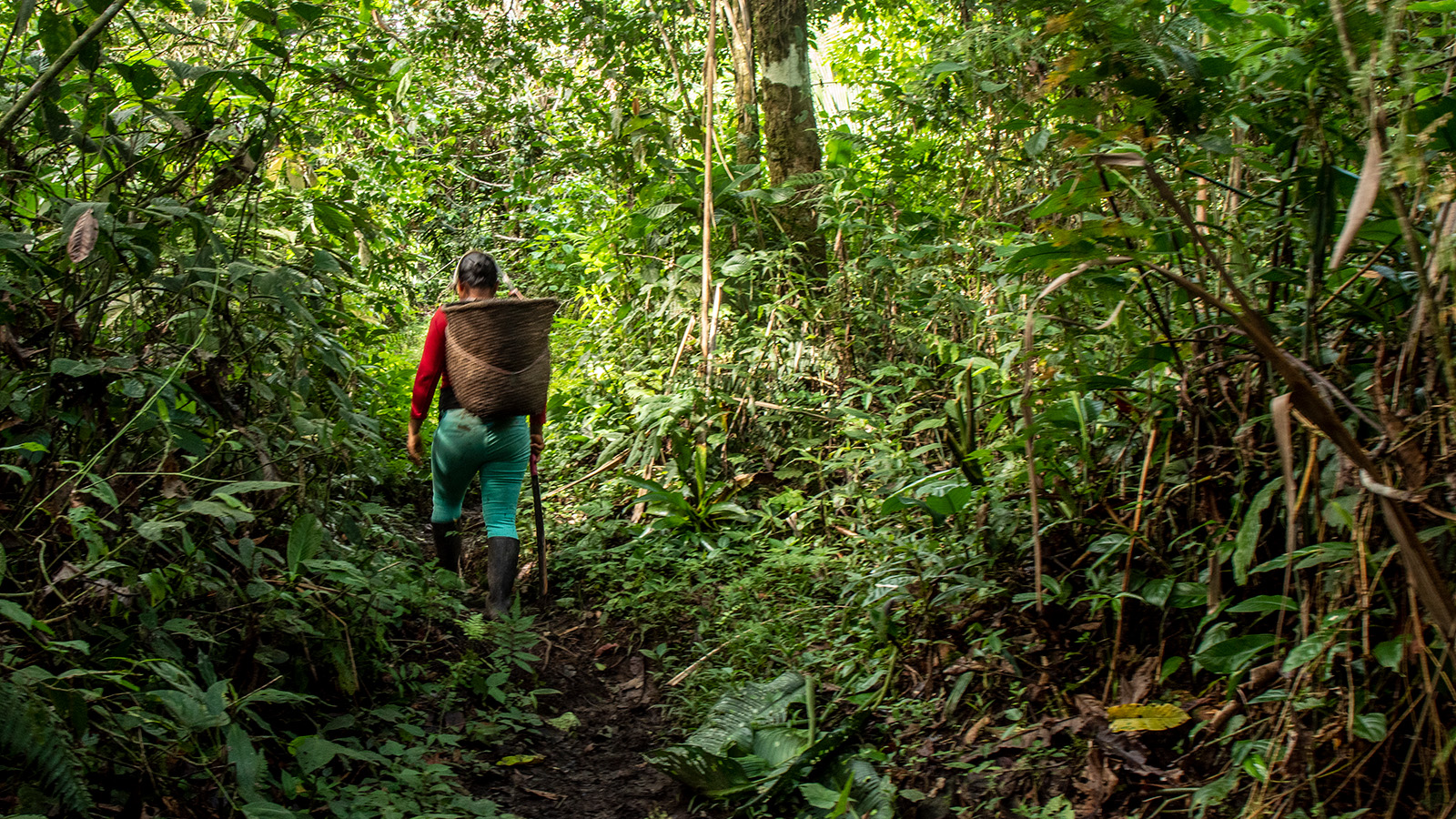
The distinction matters. A crop can be valuable without having an established market. Canopy Bridge’s task is to build the links between the two. Its funding includes support through the Amazon Bioeconomy Fund, financed by the Green Climate Fund. Here, innovation includes the patient commercial work that makes an unfamiliar product easier to buy.
The customer is not always the beneficiary
IDB Lab works with startups, venture fund managers, innovative businesses and organizations that support entrepreneurship. Their customers might be farmers, small businesses, patients or local governments. The Lab’s intended beneficiaries include people living in poverty or vulnerability. These groups overlap, but treating them as interchangeable would obscure the central question: who actually gains when the venture grows?
Its place inside the IDB Group gives it an unusual set of neighbors. The IDB works with the public sector; IDB Invest supports private-sector development. The Lab tests earlier ideas and business models, with a mandate for greater risk tolerance. Commercial venture investors and grantmakers offer alternatives, and can also become partners. The Lab can work on both a business and the conditions surrounding it.
“financing, knowledge, and connections”
IDB Lab’s description of its offer
Choose the money to match the problem
A founder encounters several doors. Direct equity brings co-investment alongside experienced investors. Debt suits businesses with the traction and finances to support repayment. Venture-fund commitments reach companies through local investment teams. Ecosystem projects tackle barriers shared by many ventures. Calling all of this “startup funding” misses why the instruments differ.
This is development finance with investment discipline. Equity carries ownership economics; loans carry repayment obligations. Grants can support work that lacks an immediate commercial return. Donor contributions, IDB resources and returns from reimbursable investments underpin the institution’s funding approach. A founder needs to explain both the development benefit and why the proposed financial instrument fits.
The $1.5 million misunderstanding
There is a revealing counterexample. In 2018, IDB Lab invested $1.5 million in Argentina’s S4 Agtech. The company used satellite information and risk algorithms to develop agricultural climate hedging products. Farmers could receive compensation when an index crossed a threshold. The proposition addressed a real problem: weather could destroy a season’s economics.
But customers struggled to understand the complex offer. Regulators also took time to approve it in Argentina and Brazil. Limited demand, approval delays and then the pandemic squeezed sales. S4 discontinued operations. The IDB’s Development Effectiveness Overview 2024 reports that the Lab and other venture investors recovered none of their investments.
The early obstacle was adoption. A technically sophisticated team had underestimated how much explanation and behavioral change the product required. The practical lesson is wonderfully unglamorous: test whether customers understand what they are buying before treating distribution as a solved problem.
Who pays for the in-between work?
The institution has faced scrutiny of its own machinery. A 2021 independent evaluation identified weaknesses in monitoring, project-cost documentation and systematic learning. Those findings concerned the period evaluated; they should not become a timeless verdict. They do explain why counting approved projects is an incomplete measure of success.
A 2023 study examined 39 IDB Lab projects and drew on approximately 100 interviews. Its diagnosis centered on intermediation: the planning, coordination and investment preparation that help a solution grow. It recommended clearer definitions of scale, measures suited to a solution’s maturity and more support for that connecting work. A successful pilot still needs someone to organize what happens next.
In March 2024, member countries approved a new operating model allowing IDB Lab to seek $400 million in funding. The proposal emphasized bringing actors and resources together around development problems. That authorization was a funding framework, not evidence that every dollar had arrived or every intended outcome had followed.
Build the route to the next buyer
The approach is visible in 2026. In March, the Lab approved plans to invest up to $2.5 million in Innogen Delta I, a Central America-focused venture fund. In July, it renewed a five-year partnership with Fondo de Fondos México around investment opportunities and institutional expertise. Local relationships are part of the financing infrastructure.

For entrepreneurs, the useful question is specific: which obstacle would this partner help remove? Capital, customer understanding, regulation and market access require different work. The model depends on capable partners, credible demand and enough time to learn. Back in the Amazon, the test remains straightforward: can the next sale make the producer’s work more worthwhile?