A climate startup can have an ingenious technology and still face a wonderfully ordinary problem: somebody has to buy it. The scientist understands the chemistry. The investor understands the financing. The prospective customer understands why changing a production line is a headache. Getting those three people to agree on the next step is a business in itself. Vectors Capital has built its investment approach around that awkward meeting.
- Early-stage capital for climate technology and the AI-energy economy.
- Corporate introductions and technical expertise alongside investment.
- Accelerator, investor bootcamp and finance-lab programs tackle different parts of deployment.
The firm backs companies working on physical systems: energy, fuels, materials, manufacturing and the infrastructure behind computation. Its proposition is practical. Help a founder reach a commercial milestone that makes the next investment make sense. For someone building a cleaner industrial process, that can mean finding a prospective pilot customer as well as finding money.
First, learn how things leave the lab
Jing (Jane) Ge founded Vectors Angel in 2019. The venture fund followed in 2022, according to her Princeton Energy Conference biography. That distinction matters: the business grew out of an investing network, and its current portfolio still separates direct fund investments from earlier angel-group bets.
Ge’s background helps explain the emphasis. She worked on climate policy and commercialization at Lawrence Berkeley National Laboratory and UC Berkeley, including university research commercialization. Utilities, renewable-energy development and venture investing also feature in her biography. This is experience with the institutions a climate invention must pass through before it becomes an operating business.

Vectors’ fellowship extends that technical habit. Participants work on sourcing, research and diligence; its public roster counts 78 fellows across 15 cohorts since 2019. For the deep-tech diligence track, the program asks for a relevant PhD. Evaluating a laboratory claim is homework with financial consequences.
AI has a power bill
Today, Vectors puts AI and energy at the center of its public thesis. AI can help make industrial systems cleaner and cheaper. It also needs computing equipment, cooling and electricity. The firm follows both directions, investing across the technology and the resources required to operate it.
“We invest on both sides of that exchange”
Vectors Capital, on AI and sustainability
Conceptual map of the published thesis; no allocation percentages implied.
The selected portfolio makes the idea tangible. Terra Fusion works on fusion energy. GoPower addresses EV charging in multifamily housing. Emvolon develops fuels and chemicals from waste methane. 2DaLoop connects recyclers and manufacturers through e-waste intelligence. These businesses have different customers and technical risks. What connects them is the need to make physical infrastructure work economically.
Nine weeks to sharpen the next step
The 2025 Net Zero - AI Accelerator translated that approach into a nine-week San Francisco program. Founders received group sessions, individual mentoring, AWS cloud credits and deployment help, with a Demo Day at the end. Its corporate network, described by Vectors as more than 70 organizations, included Amazon, Shell Ventures and United Airlines.
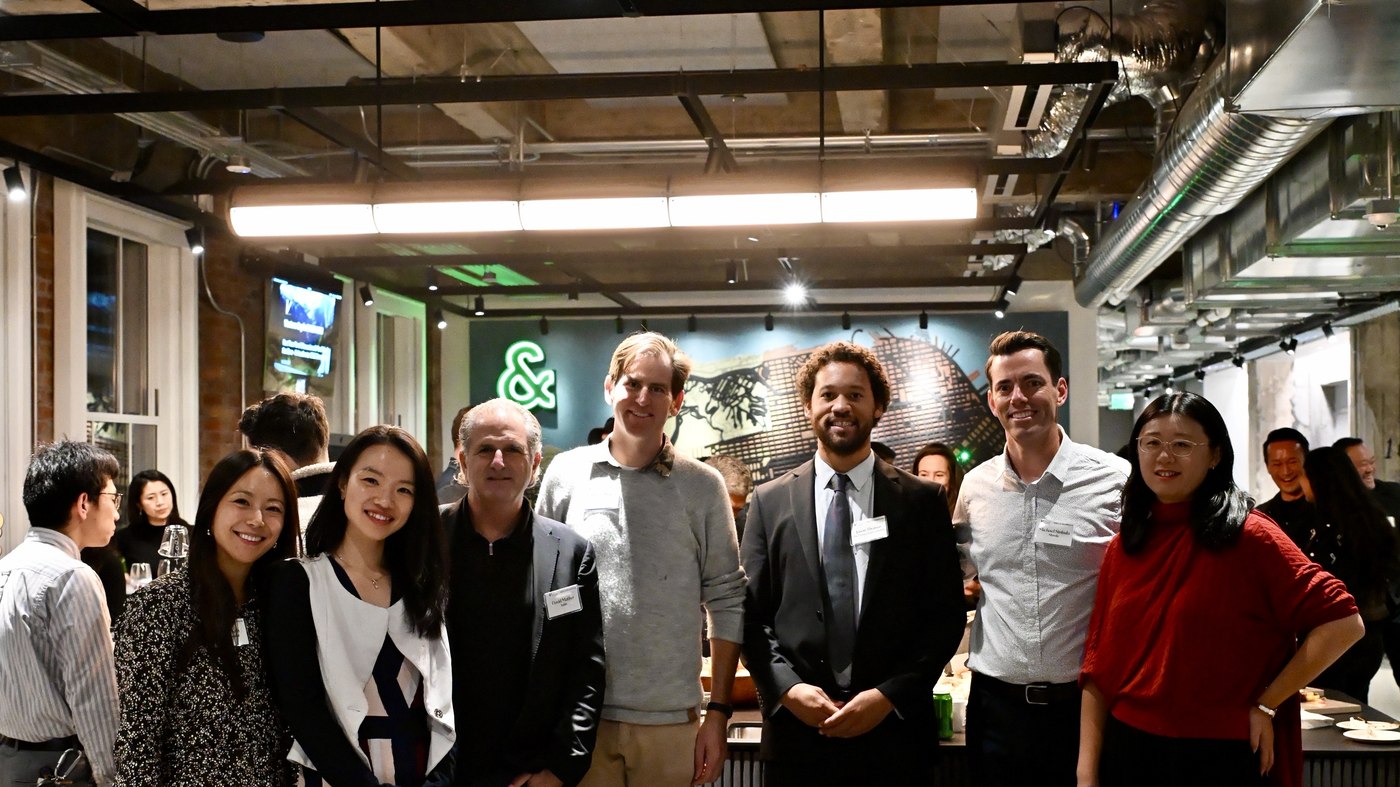
The admission criteria are more revealing than the networking pitch. The program suited teams preparing a seed round within six to twelve months and already showing customer interest: a letter of intent, customer emails or a funded pilot. AI had to be a meaningful part of the decarbonization solution. Founders outside the United States could participate.
Those requirements set useful boundaries. A research project without a customer hypothesis would need earlier work. A startup using AI as decoration would miss the point. And an introduction is only an opening: the buyer still has to approve a test, commit resources and decide whether the economics work.
The investor needs training, too
Vectors also works on the other side of the table. Its Climate Investment Bootcamp serves family offices, foundations, corporates, asset managers and individual investors. The most recent listed edition, in Hong Kong in 2025, used five modules covering investing basics, legal structure, policy, markets and live case studies. Participants worked toward an investment recommendation.
There is a coherent business logic here. A founder needs investors who understand the risk being financed. An investor needs more than enthusiasm about emissions. Vectors’ fund platform connects those constituencies, while portfolio support helps companies pursue commercialization. Beyond The Billion lists a $20 million fund target, a measure of intended scale rather than operating revenue.
A first cheque cannot finance everything
Catalyze Climate, launched by Vectors in 2024, addresses financing beyond an individual venture deal. Its workstreams cover peer learning, blended-finance incubation and capital-structure case studies. One published topic examines insurance for first-of-a-kind technology deployment, where unfamiliar risks and high upfront costs can deter financing.
That gives Vectors a particular place among climate investors: an early-stage fund with programs for founders, allocators and the people structuring deployment capital. Other specialists, including Climactic and Lowercarbon Capital, also invest in decarbonization. Vectors’ stated distinction lies in organizing corporate access and financing expertise around the company-building process. Its usefulness depends on those relationships producing substantive work.
Bring the buyer into the plan
The lesson a founder can borrow is straightforward. Define the next commercial milestone before planning the next funding round. Identify whose budget would pay for the solution. Collect evidence that this person cares. Then ask what technical result would make a pilot possible. These are deductions from Vectors’ program design, not a formula promising investment.
For researchers and operators, the firm offers expert and fellowship routes into that evaluation. Winter 2027 fellowship applications are listed as open until November 1, 2026. For founders, its Getting Involved page accepts pitches and interest in future accelerator cohorts. The useful starting point is a specific problem, a credible solution and a reason a customer might say yes.
Vectors Capital · Selected portfolio · Get involved · LinkedIn · X · Research & writing · Catalyze Climate