A lender in Maine can know a great deal about Maine. That is an advantage until too much of its future depends on the same patch of ground. Ian Lampl kept returning to this problem: an institution could understand its borrowers, do its work carefully, and still accumulate a loan book with too few ways out. The familiarity that helped it make loans also narrowed its choices.
Lampl had seen the problem from Treasury, where he helped implement the Troubled Asset Relief Program. In 2013, he co-founded LoanStreet. His proposition was practical: give smaller financial institutions the means to share loans and the machinery to keep those arrangements working. A community lender should be able to serve its town without making every financial bet on its town.
There is a certain comic inconvenience in choosing this kind of business. The exciting moment, when two parties agree to a transaction, is followed by years of reporting, payments, questions and decisions. Lampl chose to spend his time there. His education began in electrical engineering, and his career passed through commercial lending law. Both disciplines deal with systems whose individual parts have to work together.
A lawyer with an engineer’s education
At Princeton, Lampl earned a B.S.E. in Electrical Engineering and a Certificate in Applications of Computing. He went on to the University of Chicago Law School, graduating with honors from both institutions. His legal education included publication in the University of Chicago Law Review. The title of his 2005 comment, Establishing Rules for Resolving Markman Failures, suggests that even his student writing was comfortable with a difficult procedural question.
He then practiced at Cravath, Swaine & Moore, working on commercial loan syndications and securities offerings. Syndication lets multiple lenders participate in financing. The agreement brings institutions together; its terms govern what they will owe one another afterward. It is a useful place to learn how much coordination hides inside an apparently simple promise to lend money.
At Treasury’s Office of Financial Stability, Lampl became Deputy Chief Counsel. His work included the Community Development Capital Initiative, which brought qualifying credit unions into TARP. He also helped with transactions involving the government’s investments in GM, AIG and Citigroup. Treasury recognized his work with the Secretary’s honor award for exemplary public service.
That experience put large financial transactions and small institutional constraints within the same field of view. A national program had to function across organizations with very different resources. The practical question followed him into entrepreneurship: how could a smaller lender gain capabilities that its own staff and balance sheet could not easily provide?
- PrincetonElectrical engineering
and computing - CravathCommercial lending
and securities - U.S. TreasuryTARP and community
financial institutions - 2013LoanStreet
co-founded
The hometown problem
Lampl’s example of a Maine lender makes the issue easy to picture. Local expertise helps an institution find and assess borrowers. Specialization in one kind of lending can make its operations efficient. Put those strengths together, though, and the resulting portfolio may depend heavily on one geography and one product. A downturn can arrive through both doors.
A large bank has more ways to spread that exposure. A smaller institution needs access to other lenders and assets without opening branches everywhere it wants diversification. Loan participations offer one route: institutions can share interests in loans, allowing an originating lender to distribute some exposure and another institution to acquire it.
“They needed a way to effectively manage their balance sheets, and that covers geography, product and duration,” Lampl said.
The bond market offered a useful comparison. Standard agreements and established administrative arrangements make repeat transactions possible. LoanStreet applied that interest in standardization to lending, pairing a marketplace with tools for managing what had been traded. Matching counterparties mattered. So did reducing the work required to transact with them again.
its local borrower.
take an interest.
continue over time.
The distinction has consequences for a borrower who may never hear of LoanStreet. If the local lender can distribute part of an exposure, it may have more capacity to keep lending. The infrastructure operates behind the relationship the borrower already knows. It gives that relationship a larger financial neighborhood.
Four years is a long sales call
Lampl started LoanStreet with co-founder Chris Wu. The business had a problem to solve and a case for solving it. Persuading institutions to act took longer. Early sales focused on acquiring customers individually. After roughly a year without growth, the approach changed toward partnerships with corporate credit unions, which provide services to other credit unions.
That route let LoanStreet reach groups of institutions through organizations that already had relationships with them. It also acknowledged something that a convincing product demonstration cannot settle: the buyer must be ready to change a routine. LoanStreet took about four years to gain traction. Financial infrastructure has a way of making a founder’s calendar look optimistic.
Lampl’s recollection of the early market supplies a wonderfully literal example. Some prospective customers asked for a CD of the software. LoanStreet was built on Amazon Web Services. Customers who associated Amazon with books had to be brought along to the idea of hosting financial software there. The product had arrived before the buying habit.
He also remembers two prospective deals falling apart on the same day, after consuming a quarter’s attention. Late that night, an invitation arrived to present at a trade association’s best-ideas competition. He and his wife had been discussing whether the business could continue. Someone else’s interest gave them a reason to keep going.
“It felt like a sign from God.”
Ian Lampl, recalling the late-night invitation
The invitation did not turn itself into a customer contract. What it supplied was enough encouragement to continue the work. That is a smaller event than a financing announcement, and a more recognizable one for anyone who has had to decide whether tomorrow still deserves another attempt.
A loan has a long memory
LoanStreet’s commercial lending work shows why Lampl stayed interested in administration. A business loan can involve draw requests, changing rates, covenants and periodic credit reviews. Add participating institutions, and information must move between the borrower, the originating lender, internal teams and investors. A record that is accurate in one office can still arrive late in another.
By 2020, Lampl was describing an integrated approach covering those workflows, including online draw requests and covenant compliance. The argument was about continuity: avoiding repeated data entry and keeping information available across parties as a loan moved through its life. A transaction has a closing date. The work attached to it keeps an entirely different calendar.
This explains the range of LoanStreet’s business today: marketplace, reporting, analytics and commercial servicing. Each addresses a different obligation around a loan. The company reports more than 1,300 registered financial institutions on its platform. That figure describes the company’s stated network; it should not be mistaken for a measure of any individual institution’s results.
Registered financial institutions on LoanStreet’s platform, according to the company.
For Lampl, the continuing work also supplies a test of a product’s usefulness. Can an institution repeat the process? Can it add participants without multiplying confusion? Does information remain usable after the original deal team has moved on? These are unglamorous questions with a long useful life.
The number behind the interest rate
The company’s move into broader analytics followed a specific customer request. Institutions wanted the tools used to examine participations applied to their entire loan book. In January 2024, LoanStreet extended its Performance Analytics suite accordingly, covering loans institutions originated themselves and loans acquired outright.
The measures included returns, prepayments, charge-offs and reserve calculations. They force attention beyond the stated interest rate. A loan can carry an appealing rate and still deliver a different result once acquisition costs, expenses, repayment timing and losses are considered. The rate is visible at the beginning. The return emerges over time.
Lampl has continued pressing that point. In his 2026 discussion with Mark Ritter, he argued that credit unions can give too little attention to prepayment risk and too much to charge-offs. An early repayment sounds like agreeable news until the institution has to consider the income that ends with it. His emphasis is on examining the whole return.
In March 2026, LoanStreet announced an integration with Experian to bring consumer credit data and predictive analytics into the platform. Its stated uses included continuing portfolio monitoring and risk assessment. The announcement extends a familiar concern in Lampl’s work: institutions need ways to examine exposures after acquiring them, while there is still time to make informed decisions.
The room he kept coming back to
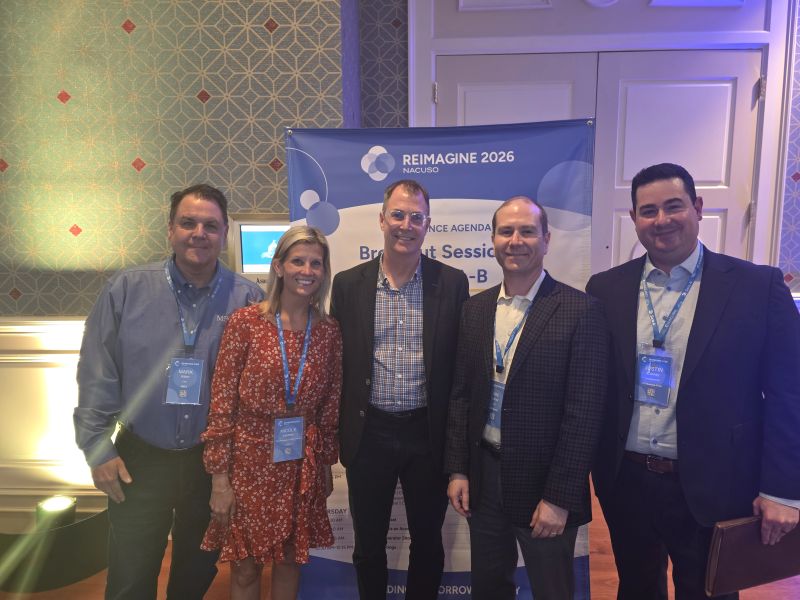
Lampl’s public working life still includes these rooms: credit union meetings, banking discussions and conversations with other founders. At NACUSO’s Reimagine 2026 event, he joined a business-lending session with Justin Conrey, Todd Mason and Nicole Haverly. Better software still has to meet the people who will use it.
His friendship with fellow founder Mike Taormina began at CommonBond happy hours around 2013. Over the years, the two have exchanged advice about their businesses and fundraising. Lampl values the chance to speak candidly about setbacks. A founder can benefit from a conversation that does not require everything to be going splendidly.
He now describes LoanStreet serving institutions in the United States, Canada and Europe. The geography has widened considerably from the local lending problem that helped start the business. The underlying ambition remains recognizable: give lenders more ways to manage what they own, connect with one another and keep serving their customers.
A hometown is a good place to understand a borrower. Lampl has spent more than a decade building ways for the lender’s options to extend beyond it.