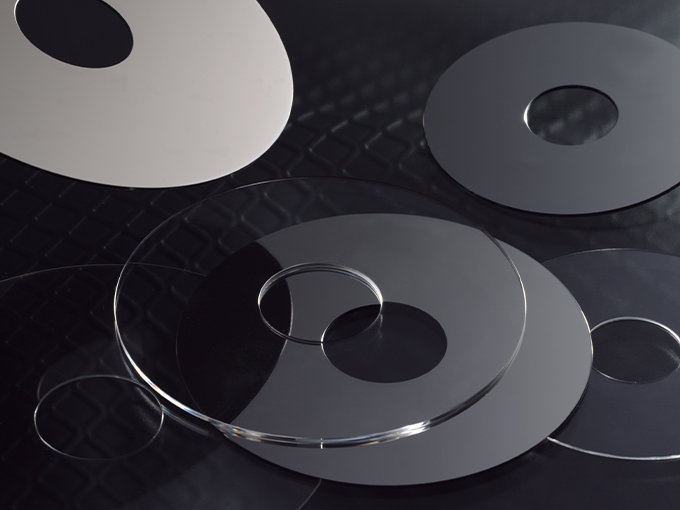
The glass disk looks like something left behind after a magician’s act: a transparent circle, a hole in the middle, almost nothing to notice. Put it inside a hard drive, however, and its thickness, stiffness and surface become consequential. HOYA makes these substrates. It also makes the lenses people wear to read about the data centers where those drives work. An improbable combination, until you ask what both customers are buying: exacting control over a material.
- Eye care supplies most of HOYA’s revenue; precision electronics supplies another substantial business.
- Its customers include opticians, surgeons and manufacturers. Each needs a different kind of reliability.
- Management is expanding selected factories while reconsidering the endoscope business.
The factory before the fame
Brothers Shoichi and Shigeru Yamanaka started an optical-glass plant in Hoya, Tokyo, in 1941. The place gave the company its name. Crystal products followed in 1945; eyeglass-lens production began in 1962. Later came semiconductor substrates, cataract implants and HDD glass disks. The sequence matters. HOYA accumulated ways of making difficult materials useful, then found different buyers for that competence.
It also stopped doing things. Crystal ended in 2009. PENTAX, which merged into HOYA in 2008, brought both medical and imaging operations; the imaging business went to Ricoh in 2011. Anyone treating the familiar PENTAX camera name as a map of today’s HOYA will take a wrong turn. The medical business followed a separate path.
The professional is the customer
Consider the distance between wanting better vision and buying a lens. A consumer needs an examination, a prescription, a fitting and someone to explain the options. HOYA sells into that professional chain. Its corporate website describes more than 64,000 active Vision Care accounts across 52 countries. Behind the wearer stands an optician or retailer who must trust the design and the delivery.
The products address different moments in a life. Progressive lenses serve people who need help across viewing distances. MiYOSMART, developed with Hong Kong Polytechnic University and launched in selected markets in 2018, addresses childhood myopia progression. A published two-year randomized trial recruited 183 Hong Kong Chinese children aged eight to thirteen. It reported 52% less myopia progression and 62% less axial elongation with DIMS lenses than with standard single-vision lenses. Those are group results under study conditions, not a promise for every child.
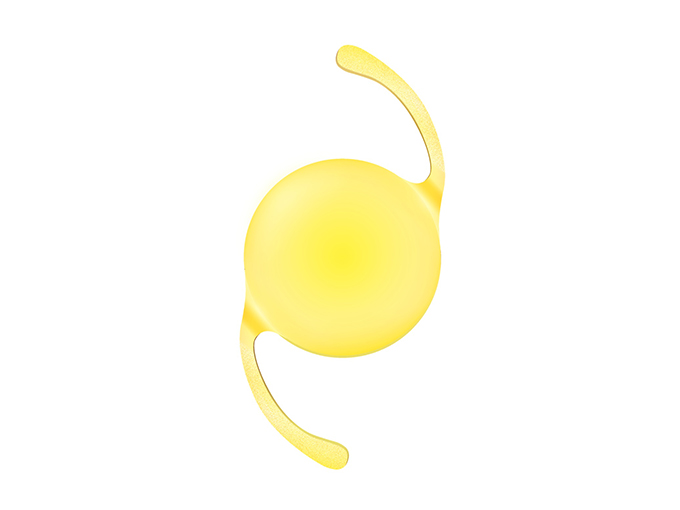
HOYA Surgical Optics supplies cataract lenses and injection systems to the medical channel. PENTAX Medical supplies flexible endoscopes used in diagnosis and treatment. Japan’s Eyecity adds a different relationship: direct contact-lens retail, including private-label products and subscriptions. There is no single checkout that explains this company. Its business model follows the buyer.
The practical distinction is the kind of decision each buyer makes. A wearer compares comfort and price; an optician considers fitting and support; a surgeon evaluates a lens together with its delivery system. HOYA’s breadth gives it several routes to market, but breadth alone does not win any of those decisions. Its published management principles emphasize customer value and individual initiative. The test arrives in a particular practice, procedure or production line.
Glass goes to the data center
Across the portfolio, the electronics customer has another problem. Semiconductor manufacturers need circuit patterns transferred onto wafers. HOYA supplies mask blanks, the precision starting materials from which photomasks are made. Display manufacturers buy photomasks for their own pattern-transfer processes. HDD makers buy glass substrates. These are components in other companies’ production systems, where a supplier’s technical performance matters more than its public visibility.
Rounded segment shares. Consolidated revenue includes other activities.
For the year ended March 2026, HOYA reported ¥947.749 billion in revenue. Life Care represented roughly 62% and Information Technology 38%. The mix puts an everyday healthcare business alongside exposure to chipmaking and storage infrastructure. It also complicates the competition: Essilor and ZEISS are useful comparisons for spectacle lenses, but comparing lens catalogs tells you little about semiconductor materials.
The business has to earn its place
In its 2026 report, HOYA sets out approximately ¥42 billion of initial investment for a new EUV mask-blank plant in Singapore and approximately ¥50 billion for a new HDD-substrate facility in Vietnam. Both are scheduled to begin operating in FY2028. These are planned initial commitments, not a bill already paid. Growth requires actual production capacity, not merely an attractive market forecast.
“Our cash generation is extremely strong.”
Eiichiro Ikeda / 2026 CEO interview
Elsewhere, the decision is less comfortable. On July 31, 2026, the board initiated a strategic review of the endoscope business, including a potential transfer to a third party. HOYA describes price competition, bundled sales and uncertainty in China as pressures on that operation. The review remains an open decision. HOYA’s investor-relations site also published an October 9 notice concerning the transfer of MID Labs shares, another sign that the portfolio is being actively reconsidered. It is also evidence that owning a technically interesting business does not settle whether it belongs.
The factory needs its nervous system
Specialization offers no exemption from ordinary operational trouble. A cyberattack in March 2024 temporarily shut down manufacturing and order-processing systems across several HOYA businesses. The company’s subsequent report described a comprehensive review and rebuilding of security infrastructure. The immediate failure was the ability to keep systems and orders moving. A precise lens cannot reach a customer through a stalled production process.
Keep the skill. Question the product.
Management’s next experiment is HOYA Incubation Laboratories, launched in FY2026 to connect technologies across the group and carry work toward commercialization. CEO Eiichiro Ikeda links the renewed internal effort to acquisition opportunities that failed the company’s economic tests. The useful lesson is to examine existing expertise before shopping for another business, while giving research a route to production.
That approach needs patient capital, demanding customers and a skill worth transferring. It offers little help when a material is easily interchangeable or a factory cannot meet a buyer’s requirements. HOYA’s story is interesting because its products change while the underlying questions persist: What must this material do? Who needs it? And is this still the right business to make it?
Take a closer look
Explore HOYA, Vision Care products, Surgical Optics and PENTAX Medical.