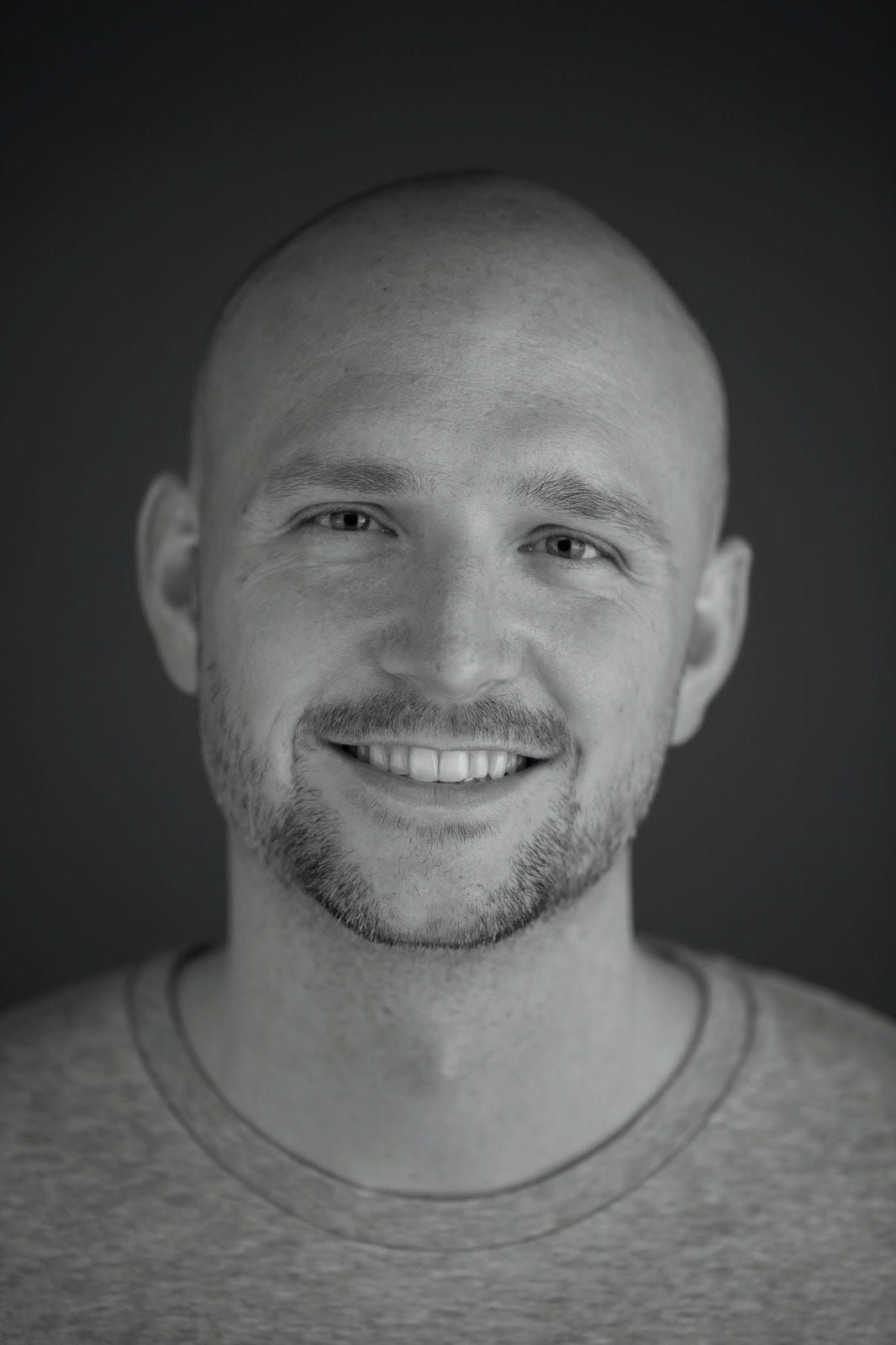
Ninety seconds, four data points, one tele-doctor.
Matthias Hofmann runs a company called Eyebot, which is a kiosk. That is not the way founders like to describe their startups, but it happens to be accurate. The kiosk is roughly the size of an airport check-in machine, it lives inside a shopping mall or a supermarket or a college concourse, and it will measure your eyes in about a minute and a half. It costs nothing to use. A remote optometrist reviews the scan, and 24 hours later you get a prescription in your inbox for $20. Zenni will sell you the frames for under $30. That is the whole business, more or less, and Hofmann has been trying to build it, in one form or another, for about fifteen years.
Eyebot is headquartered at 240 Commercial Street in Boston with 37 employees. In August 2025 it closed a $20 million Series A led by General Catalyst, with AlleyCorp, Baukunst, Village Global and Ubiquity Ventures along for the ride, bringing total funding to around $29.6 million. The money will go to hundreds more retail locations, more engineers, and a bigger clinical bench. The kiosk in circulation is called the S1+. It is the eighth revision. Hofmann is a hardware founder, so the number matters to him.
The problem is boring, which is why it is interesting
Two billion people on Earth walk around with blurry vision, thirty million of them in the United States. Hofmann repeats these numbers because they are the whole thesis. The interesting fact about American vision care is not that the technology is bad. It is that the technology is trapped in a chair, in an office, in a strip mall, behind an appointment, behind an intake form, behind a receptionist who is not answering the phone. Eyebot's proposition is that most of that machinery can be pulled out of the office and shrunk to the size of a vending machine. You do not need the vending machine to be a doctor. You need it to collect the four measurements the doctor would collect, and then send them to a doctor.
When Eyebot put its first public kiosk in a Boston-area shopping mall in late 2024, 22 percent of the people who tried it told the company they had never had an eye exam in their life. Not never in the last year. Never. This is the sort of number that either shocks you or it does not; if it does, you understand what Hofmann is doing.
Fifteen years, three companies, the same problem
Hofmann grew up in Switzerland. He wanted to be a fighter pilot. At age twelve his own vision problems foreclosed on that ambition, and he has told interviewers that classmates were not gentle about the glasses. He describes the moment with the flatness of someone who has told the story enough times that the sharp edges have worn down. He went into optics instead. A PhD in electrical engineering at Virginia Tech, with a focus on optics. A postdoctoral fellowship at Harvard Medical School, where he worked on optical scanning to identify breast cancer tumors, a project with the unhelpful property that it did not involve the eye at all but did teach him a great deal about pushing light around inside biological tissue.
Around 2013 he joined EyeNetra, an MIT spinout building a smartphone-based vision exam. EyeNetra was the first product of its kind to reach the market, and its story is instructive in the way that first attempts often are. It required the user to do the work. Hold the phone. Line up the reticle. Interpret the dot. Repeat. "It's a complicated test that requires significant training," Hofmann says now, with the mild exasperation of someone who has thought about this for a long time. "It assumes that people are skilled at technical things and have patience - neither of which most people have." The lesson he took from EyeNetra was that the human is the bottleneck, and the way to solve that is to build a machine that does the work instead.
He spent time at Formlabs and Lumicell in the intervening years, absorbing the parts of hardware manufacturing you cannot learn in graduate school. In 2021 he reconnected with Jack Moldave, a former colleague, and the two of them started Eyebot. Alexander Martin joined later as chief medical officer. The company took a $1.5 million NSF grant and a $100,000 check from MassVentures early on. Then $6 million in seed capital in mid-2024, co-led by AlleyCorp and Ubiquity Ventures. Then the $20 million Series A in August 2025.
Eyebot Funding, Cumulative
The S1+ and the philosophy of the vending machine
The S1+ captures four measurements that together produce a refractive prescription. Hofmann is guarded about the internals, which is reasonable given that he claims his company is one of maybe four groups on the planet capable of doing what it does. The user experience is what Hofmann talks about publicly. You walk up. You sit down. You look into the machine. The machine looks back. Ninety seconds later it is finished. A tele-optometrist reviews the results and issues the prescription. If you want glasses, Zenni is one click away.
The design brief is not "faster eye exam." The design brief is "make the interface disappear." Hofmann has been consistent on this point across interviews. "We're essentially solving the interface problem," he says. The exam has existed for a century. The bottleneck is not the physics. The bottleneck is that the exam is expensive to deliver in the format optometrists deliver it in, which requires a trained human, a specific room, and an appointment. Move the exam to a box in a mall, and the cost curve bends. The tele-optometrist, at the other end of a wire, can review many more scans per hour than they could see patients in person. The economics only work if the machine is boring and reliable and does not require the user to do anything hard.
What retail knows that healthcare forgot
The choice of retail is not incidental. American optometry has clung to a service delivery model that assumes patients will make appointments, take time off work, and travel to a stripmall office. That model performs badly for people who are hourly, uninsured, rural, or simply not thinking about their eyes on a given Tuesday afternoon. It performs particularly badly for the 22 percent that Eyebot found at the mall. A kiosk that is already where the customer is - between the food court and the Sephora - captures demand that would never have made it to a phone call. This is a distribution insight dressed as a hardware startup.
Hofmann's plan is to expand into supermarkets, colleges, malls, and grocery chains across the United States, and eventually to underserved international markets. He wants to expand throughput per unit and continue to iterate on the hardware. He projects the fleet will deliver more than half a million tests annually as it grows. Given the cost structure - free at the point of use, revenue only on the prescription and downstream eyewear sale - the unit economics require scale. Hardware companies at this stage tend to under-promise on unit counts and over-promise on timelines. Hofmann is unusually restrained on both.
The temperament
Hofmann is a father of three. He climbs, indoors and outdoors, which sounds like the sort of hobby a founder invents to sound interesting but which he has mentioned casually enough in interviews to suggest he actually does it. His advice to other founders is worth reproducing in full because it is either wisdom or the sort of thing wisdom becomes when the founder is finally profitable enough for it to stop being reckless. "Just do it," he says. "There's no right recipe, and too much planning will just block you." This from a man who spent fifteen years on one problem.
The pattern he seems to admire is patience wearing the costume of impatience. Ship the eighth revision. Then ship the ninth. Do not spend two years designing the tenth in a slide deck. In a hardware business, particularly a hardware business embedded in the healthcare regulatory apparatus, the only way to know if a thing works is to put it in front of a shopper and watch them try to use it. This is what Eyebot has done, 45,000 times so far, in the malls and stores it has quietly wired up. The number is going up. Hofmann would like it to be going up faster.
What is unusual about Eyebot is not the ambition, which is common enough among healthcare startups. What is unusual is the discipline of the offer. Free scan. Twenty dollar prescription. Cheap frames. No wait. If any of those four pieces breaks, the whole thing breaks. Hofmann talks about all four with the same slightly tired precision, the way someone talks about a system they have taken apart and put back together enough times to know where each screw goes. It is a founder profile that is very Boston, very engineering-first, and very much at odds with the way most healthcare pitches are delivered in 2026. It might work. He has been building toward it since he was twelve.