At 8:30 one morning in the autumn of 2008, Howard Schweitzer received a job offer. The first staff meeting was at nine. Washington usually gives an appointment more ceremony than that. This one came with half an hour to get moving and a financial system that could not wait for a leisurely introduction.
He had discussed the position the previous day with Neel Kashkari. Now he was joining the Treasury Department as chief operating officer of the Troubled Asset Relief Program, or TARP. At home, his eight-year-old daughter left him a drawing with a message: “Daddy-you are saving the world.” It hung in his office. When he departed in August 2009, his colleagues framed it.
A child's verdict is a generous place to begin a story about a government rescue. It also catches something that job titles miss. A chief operating officer has to make an institution function. The question is practical: who will do the work, how will decisions travel, and what happens when the first plan meets the first complication? Schweitzer's career has repeatedly put him near that junction.
Before the emergency, the paperwork
Schweitzer earned a history degree from the University of Michigan in 1991 and a law degree from George Washington University in 1995. He entered the Export-Import Bank during the Clinton administration and rose to senior vice president, general counsel, corporate secretary and chief ethics officer. The collection of titles sounds like a particularly ambitious business card. It also describes the overlapping obligations of a public financial institution.
At Ex-Im, a transaction had to make sense financially and survive the demands of government. Schweitzer advised five successive chief executives. His later biography describes work on complex international financing, a credit portfolio of about $60 billion, and Senate confirmations for presidential nominees. These were different kinds of negotiation: with borrowers, with colleagues, with political institutions. Each required knowing whose decision mattered.
A more concrete example arrived in January 2008. Schweitzer led the development of Ex-Im's transaction due diligence guidelines. The bank wanted its partners to understand the risks it examined when considering applications. Lenders, exporters, public interest groups and the Justice Department helped shape the guidelines. The aim joined two demands that often irritate each other: prevent illegitimate transactions and keep legitimate business moving.
There is a small lesson in that pairing. A process can be rigorous enough to discourage fraud and still become so cumbersome that it discourages everyone else. Conversely, speed can make an institution useful while allowing risks to slip past. The guidelines put shared responsibility into the transaction itself. For Schweitzer, the work involved building a route through those competing requirements, rather than simply choosing the more flattering one.
The following month, Ex-Im announced a court victory in its effort to recover more than $104 million in defaulted loans from Asia Pulp & Paper and three Indonesian operating companies. The U.S. Attorney's office litigated the case after restructuring talks failed to produce terms the bank would accept. Schweitzer, speaking as general counsel, stressed creditors' rights and the obligation of borrowers to repay. The figure represented the recovery claim, rather than a reported cash receipt.
Taken together, the two episodes give his earlier work some texture. One concerned improving the rules before a transaction. The other concerned enforcing obligations afterward. Government finance involves both. A signature begins a relationship; it does not relieve anyone of the duty to pay attention to what follows.
“I dropped everything and dove right in.”Howard Schweitzer, recalling the Treasury appointment
A rescue needed an operating system
By November 10, 2008, Kashkari was publicly identifying Schweitzer as TARP's interim chief operating officer. James Lambright, the Ex-Im chairman and president, had joined as interim chief investment officer. Don McLellan, formerly a senior executive at Motorola, was managing the Capital Purchase Program. The rescue drew people from different professional backgrounds because it required several kinds of expertise at once.
In describing the effort, Treasury emphasized how quickly the team was establishing operations, bringing in outside assistance and setting up oversight. A federal program of this scale needed the machinery behind its announcements. Contracts, controls and accountability had to exist alongside the financial decisions. A press conference could announce the purpose. Someone still had to arrange the work.
The $700 billion figure belongs to TARP's original authorization. It should not be mistaken for a personal achievement, a balance sheet controlled by one official, or the amount ultimately spent. Schweitzer was part of a leadership team. His responsibility was program execution and infrastructure. The distinction matters because large numbers can turn a complicated institutional undertaking into a misleadingly tidy individual legend.
He stayed through the presidential transition, working under Henry Paulson and then Timothy Geithner. The office changed political hands while the task continued. When Schweitzer left in August 2009, Geithner awarded him Treasury's Distinguished Service Award. That sequence is the concrete basis of his experience across administrations: public responsibilities carried through a change in political leadership.
January 2010: a different side of the table
Cozen O'Connor announced Schweitzer's arrival on January 14, 2010. The new role involved strategic advice for American and multinational clients, with work spanning public law, public-private partnerships, international transactions, government contracts and compliance. The move placed someone who had helped operate government programs in a position to advise people dealing with them.
Mark Alderman, already building the firm's government relations practice, welcomed the appointment as an expansion of its Washington ambitions. Schweitzer expressed an interest in helping clients navigate legal, policy and regulatory complexity. That stated ambition was fairly precise. Businesses encounter government through overlapping rules and offices, and an answer from one part of the system does not necessarily settle a question for another.
Today Schweitzer is chief executive officer of Cozen O'Connor Public Strategies and a member of the law firm's board. A September 2025 announcement described more than 50 professionals working across nine offices on the East Coast and in the Midwest. It also reported his appointment to Fast Company's Impact Council. The council membership joined his government experience to a forum concerned with business and innovation.
His work now includes regulatory advice, political strategy and advocacy across jurisdictions. That makes the local dimension consequential. A company can have an interest in Washington and another in a state capital or city government. The same business question may encounter different decision makers, calendars and authorities. A national presence is useful only if someone understands where the actual decision will occur.
The poker player and the political adviser
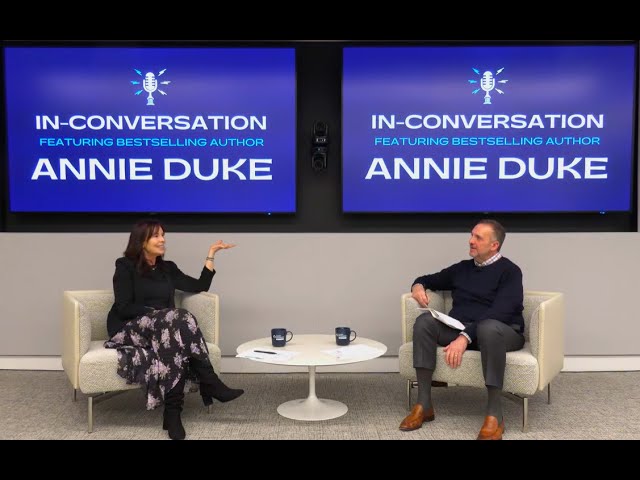
In December 2025, Schweitzer sat down with Annie Duke, the author, decision strategist and former professional poker player, for his In-Conversation series. Their subject was how leaders make choices amid uncertainty. For a former rescue-program operator, a conversation about the limits of foresight had an obvious relevance. Neither a government office nor a business gets to order tomorrow's circumstances in advance.
Afterward, he highlighted lessons he intended to carry into 2026. Hiring and investing involve forecasts. A favorable outcome can follow a poor decision; an unfavorable outcome can follow a sound one. Luck complicates the verdict. Judging a choice solely by its result can therefore teach the wrong lesson, especially when the decision must be repeated under different conditions.
He also singled out hiring as a difficult forecasting problem and the value of a group that supplies candid feedback. Those interests make a useful companion to his public career. Building a team requires judgments about people with incomplete information. Once the team exists, a leader needs a way to hear unwelcome evidence. Confidence is convenient in a meeting. A reliable correction can be more useful.
His February 2026 conversation with executive coach and author Kathryn Lowell approached leadership from another direction: presence, trust, listening and intuition. They examined how leaders can steady their teams amid economic, technological and political disruption. The choice of guests broadens the portrait. His interview series makes room for the quality of a decision and for the human relationships that help people carry it out.
When the audience changes the map
A conversation with NBC News election analyst Steve Kornacki prompted another line of inquiry. Looking back on their discussion at the start of 2026, Schweitzer focused on youth voting, online personalities and the dispersal of political information. He described studying how news consumption was changing and how artificial intelligence might accelerate that change. The audience had become part of the policy adviser's problem.
The issue extends beyond which party has the more persuasive message. Political judgment depends on understanding what people encounter before they form an opinion. A television schedule offers one kind of map. An individualized stream of recommendations offers another, with far fewer landmarks shared by everyone. For anyone advising on public affairs, assumptions about the common conversation need regular inspection.
Schweitzer's public analysis continued into the 2026 election season. On September 8, he joined Alderman and Patrick Martin for a podcast discussion of Senate races, voter sentiment and the implications for Congress and 2028. The program was listed as The Beltway & Beyond, the current name appearing alongside older Beltway Briefing episodes. The subjects change with the calendar; the need to assess institutions and incentives persists.
The distance from that hurried Treasury appointment to a conversation about algorithmic news is considerable. Yet the two belong in the same career. Each asks what information reaches the people making decisions, how they interpret it, and whether an institution can respond. Schweitzer has worked inside that process and now advises clients about it. The drawing his colleagues framed remains a touching counterpoint to the machinery: a child's confidence, offered while adults were still working out what to do.