Washington is a city in which a person can understand the argument and still misunderstand the process. Stewart Hall’s early career put him close to that distinction. From 1992 to 1996, he served as legislative director to Senator Richard Shelby of Alabama, working across defense policy, appropriations, financial services and Senate procedure. Before he was assembling companies, he was working inside an institution where the route to a decision mattered.
Three decades later, Hall runs Public Policy Holding Company, better known as PPHC. Its work includes government relations, public affairs and corporate communications. The name has the restrained charm of a file cabinet. The underlying proposition is more lively: bring together people who understand different parts of a policy problem, and make it easier for them to help the same client.
Hall’s career gives that proposition a history. He has been a Senate staffer, a founder who sold a business, a founder who started another, and a chief executive explaining an advisory group to public-market investors. Alongside those roles, he has maintained a connection to policy education at the University of Alabama. The subject has changed settings repeatedly. Government remains at the center.
A working knowledge of the Senate
Hall graduated from the University of Alabama and earned an MA and a Ph.D. in Government at the University of Virginia. It is a fitting academic background for someone whose professional biography includes Senate procedure. Government can be studied as a set of ideas; legislative work adds the practical question of what happens to those ideas once people have to act on them.
The subjects in his Senate portfolio were substantial. Appropriations concerns the allocation of public money. Defense policy and financial services bring their own institutions, interests and technical language. A legislative director working across them encounters several versions of the same problem: people may agree that an issue matters while disagreeing about its remedy, its urgency or who should decide.
That background offers a useful starting point for understanding Hall’s later work. A business seeking advice about public policy needs more than an account of the day’s political argument. It needs to understand how a decision might develop and which institutions will shape it. Hall’s move into the private sector placed his career on the advisory side of that relationship.
He co-founded Federalist Group in 1999. It was his first private-sector venture, a government affairs firm in Washington. The transition changed whom he worked for. His familiarity with legislative institutions became part of a business serving clients who needed to understand and engage with government.
Selling a firm, then starting again
In 2005, Ogilvy Public Relations, part of WPP, acquired Federalist Group. Hall continued to lead the firm, which doubled in size during the following four years. Selling the business did not immediately remove him from its day-to-day story. He stayed for the next phase, experiencing what it meant to grow a specialist practice within a larger organization.
There is a useful complication here for anyone who imagines a founder’s career as a straight line from launch to exit. Hall’s next steps involved more founding. In 2010, he co-founded Crossroads Strategies, a bipartisan federal relations, advocacy and advisory firm. Four years later, Crossroads became part of the formation of PPHC, with Hall as co-founder and CEO.
co-founded
co-founded
co-founded
The progression increased the organizational challenge. A single firm has its own routines and relationships. A holding company must work across several firms, each with a history of its own. Its chief executive has to make the larger structure useful to people who may already be successful at operating independently.
Hall has given credit to the people who helped create that structure. When fellow PPHC co-founder Bill Chess retired as chief administrative officer in July 2024, Hall said, “PPHC wouldn’t exist without Bill.” Chess had also served as CFO until July 2023. The tribute places another builder inside a story that could otherwise become a solitary founder’s résumé.
“PPHC wouldn’t exist without Bill.”
Stewart Hall, on fellow co-founder Bill Chess, July 2024
The group’s premise is that distinct disciplines can work together. Research can help establish what a problem looks like. Communications advisers can help explain it. Government relations practitioners can bring knowledge of the institutions involved. The attraction for a client is access to several forms of judgment without having to assemble the entire team from scratch.
The geography of a policy problem
As PPHC grew, the map became part of the strategy. In March 2023, it acquired MultiState for $22 million. The deal added a network across all 50 U.S. states and Canada, along with capabilities in research and compliance. It widened the places the group could work and the kinds of assistance it could provide.
State-level reach changes the practical meaning of a Washington advisory business. Federal and state decisions can intersect, but the people, schedules and procedures differ. A client with interests in several jurisdictions needs someone to follow those differences closely. An organizational chart cannot supply local knowledge merely by drawing another box.
Hall’s acquisition strategy has continued beyond the United States. PPHC announced an agreement to acquire Britain’s WPI Strategy in March 2026, with completion on April 1. The firm combines public affairs work with economics and research. That addition fits a business in which an argument may need an analytical foundation before it reaches a public audience.
In July 2026, PPHC acquired London-based Tancredi, bringing it into TrailRunner International. The deal expanded corporate, financial and litigation communications capabilities and added geographic reach through offices including Milan and Los Angeles. Tancredi’s identity remained visible in the arrangement: it would be branded as a TrailRunner International group company.
The following month brought The Advocacy Partners in Florida. Founders Slater Bayliss and Stephen Shiver would continue to lead it, retaining its brand, team and operating culture. Hall’s comment on the acquisition was revealing: “What excites us most is the people, the relationships, and the opportunities it creates.”
Those arrangements show the management problem in concrete terms. The group wants access to a firm’s expertise and connections. The firm’s clients already know its people. Keeping that continuity while creating opportunities across the wider group is part of what Hall is asking the holding company to accomplish.
An audience with spreadsheets
On January 30, 2025, Hall joined CFO Roel Smits and chief strategy officer Thomas Gensemer at PPHC’s first Capital Markets Day at the London Stock Exchange. Leaders from member firms took part in a panel and questions from attendees. The event brought the group’s businesses before an audience interested in how the whole arrangement worked.
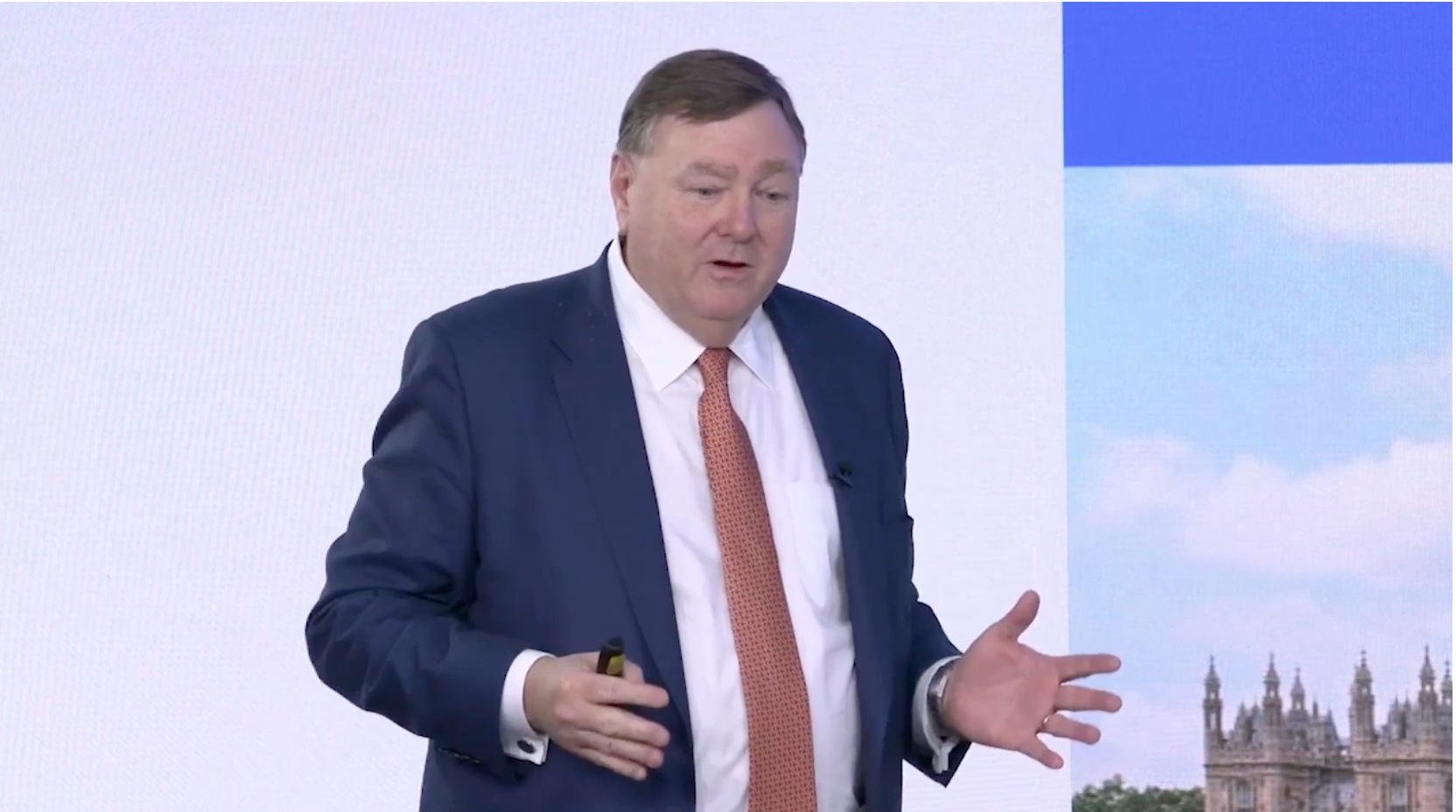
Public markets introduced another way to assess the business. PPHC began trading on London’s AIM market in December 2021 and announced its Nasdaq listing in January 2026. Investors could now examine a company built around professional expertise through the familiar measures of revenue, margins, acquisitions and retention.
The scale is visible in the financial results. PPHC reported revenue of $186.5 million for 2025, with organic revenue growth of 6.2%. For the first half of 2026, revenue reached $102.3 million, up 16.3% from the comparable period; organic growth was 4.4%. Those are group results, encompassing the work of many practitioners and firms.
Full year 2025
First half 2026
The public-company account also includes costs and losses. In the second quarter of 2026, PPHC reported a GAAP net loss of $3.7 million. Adjusted EBITDA was $12.3 million, a separate, non-GAAP measure. Revenue growth gives one view of the group; these other figures keep the picture from becoming a simple procession of larger numbers.
Hall’s explanation of the business also addresses what clients are buying. On the second-quarter earnings call, he described roughly 90% of revenue as retainer-based, with annual retention of that revenue at 80% to 85%. His argument emphasized senior counsel and outcomes. He also argued that the company lacked the junior-staff billing structure vulnerable to compression by artificial intelligence.
That is an executive’s case for his own model, and its success will be measured over time. Still, it identifies the work he wants PPHC to organize: experienced people making judgments about consequential problems. The company must keep that proposition useful to clients while explaining it in terms investors can evaluate.
Back to Alabama
Hall’s connection to Senator Shelby has a later chapter at his alma mater. He chairs the Board of Advisors for the Shelby Institute for Policy and Leadership. Its Shelby Scholars lecture series advertised Hall as a guest speaker at Tuomey Hall on October 3, 2024, bringing his career in government affairs into a setting devoted to learning about policy and leadership.
In February 2026, the University of Alabama named him to the search committee for the inaugural dean of its School of Leadership and Policy. The planned school combines classroom learning with practical experience. Hall’s participation connects a career spent working around institutions with the task of preparing students to understand them.
There are also less formal glimpses of his working relationships. In a public LinkedIn message to retiring colleague Ed Manning, Hall thanked him for his years in the PPHC family and joked, “But you know I will keep trying to bring you back in no matter how futile!” The recruitment instinct apparently survives the retirement party.
It is a small moment, but an apt one for this career. Hall keeps building organizations whose work depends on particular people. His route has taken him from a senator’s office to advisory firms, from Washington to London investor presentations, and back to Alabama’s students. Across those settings, the practical assignment persists: understand how institutions work, find people who know their part of the problem, and get them into a useful conversation.
Continue the conversation
- Stewart Hall at PPHC
- Hall’s LinkedIn profile
- A Different Perspective: audio interview
- Watch: 2023 interim results with Hall and Smits
- London capital markets event
- Shelby Scholars lecture biography
- Alabama dean search announcement
- 2025 financial results
- Second-quarter 2026 results
- MultiState acquisition
- Tancredi acquisition
- The Advocacy Partners acquisition
- WPI Strategy acquisition
- Bill Chess retirement tribute
- Nasdaq listing announcement
- Q2 earnings call transcript
- PPHC on LinkedIn
- PPHC on X