The founding equipment was modest even by 1990 standards: three employees, eight clients, and, in Stu Van Scoyoc’s own telling, a cell phone that weighed five pounds. The device is a lovely period prop. You can almost hear it landing on a conference table with the authority of a paving stone. Yet the weight that mattered was elsewhere. Van Scoyoc was attempting to build a Washington firm around something harder to measure than access or celebrity: the disciplined conversion of somebody else’s ambition into language the federal government could use.
He calls the work “a translational thing.” A university wants a research program. A city needs an infrastructure project. A company encounters a rule that changes its plans. None arrives in Washington as a finished amendment, an agency request, or a coalition with a common script. Someone has to understand the original problem, locate the machinery that can act on it, and make the case survive contact with politics.
Translation is an apt vocation for a person who has already changed professional languages twice. Van Scoyoc earned a Bachelor of Science from Lehigh University and began as a chemical engineer at DuPont. He studied law at night, then moved into DuPont’s Washington government affairs office in 1974. Engineer, lawyer, advocate: three labels, one persistent appetite for systems.
“We work tirelessly to position our clients to deliver the right message, to the right person, at the right time.”Stu Van Scoyoc
An engineer enters Washington
Engineering begins with constraints. So does Congress. There is a fixed budget, a prescribed process, limited time, competing loads, and a distressing number of ways for a promising idea to fail. Legal training adds another discipline: words must carry the intended force after their author leaves the room. Those habits gave Van Scoyoc a useful perspective on a capital that likes broad declarations but runs on details.
Before founding his namesake firm, he served as a vice president at Charls Walker Associates and helped found Winburn, Van Scoyoc & Hooper. When Van Scoyoc Associates opened in 1990, its early specialties were appropriations and tax. The timing proved fortunate. As congressional earmarks expanded in the 1990s, organizations that had never imagined themselves fluent in federal budgeting needed guides.
Van Scoyoc’s description of the job was refreshingly mechanical. Clients brought ideas they wanted to accomplish. His team translated those ideas into legislative language, built constituent support, carried the proposal to lawmakers, and shepherded it through committees. There is no velvet-rope mystique in that account. It sounds like work because it is.
The firm grew alongside the work. Its own current account says more than 60 employees now represent nearly 200 clients, from large companies and research universities to towns, hospitals, associations, and charitable organizations. The range is important. It made VSA less a single-issue boutique than a collection of specialists who could assemble around a client’s problem.
The unfashionable bet on staffers
Washington firms often announce a famous new hire with the subtlety of a cannon. Van Scoyoc Associates made a different early choice. It did not build its model around former members of Congress. Instead, it recruited senior congressional and executive branch staffers, policy experts, and practitioners from both parties.
The distinction goes beyond optics. Staffers know where policy acquires its commas. They understand committee procedure, agency jurisdiction, drafting, deadlines, and the mood of an office after a bill has been rewritten for the fourth time. A former member may bring a recognizable name. An experienced staffer often brings a map of the plumbing.
The bipartisan balance was equally structural. Republicans and Democrats were kept in roughly equal numbers, giving clients a team able to work across elections and divided government. In a city that periodically rediscovers bipartisanship as if it were an exotic bird, VSA treated it as staffing.
Moves from DuPont engineering into the company’s Washington government affairs office.
Starts Van Scoyoc Associates with three employees and an appropriations-and-tax focus.
Creates Capitol Decisions as a smaller, issue-focused government relations firm.
Moves VSA to The Wharf as the Southwest waterfront development’s first office tenant.
Names Jennifer LaTourette president and COO while remaining founder and CEO.
This preference for practitioners also fits the founder’s public style. Van Scoyoc has been recognized on Washington power lists, but his firm has been repeatedly described as relatively low-profile. The contrast is useful. Lobbying is an occupation that attracts theatrical metaphors: power brokers, influence peddlers, back rooms. Van Scoyoc’s favored nouns are message, person, and time. They are almost stubbornly ordinary.
When the old machine stopped
A systems thinker becomes most interesting when the system changes. After Congress curtailed earmarks and relied more often on stopgap spending measures, the appropriations practice that had helped fuel VSA’s growth faced a leaner landscape. Van Scoyoc did not pretend the change was cosmetic. In 2014, he spoke wistfully about an earlier Congress whose committees had more time to examine issues and whose members more readily heard both sides.
The company adjusted. It expanded work involving federal agencies, grants, contracts, regulation, research development, and philanthropy. The Implementation Group concentrated on competitive federal funding. Capitol Decisions maintained a smaller advocacy practice. In 2011, Van Scoyoc said he wanted non-lobbying work to account for as much as a quarter of revenue within several years.
The method remained recognizable. A grant application still needs an institutional story. A regulatory matter still needs the right agency audience. A coalition still needs language its members can repeat without wincing. The channel changes; the translational task endures.
So does risk. Years ago, Van Scoyoc leased several thousand more square feet than his firm needed. The excess became room for expansion. Later, as the company reduced its footprint, he admitted that if he had the choice again, he was not sure he would take the same chance. It is a rare founder anecdote because it refuses to become a fable. The gamble worked, then circumstances changed. Both facts get to remain facts.
A firm learns to outlast its founder
In 2017, VSA made a more visible bet on place, becoming the first office tenant at The Wharf. The move put the firm at 800 Maine Avenue SW, with the Capitol in one direction and the Potomac in the other. Van Scoyoc said he wanted the firm to be part of the waterfront’s revitalization. For a business concerned with positioning, the address came with almost suspiciously tidy symbolism.
Five years later, he made a decision with more consequence than an office view. Jennifer LaTourette became president and chief operating officer, while Van Scoyoc remained CEO. He framed the appointment as preparation for the firm’s next 30 years and credited her counsel, mentorship, and role in guiding clients through two years of upheaval. Founders are often praised for starting. The harder skill is arranging for continuation.
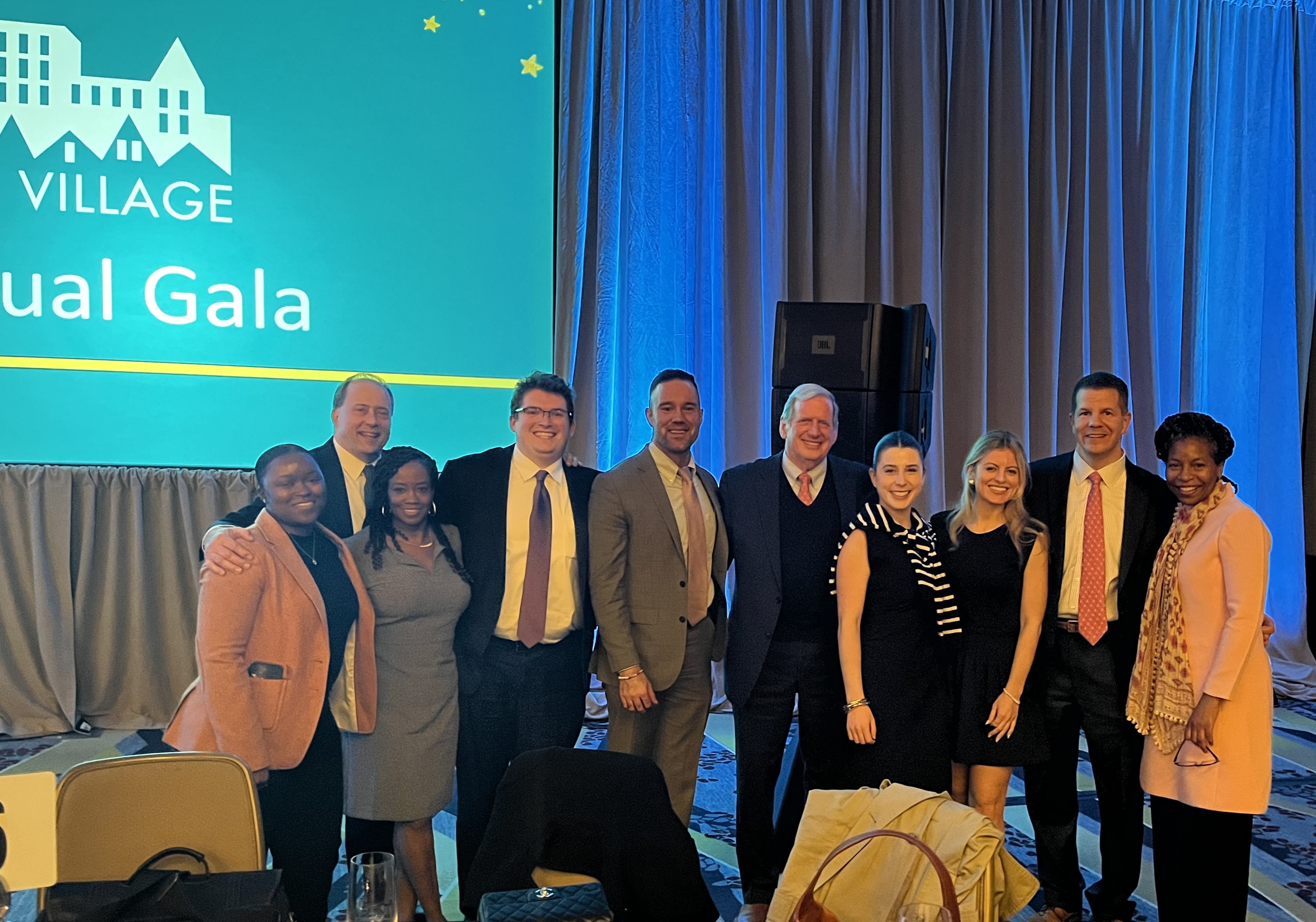
Continuation also appears outside the client ledger. VSA says charitable giving and community service have been embedded in the companies since 1991. Van Scoyoc and his wife, Pat, received N Street Village’s Founder’s Award in 2018 for their support of a vocational center designed to help women build skills for re-entering the workforce. At the time, he spoke not about a plaque but about the 300 additional women the center could serve. The metric was people through a door.
Recent public appearances show the founder still close to the substance. In February 2025, he joined colleagues to discuss the fiscal 2026 outlook at the annual meeting of the EPSCoR/IDeA Coalition, whose members advocate for research capacity across states and institutions. In 2026, the National Association of Enrolled Agents thanked him and the VSA team for helping with its Capitol Hill fly-in. Budgets, research, tax administration: familiar territory for someone whose work began with appropriations and translation.
The sentence that became a company
There is a temptation to treat “the right message, to the right person, at the right time” as a polished line for a brochure. Its durability suggests something more practical. Remove any one element and the advocacy fails. A clear message sent to the wrong office is wasted. The correct official cannot rescue a muddy request. Perfect preparation that arrives after the markup is merely an excellent souvenir.
Van Scoyoc’s career can be read as a long attempt to improve all three variables. Engineering sharpened the message. Law taught precision. Decades in Washington built a sense of audience and timing. A bipartisan bench widened the number of people the firm could credibly approach. Specialists gave the message substance. The company grew, in other words, by turning one sentence into an operating system.
The five-pound phone belongs in the origin story because it is funny, concrete, and obsolete. The principle beside it is none of those things. Washington’s devices have become lighter. Its communications have become faster. Its politics have become noisier. The need to know what to say, whom to tell, and when to arrive has not lost an ounce.