How Many Creators You Have Decides CreatorIQ or Aspire
CreatorIQ's contract and payment workflows assume hundreds of creators. Aspire's gifting workflows assume dozens. The line that decides which platform fits is program scale, not feature count.
Every influencer software comparison you have read wants to end with a winner. This one ends with a mirror. Put CreatorIQ and Aspire side by side and the honest question is not which platform has more features. It is which platform was built for a program that looks like yours. That answer is already sitting in a number you can count today: how many creators you will actually pay this year.
Both tools get filed under the same shelf label - "influencer marketing platform" - and both will happily run you through a polished demo. But they solved different problems. CreatorIQ built infrastructure for enterprise brands running large, global, paid programs. Aspire built a workflow for leaner ecommerce and mid-market teams that discover creators, ship them product, and grow relationships. The features overlap. The assumptions do not.
Read that line slowly, because it does most of the work. CreatorIQ's contract and payment machinery assumes hundreds of creators moving through a pipeline at once. Aspire's gifting and marketplace flow assumes dozens. Buy the enterprise tool for a program of thirty and the workflow feels like overhead. Buy the mid-market tool for a program of three hundred and the same workflow becomes a ceiling. Neither is a defect. Each is a design choice about who is on the other side of the screen.
01The number that picks the platform
Start with the count, not the checklist. If you will work with a few dozen creators this year, mostly gifting product and running the occasional paid post, the machinery you need is small: find people, ship samples, approve content, track sales. If you will pay hundreds of creators across markets and currencies, on real contracts, with finance and legal watching, the machinery you need is large: structured agreements, global payouts, tax handling, and measurement your leadership will trust.
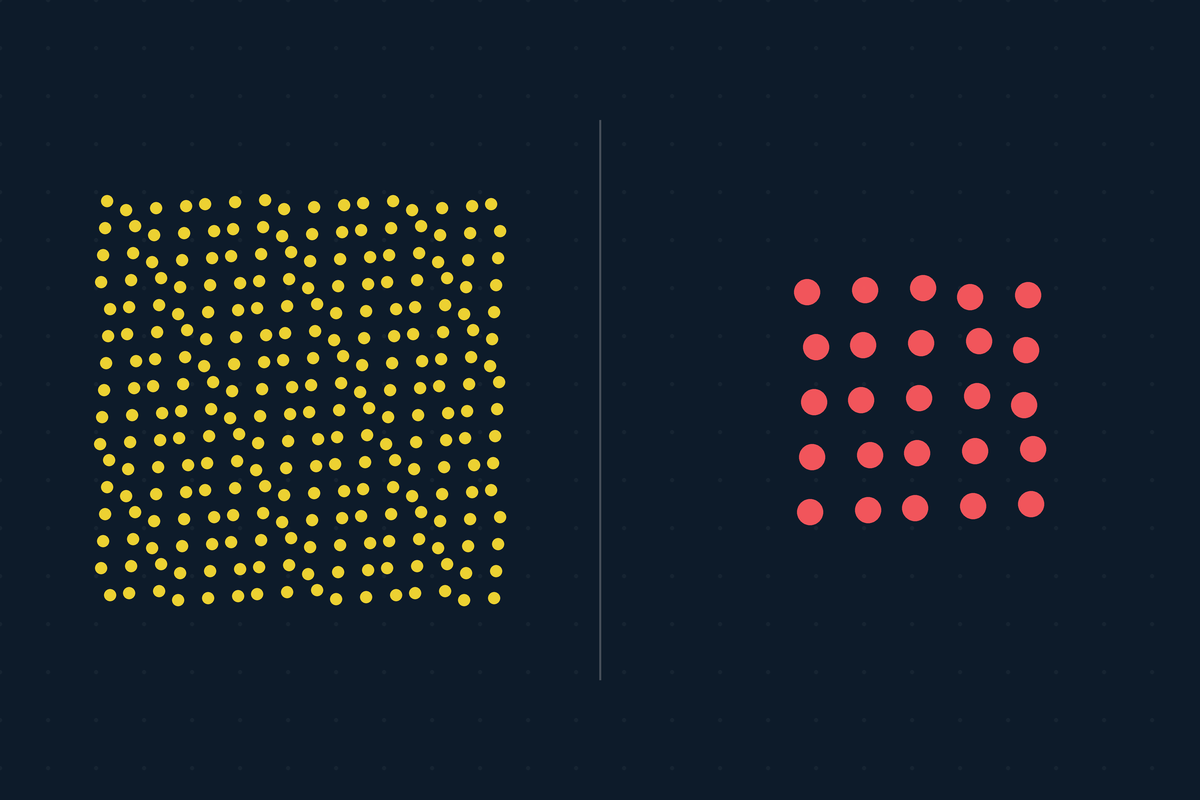
A program of hundreds
Contracts, global payroll, benchmarking. This is where CreatorIQ's workflow stops being overhead and starts being the reason you sleep at night.
A program of dozens
Discovery, gifting, ecommerce sales. This is where Aspire's marketplace and Shopify flow feels effortless and the enterprise tooling would just get in the way.
The two clusters above are the whole argument. One program is dense enough that spreadsheets and PayPal will eventually break a finance team. The other is small enough that a heavy contract engine is friction you pay for and never use. You already know which cluster you are standing in.
02Where CreatorIQ actually earns its price
CreatorIQ, founded in 2014 and based in Los Angeles, sells to enterprise brands and agencies. Its case is easiest to see in the boring parts. It handles creator payments across 190 countries and 120 currencies through ACH, PayPal, and wire, and it manages the contracts and tax paperwork that come with paying that many people in that many places. When your program spans thirty countries, that is not a nice-to-have. It is the difference between a payroll run and a crisis.
The other thing enterprise buyers are really paying for is measurement they can defend. CreatorIQ scores strongly on independent review sites for campaign analytics and reporting, and it offers competitive benchmarking - the ability to compare your program's performance against rivals, by region and over time. For a mid-market team that feature is a curiosity. For a global brand where the influencer budget has to be justified against paid media, benchmarking is how the program keeps its funding.
That is also the catch. CreatorIQ rewards teams that have staff to run it. The learning curve is real, the setup is real, and the platform expects a dedicated influencer function on your side. If you have that, the depth pays off. If you do not, you are buying a jet to commute to the office.
03Where Aspire is quietly the smarter buy
Aspire - which older buyers may remember as Revfluence, then AspireIQ - flipped the discovery problem around. Instead of handing you a search engine and wishing you luck, it built one of the largest inbound creator marketplaces, with over a million creators actively applying to work with brands. For a lean team, inbound beats outbound: the creators come to you, which is exactly what you want when nobody on staff has time to run a discovery engine full time.
The rest of Aspire is built for the ecommerce reality. It plugs into Shopify for product gifting and sales tracking, so seeding samples and attributing revenue happen in one place. It automates the follow-ups, the shipment tracking, and the content briefs and approvals that eat a small team's week. And it connects to affiliate networks - Impact, CJ, ShareASale x Awin, plus Klaviyo - so a brand can run creators as a performance channel with real CPA tracking. CreatorIQ, notably, does not focus on affiliate tracking at all.
Aspire lists a far larger discovery database - roughly eight times CreatorIQ's. Yet reach rarely decides the purchase. You will work with a few dozen of them. Program scale sets your bill; database size mostly sets the marketing slide.
There is a trade-off, and it is worth naming. Aspire pays creators in USD via PayPal. For a US-centric program that is fine. For a brand paying creators in Jakarta, Lagos, and Sao Paulo in local currency, it is a wall. The payment model tells you almost everything about who each platform was built for, before you read a single feature comparison.
04The honest side-by-side
| CreatorIQ | Aspire | |
|---|---|---|
| Built for | Enterprise programs, hundreds of creators | Mid-market & ecommerce, dozens of creators |
| Payments | 190 countries, 120 currencies | USD via PayPal |
| Discovery | ~20M profiles, AI search | ~170M profiles + inbound marketplace |
| Benchmarking | Yes, competitive | No |
| Affiliate / CPA | Not a focus | Impact, CJ, ShareASale x Awin, Klaviyo |
| Ecommerce | Enterprise integrations | Native Shopify gifting & sales |
| Team it expects | Dedicated influencer staff | Lean team, self-serve friendly |
Notice what the table does not do: it does not crown a winner. Every row is a fork, and which branch is "better" depends entirely on the program you are running. That is the point. A feature grid pretends the two tools are competing for the same job. Program scale shows they are not.
05What it costs, and the trap in the price
Both use custom pricing and both hide the number behind a demo, which is the most common complaint from smaller brands trying to budget. Third-party estimates put CreatorIQ entry contracts in the range of roughly $24,000 to $36,000 or more per year, climbing for full enterprise rollouts, and Aspire somewhere around $21,600 to $54,000 per year. Treat those as directional, not official - the vendors publish neither.
The pricing overlap is a trap. Because the ranges brush against each other, it is tempting to treat the choice as a coin flip and pick on vibe. Do not. The money is close enough that the deciding factor should be fit, and fit comes back to the count. If your program is small and US-based, paying enterprise prices for global payment rails you will never use is pure waste. If your program is large and global, saving a little on a mid-market tool that pays only in USD will cost you far more the first time payroll seizes up.
06The one question to bring to the demo
Skip the feature bingo. Walk into both demos with a single number - the count of creators you expect to pay in the next twelve months - and ask each vendor to show you that exact program running end to end. Watch where the workflow strains. If you are shipping product to forty creators and the tool wants contracts, currency selection, and a benchmarking dashboard, you are watching overhead. If you are paying four hundred creators in twelve currencies and the tool wants you to send PayPal transfers one at a time, you are watching a ceiling.
The right platform is a fact about your program, not an opinion about the vendors. Count first. The tool that assumed a program shaped like yours is the tool that will feel invisible in a year, which is exactly how good software is supposed to feel.
Go deeper
- CreatorIQcreatoriq.com
- Aspireaspire.io
- CreatorIQ on paymentsInfluencer payment methods
- Aspire on ShopifyAspire Elevate app
- CreatorIQ on LinkedInlinkedin.com/company/creatoriq
- Aspire on LinkedInlinkedin.com/company/aspireiq
- Comparison guideAspire vs CreatorIQ 2026
- CreatorIQ on YouTubeyoutube.com/c/CreatorIQ
QQuestions buyers actually ask
What is the main difference between CreatorIQ and Aspire?
Program scale. CreatorIQ is built for enterprise programs running hundreds of creators with global payments, contracts and benchmarking. Aspire is built for mid-market and ecommerce teams running dozens of creators with marketplace discovery and gifting.
Which platform is better for a small or mid-market brand?
Aspire is generally more accessible for mid-market and ecommerce teams. Its inbound marketplace, Shopify gifting and self-serve workflows suit lean teams that do not have dedicated influencer staff.
Which platform handles international creator payments?
CreatorIQ. It supports payments across 190 countries and 120 currencies via ACH, PayPal and wire. Aspire pays in USD via PayPal, which suits US-centric programs.
Does either platform do affiliate or CPA tracking?
Aspire integrates with affiliate networks like Impact, CJ, ShareASale x Awin and Klaviyo for CPA-driven programs. CreatorIQ does not focus on affiliate tracking.
How much do CreatorIQ and Aspire cost?
Both use custom pricing and require a demo. Third-party estimates put CreatorIQ entry contracts around $24,000 to $36,000 or more per year (higher for enterprise) and Aspire roughly $21,600 to $54,000 per year. These are estimates, not official figures.
Figures on pricing, database size, currency and country coverage are drawn from public vendor pages and third-party comparison guides current as of August 2026 and are best treated as directional. Neither vendor publishes official pricing. YesPress is not affiliated with CreatorIQ or Aspire.