HeyReach is for the moment when LinkedIn prospecting stops being one person with a spreadsheet and becomes an operation. There are several sender accounts, several clients, several campaigns, and one unpleasant certainty: a promising reply will arrive in the inbox nobody is watching. HeyReach puts the moving pieces behind one dashboard. It rotates leads among connected senders, builds conditional sequences, and gathers conversations in a shared inbox. For a lead-generation agency or a sales team with real volume, this is a legible answer to a very ordinary mess.
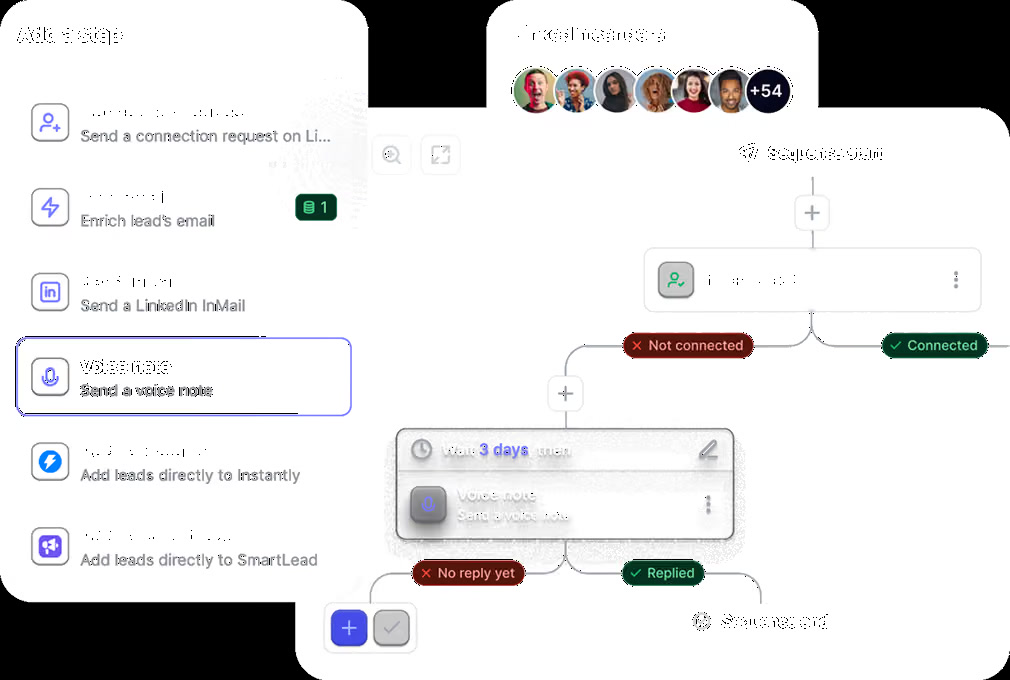
The product is less interesting as a robotic message launcher than as air-traffic control for outbound. A campaign can begin with a profile visit, branch on connection status, enrich an email, send an InMail, wait, and follow up. Leads can enter from Sales Navigator, Clay, HubSpot, RB2B, or a CSV. Replies can return to HeyReach, while activity moves on to the CRM. The point is coordination. If the list is poor and the message reads like a mail merge wearing a necktie, coordination only helps the mistake travel faster.
Who should actually buy it?
The obvious customer is an agency managing outreach for multiple clients. Separate workspaces keep client data apart; permissions limit who can touch what; the agency plans add a shared sender pool, a master view, white-labeling, onboarding, and direct support. A 25-sender plan makes little sense for a lone founder sending a few careful notes. It makes considerably more sense when five account managers are otherwise passing login details through Slack and keeping campaign status in a haunted spreadsheet.
The second buyer is a sales or growth team that treats LinkedIn as one lane in a larger GTM system. HeyReach has native links to HubSpot and multichannel email partners, plus API, webhooks, n8n, Make, Zapier, a CLI, and an MCP server. Builders can push a qualified lead into a campaign after a website visit, sync a reply back to HubSpot, or ask a compatible AI client to summarize campaign performance. That flexibility is a reason to choose it over a lighter browser tool.
Recruiters and solo consultants can use it too, but the economics are less automatic. The Growth plan begins at $79 per sender per month on monthly billing. If you need one account and rarely run concurrent sequences, disciplined manual outreach may be cheaper and more personal. HeyReach becomes easier to justify when switching accounts, assigning replies, and moving data between tools already consumes paid hours.
The feature that earns the rent
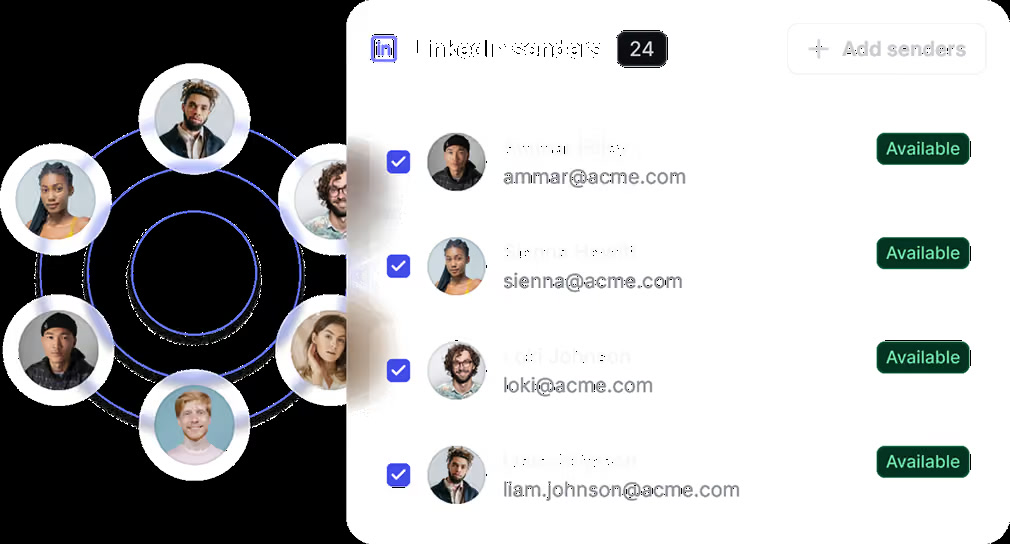
Multi-sender rotation is the headline act. Instead of cloning a campaign for every LinkedIn account, a team assigns several senders and lets HeyReach distribute leads among them. Each account keeps its own activity limits. This increases total reach while keeping the operating logic in one place. The agency plans extend the idea with pooled seats that can move between client workspaces, useful when one client pauses and another needs capacity.
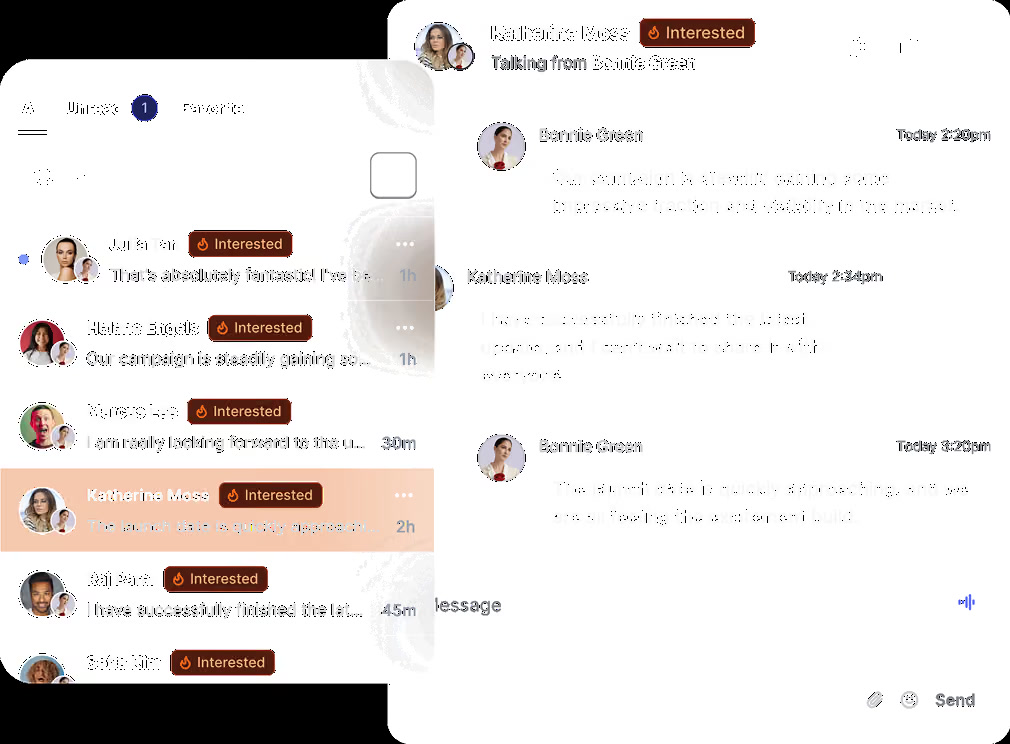
The Unified Inbox is the quieter win. It collects messages from connected accounts, lets teammates reply on behalf of colleagues, supports tags and sentiment, and now handles voice notes on desktop. Public reviewers repeatedly single it out. Emilia Korczynska of Userpilot described the product as easy to use, with “a great shared inbox and integrations.” A January 2026 Trustpilot reviewer said the inbox saved hours of logging in and out. Those comments describe time recovered from administration, not magic conversion dust.
“Easy to use, with a great shared inbox and integrations.”Emilia Korczynska, VP of Marketing at Userpilot
Sequences with branches, not spaghetti
HeyReach’s sequence builder combines connection requests, standard messages, profile views, InMails, enrichment, email handoffs, and delays. “If Connected” logic separates existing connections from new prospects, so a team does not send an invitation to somebody already in the network. The 2026 rebuild added templates, inline actions, auto-save, auto-pause, sequence sharing, and message previews that fill variables before launch. That last detail can prevent the tiny disaster known as “Hello, {{first_name}}.”
In September 2026 the company added voice notes in beta. A user can record a reusable clip or clone a sender’s voice from a 20-to-30-second sample, then turn personalized text into audio. Names and company variables can be spoken for each prospect. The product previews audio for the first five leads and reports sends and replies. It is inventive, slightly uncanny, and easy to misuse. A synthetic voice deserves the same editorial review as a written message, with an extra question about whether the recipient would feel tricked.
+ clean lead data
+ previewed copy
+ CRM follow-through
The integrations grow up
HeyReach’s native HubSpot integration, released in May 2026, closes a common reporting gap. Teams can import a HubSpot list, map the LinkedIn URL field, and log connection requests, messages, InMails, replies, and campaign enrollment on the contact timeline. Conversation threads arrive as notes. Twenty properties cover attribution, exposure, engagement, and intent, including reply sentiment. When a rep leaves, the account’s LinkedIn history no longer disappears with their private system.
The public API and webhooks handle custom systems. The Login API can connect accounts through credentials or cookies, process two-factor authentication, update proxy settings, resync profile information, and manage reconnects. The CLI puts campaign control and reporting in a terminal. HeyReach’s MCP server exposes workspace actions to compatible AI clients. These are meaningful additions for technical GTM teams, though every new control surface deserves scoped credentials, logs, and a named owner.
| Buying situation | HeyReach fit | Reason |
|---|---|---|
| Agency with 25+ senders | Clear fit | Pooled seats, client workspaces, white-labeling, master view, and one inbox. |
| Technical GTM team | Clear fit | API, webhooks, HubSpot, Clay-friendly workflows, CLI, and MCP. |
| Small sales team | Worth a trial | Useful if reply routing and CRM attribution are already painful. |
| Solo founder with a short list | Probably too much | Manual, carefully researched notes may cost less and feel better. |
| Team seeking zero platform risk | Wrong category | LinkedIn explicitly prohibits third-party automation. |
Pricing without the confetti
Growth costs $79 per sender monthly for fewer than ten senders. Quarterly billing lowers that to $71 and annual billing to $63. At ten or more senders, the published rates fall to $59 monthly, $53 quarterly, and $47 annually. Every Growth account includes unlimited campaigns, LinkedIn actions, the inbox, integrations, API and webhooks, workspaces, MCP, and 100 initial enrichment credits per sender.
Agency pricing is fixed by capacity: $999 a month for 25 senders or $1,399 for 50, with discounts for longer billing. The Unlimited plan is $2,999 monthly, $2,699 quarterly, or $2,399 per month on an annual commitment. “Unlimited” has a 300-sender fair-use cap, which is generous but still a cap. A custom managed-service plan and a discounted early-stage program are quote-based. The startup program requires under $250,000 ARR, fewer than five people, and no prior HeyReach subscription.
Compare total cost, not the website number. Add Sales Navigator where required, data and enrichment, email sending tools, implementation time, and the humans who will answer replies. Also price the possibility of a sender restriction. Annual discounts look less charming when the workflow itself has not survived a month-long pilot.
The LinkedIn-shaped warning label
LinkedIn says it does not permit third-party software or browser extensions that scrape, alter, or automate activity on its website. Its help center says members using such tools risk temporary or permanent account restriction and that the tools can stop working without notice. HeyReach promotes hard account limits, rotation, proxy controls, and safety practices, but those controls do not create permission from LinkedIn. “Safer” and “allowed” are different words.
The tension became public in March 2026, when LinkedIn removed HeyReach’s company page and several executive profiles. HeyReach said customer campaigns continued and its infrastructure was unaffected. The episode did not prove that every user would be restricted, nor did it erase the policy risk. It simply put the dependency in bright lights. A team should use a non-critical sender during evaluation, keep exports and CRM history current, and avoid building its entire pipeline around one borrowed platform.
Reviews carry the same split. Many customers praise sender rotation, the inbox, integrations, and responsive support. Trustpilot showed 4.0 from 51 reviews in the research snapshot, with 74 percent at five stars and 22 percent at one star. One favorable reviewer still called the interface dense for the first day or two. Reddit users have reported useful acceptance rates and also warned that the tool can become a mass-follow or spam system when handled poorly. Both can be true. Software reflects the operator holding the list.
HeyReach is a convincing operations layer for teams already committed to LinkedIn outbound. Its rotation, shared inbox, workspaces, and integration surface solve concrete coordination problems. It is harder to justify for a casual sender, and impossible to evaluate honestly without LinkedIn’s automation ban in the room. Buy it for control, not permission.
A useful 14-day trial plan
Do not spend the trial admiring dashboards. Pick one narrow segment and one person who owns the replies. Use a small lead list with a reason to hear from you. Keep actions conservative, preview every personalization fallback, and sync the outcomes into the system your team already trusts. Then ask whether HeyReach reduced operating friction and created worthwhile conversations. Raw send count is the least interesting answer.
- Connect one non-critical sender and set limits before launch.
- Import a clean, deduplicated list with a specific reason for contact.
- Build one short sequence and preview variables for real leads.
- Assign every positive reply to a human with a response deadline.
- Verify CRM logging, exports, and attribution before adding volume.
The backstory helps explain the product’s instincts. Nikola and Stefan Velkovski first built Howitzer, a Reddit direct-message tool, then pivoted to LinkedIn outreach from Skopje. HeyReach launched in 2023 and initially struggled past roughly $8,000 in monthly recurring revenue. After hundreds of customer calls, the team narrowed its attention to lead-generation agencies. Its early AppSumo campaign sold 1,117 licenses and generated $190,080 in four days. An Understory interview reported more than $7 million ARR by late 2025; NIN reported $10 million in annual revenue in early 2026. The useful lesson is not the large number. It is that a product found its market by listening to the people with the messiest version of the problem.