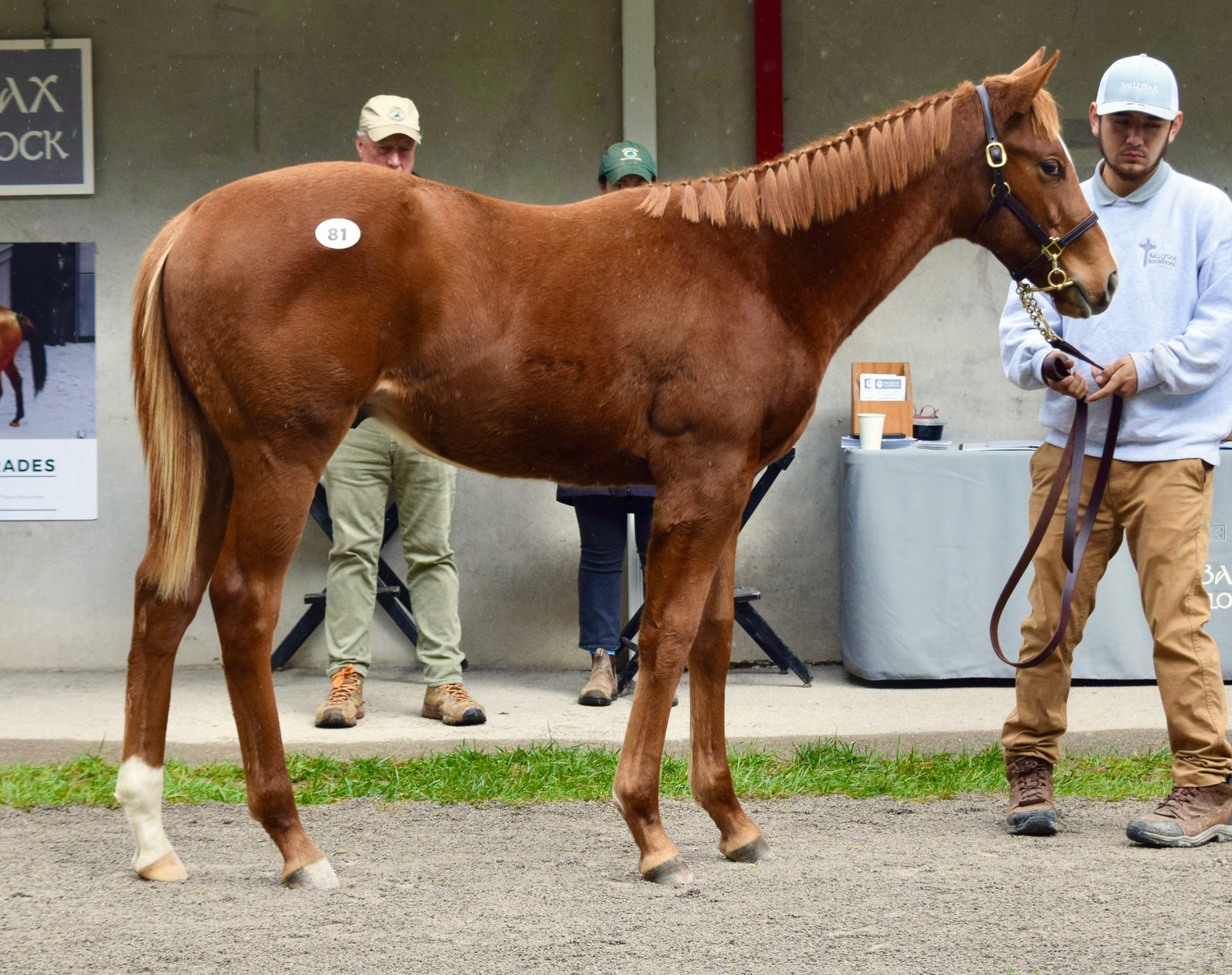
At a horse auction, the verdict comes with a number. In November 2025, a chestnut colt by Cody’s Wish out of Catching the Wind sold for $500,000 to trainer Wesley Ward. Ballysax Bloodstock offered him for Two H’s, the partnership linking Henry Nothhaft Jr. with his father’s Thoroughbred operation. For a software entrepreneur accustomed to product launches and enterprise customers, it was a rather different form of user feedback.
The number makes a convenient opening. It also invites precisely the mistake Nothhaft’s recent work tries to prevent: treating the most conspicuous result as the whole story. A sale price records what a buyer paid. It leaves the purchase costs, intervening decisions and alternative outcomes offstage. A handsome horse can occupy the photograph while the arithmetic waits outside.
Nothhaft has spent much of his career attending to what waits outside. At Trapit, where he was co-founder, chief product officer and later CEO, the overlooked material was useful reading buried beneath the web’s daily output. In Kentucky, it is the information behind pedigrees, auction results and breeding decisions. The settings have changed considerably. His interest in making information usable has survived the journey.
Before the auction ring, a meeting room
His early career was in the practical end of software. He worked at Everdream, which provided remote management of connected devices and was acquired by Dell. At WebEx, he oversaw the flagship Meeting Center service through the company’s acquisition by Cisco. LiteScape followed, with work on its mobile address-book and presence product, 3deep.
These were products with jobs to do. A meeting had to connect. A contact had to be findable. Software could be technically elaborate, but customers still needed a comprehensible reason to open it. His education was in economics at Willamette University, a useful background for a career spent between product decisions and the business surrounding them.
In 2009, he became an entrepreneur-in-residence at SRI International. There, the opportunity widened. SRI’s artificial intelligence work offered ways to learn from a person’s preferences and organize information accordingly. Nothhaft and fellow co-founder Gary Griffiths built Trapit around that possibility. The technical inheritance mattered; so did the mundane question of what someone would actually want it to do on a Tuesday morning.
A reading list that learned
Trapit grew out of CALO, the research program that also gave rise to Siri. Their family resemblance was in the underlying research, rather than their eventual jobs. Siri pursued interaction with devices. Trapit pursued discovery: finding material a reader might care about without requiring that reader to know every worthwhile publication in advance.
Its working unit was a “trap.” A keyword, a URL or an existing article could start one. The search persisted, gathering related material as it appeared. A thumbs-up or thumbs-down helped adjust the results. That small piece of product design gave an abstract AI proposition an ordinary human action: tell the thing whether it has understood you.
Nothhaft described it as “a Tivo for the real-time web.” The comparison had the virtue of being domestic. People already understood a machine that kept something interesting until they had time for it. A personalized reading service needed to earn the same sort of place in a day.
The ambition was also editorial. Friends could supply links, but a social circle was an imperfect map of someone’s interests. Search could locate a known destination, but discovering unfamiliar places required more assistance. Trapit tried to make that assistance continuous. A reader could return to a subject rather than repeat the same hunt from scratch.
When the reader became a customer
The company’s path led toward organizations. By 2013, its Content Curation Center combined discovery with tools for publishing material. The business problem extended beyond finding an article: someone had to select it, prepare it for an audience and get it into the appropriate channel. In 2014, the product was simplified under the Trapit name.
That December, Trapit and Addvocate announced their intention to merge. Addvocate brought employee advocacy software, helping people share material through their own social accounts. Together, the businesses could connect the supply of relevant reading with the people a company hoped would pass it along. Customers included IBM, Microsoft, GoDaddy, MarkLogic and New York Life.
Nothhaft became CEO following the merger, with the appointment announced on March 2, 2015. He had already worked across strategy, product development, marketing and business development. The new title put responsibility for the combined company alongside his responsibility for its product.
“Impersonal spray-and-pray tactics have displaced intimacy and trust,” he said at the time. It was an awkward problem to solve with software: helping a company coordinate communication without draining the person from it. The product could organize suggestions and reporting. The credibility of the conversation still belonged to whoever pressed send.
ScribbleLive acquired Trapit in May 2017. An experiment in personalized reading had become an enterprise business and then part of another company. The route required changes in audience and workflow, with Nothhaft moving from designing the product to leading the organization selling it.
“Impersonal spray-and-pray tactics have displaced intimacy and trust.”Henry Nothhaft Jr. / 2015
The collaborator misses the conversation
After Trapit, his work included product leadership at Clear Labs and operating roles at Alioth and EssentialDx. In 2023, EssentialDx prepared to launch tools for organizational analysis, talent acquisition and brand perception. The proposed engagement lasted 30 days and used a flat fee. He was again working on the distance between available information and a decision someone needed to make.
His public writing provides a more personal account of how he likes that work to feel. In an April 2025 essay, he recalled two periods when a close colleague made the creative process unusually productive. He ran product and marketing; the collaborator ran business development. Ideas moved between them, becoming pitches, narratives and finished work.
Moving up the organizational chart made that rhythm harder to recreate. Peers had separate responsibilities. Direct reports brought a different relationship to the conversation. The recollection is revealing because its desired reward is companionship in making things, rather than the solitude usually assigned to the executive with a vision.
He wrote that working with generative AI had brought back some of that productive exchange. He described using it to refine language, structure ideas and finish work. The enthusiasm came with a condition: the person had to arrive with ideas and standards. An available collaborator could accelerate a project; deciding what deserved to exist remained a human responsibility.
His June 2025 essay, “LinkedIn is a Joke,” supplied the less enchanted side of the same sensibility. He criticized a professional network filled with performative posts, opaque algorithms and attention-seeking content. The builder of a content-discovery business was still irritated by content that consumed attention without repaying it.
Two H’s, one new field of questions
In 2024, Nothhaft relocated to Versailles, Kentucky, and bought his first mare in foal. His father had years of experience breeding, racing and selling Thoroughbreds through HnR. Their Two H’s partnership joined that experience with the younger Nothhaft’s work in data and AI. It also gave him a live problem around which to build analytical tools.
The resulting platform became Thoroughbred Intelligence. His work now covers bloodstock research, breeding, racing, auction valuation and ownership strategy, with clients and transactions spanning the United States, Australia and Europe. He also co-founded Insight Thoroughbred, serving as operating partner and handling analysis and business operations. Its first fund acquired five mares in foal in 2025.
The family partnership’s colt provides a concrete example of this chapter, but should not be mistaken for a controlled experiment. A $500,000 auction result establishes a transaction. It cannot isolate how much value came from analysis, horsemanship, pedigree, market appetite or fortune. The distinction matters when an AI entrepreneur enters a business already rich in persuasive stories.
Nothhaft’s September 2026 writing about other breeders makes room for that complexity. He followed the years of decisions behind two Book 1 auction results, including the history of a claimed maiden and the descendants of a breeder’s first mare. He paid attention to the people and patience beneath the sale-board numbers. Even in a market that publishes its verdicts, understanding the verdict takes more work.
The expensive end of the spreadsheet
His October 23, 2026 analysis offered a less celebratory auction story. Thoroughbred Intelligence tracked 311 yearlings previously bought at public auction. Of those, 212 sold at the October sale; 99 were bought back or withdrawn. The sold horses brought about $14.5 million against approximately $15.5 million in their purchase prices.
The split by original cost was sharper. Horses acquired for under $25,000 sold at a median 2.39 times their purchase price. Those acquired for $100,000 or more sold at a median 0.69 times. These are gross multiples, before the costs of keeping and preparing a horse. The horses without completed sales also prevent a tidy final accounting of the whole group.
There is something fitting about his latest work making an attractive market look more complicated. Trapit promised to reduce the time spent hunting for relevant reading. The auction tracker puts purchase histories and resale outcomes where a reader can inspect them together. Both require someone to decide which information belongs beside which other information.
Nothhaft remains involved in software and advisory work, including Catalyst Industries and New Circle. Kentucky has supplied another place to apply the habit. The next sale will produce another set of numbers, another photograph and another temptation to turn an outcome into a complete explanation. His more useful contribution may be the question that follows: what else do we need to know before we bid?