Christopher O’Donnell has an unusually firm position on projectors. They are liable to ruin your resolution, flatten your contrast, and turn a carefully designed interface into something resembling road surfacing. His advice for a product demo is correspondingly unromantic: test the equipment, tell the developers you are presenting, and arrive before the audience. Glamour can wait until the internet connection works.
In his 2015 guide to demonstrations, he also insists on showing production software. “Production software or it didn’t happen.” It is a compact statement of taste from someone whose career has involved an awful lot of things happening: a marketing product rebuilt, sales software developed inside another company, a chief product officer’s job, and then a new business with an old colleague.
Today O’Donnell is co-founder and CEO of Day AI. He is returning to customer relationship management, a category he helped build at HubSpot, with a question that reaches beyond software: how much of a conversation survives being turned into a record?
A degree with two volume controls
At Brown University, where he studied from 2000 to 2004, O’Donnell majored in Computers & Music. The program brought together computer science, composition, and performance. The combination looks unusually apt in retrospect, though it was also simply what he studied. His education included Brazilian Portuguese and a semester living in Rio de Janeiro through Brown in Brazil.
There is a pleasing refusal to choose one instrument in that background. He has continued producing music and playing guitar alongside building technology products. A software career, in his case, did not require quietly retiring the other half of the degree.
Before HubSpot, he was director of product at Performable. The acquisition of that company brought him into HubSpot in 2011. He then led a rewrite of the marketing product, work that culminated in HubSpot Contacts and the 2012 release of HubSpot3. His later responsibilities included the teams building HubSpot CRM and Sales Pro, before he became chief product officer overseeing product management, design, and user experience.
The pirate flag inside the office
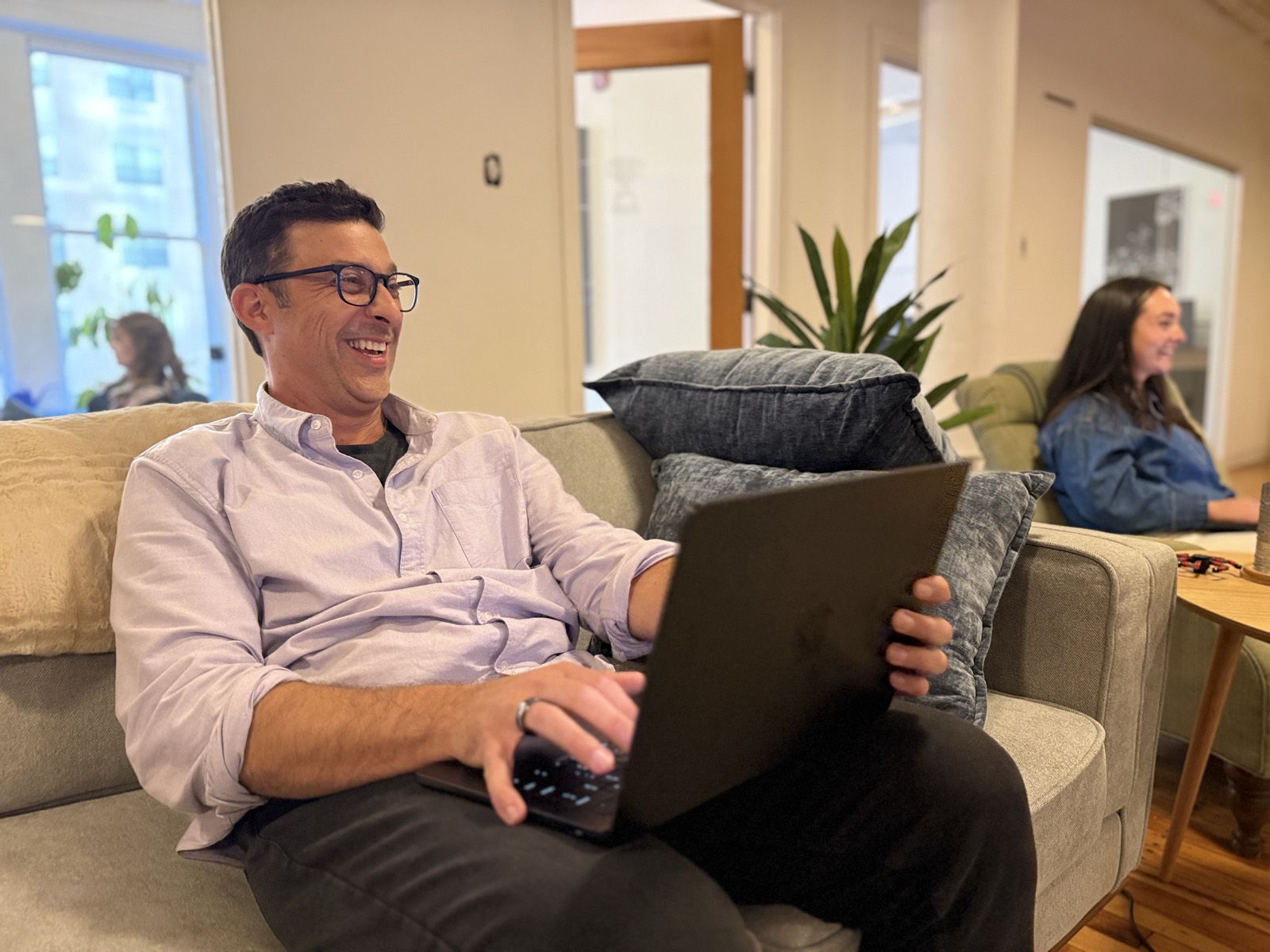
The HubSpot sales-product chapter came with a pirate flag. O’Donnell and Michael Pici hung it behind their small team as they worked on what amounted to a startup inside the company. The decoration was a fairly direct organizational chart.
The group had its own technology stack and billing. It began with something modest: notifications that told users when an email had been opened. From there it developed sales-acceleration tools and, eventually, the core CRM. The route into a large software category began with a specific thing a salesperson could use.
O’Donnell remembers the process as rocky. That is a useful correction to the neatness that successful projects acquire afterward. Once the outcome is known, each decision can look like an arrow pointing toward it. Inside the experiment, the arrows were still being drawn.
Pici would become his co-founder at Day AI. Their second company therefore began with experience of building together, including the less photogenic part: working out what to make before anyone has the benefit of calling it obvious.
A science fair with consequences
His account of HubSpot Science Fair gives a better picture of his approach than a job title can. In 2017, he described a monthly company-wide showcase where product teams demonstrated working software and explained its effect on customers. Features had to arrive with their status attached: who could actually use this thing?
The format made room for improvements to reliability as well as new capabilities. A reduction in support tickets could matter. A customer’s response could matter. The company needed something tangible to connect the demonstration to the person on the receiving end.
As vice president of product, O’Donnell said he sometimes saw the work for the first time at the event. That required trust. It also gave the people doing the building a chance to explain their decisions directly to the rest of the organization.
There were costumes and ambitious catering, too. One engineer made hundreds of dumplings. Software organizations have devised many ways to discuss accountability; this one at least understood the advantages of feeding the room.
The interest in real conditions runs through his earlier writing about design. A contact page filled with invented information can look beautifully composed. Actual customer records arrive with gaps, inconsistent fields, and inconvenient amounts of text. His advice was to design using production data and keep designers close to engineers as the work changed.
He treated a mismatch between mockup and finished product as something to investigate. Perhaps the idea had improved during development. Perhaps the details had been overlooked. Perhaps the team lacked a particular skill. Those are different problems, and calling all of them an execution failure would save time only by wasting the next conversation.
“Creativity comes from the constraints.”
Christopher O’Donnell
The advice he had to learn to give
O’Donnell has also described a flaw in his own way of leading. In a detailed review, colleagues appreciated the room he gave them to work and experiment. Some also felt that he had useful advice he was keeping to himself. Freedom could leave people wondering whether the boss had a preferred answer hidden in a drawer.
He had wanted to protect their ownership. The result could be an awkward guessing game: make your own decision, while trying to determine which decision the person evaluating you already favors.
His response was to offer a starting point and explain the context, while explicitly inviting a better approach. He called it “Do this, or something better”. The phrase asks something of both parties. A leader must reveal assumptions; a team must be allowed to challenge them.
It is an instructive admission from a product executive. Advocating autonomy is easy. Describing how your version confused people takes more care. His account makes leadership sound like work that needs revision, which is probably useful for everyone required to sit through it.
The songs stayed on the laptop
Music provides another view of the difficulty of showing work. O’Donnell has described writing roughly a hundred songs before sending eight to musician Brad Hallen. Hallen thought four or five were worth developing further. Getting to that exchange took years.
He had put the guitar away while making his way into adult responsibilities. Returning to practice required its own effort; sharing songs introduced another threshold. A person can be alone with a laptop and still find the next step daunting.
The story is more revealing than a tidy claim that musicians make better product leaders. There is no need to settle that argument. Here was someone accustomed to building things for other people, discovering how difficult it could feel to let another person hear a song.
O’Donnell makes music with The Providers. His account of finding the band’s audience also sounds familiar to anyone who has worked on a product: put the work in front of people, notice who responds, and learn where to concentrate. A composition may begin in private. An audience introduces evidence.
Back to the customer conversation
After HubSpot, O’Donnell served as chief product officer at Thrive Global. He and Pici eventually reunited to build Day AI, founded in 2023. The project brought them back to a familiar gap: the difference between what happens in a customer relationship and what somebody later remembers to record.
An early visit from Sequoia’s Dannie Herzberg found a business barely a week old, with an idea and no code. The tour included O’Donnell’s music studio, guitars, and his children’s Lego collection. As opening exhibits for a software founder, those objects could hardly have been more cooperative.
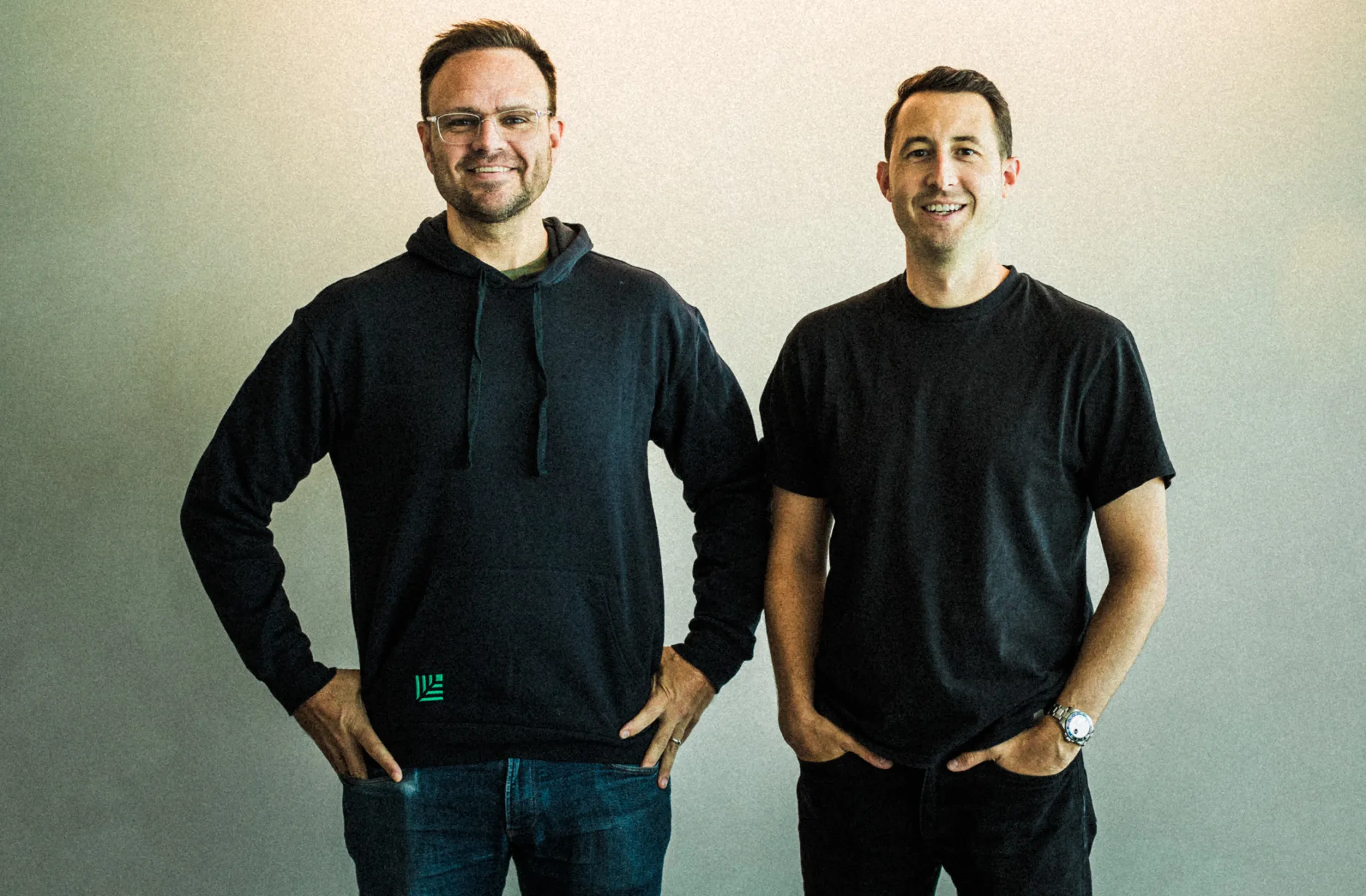
The team went on to conduct hundreds of interviews, using its own product to collect information and test assumptions. The picture is of a partnership resuming a working habit: Pici and O’Donnell comparing notes, looking for the point where customer experience can become a product decision.
A sketch of the product’s aim, rather than a measurement of its performance.
The room to change course
Building automation has brought an old issue back into view: people want help and still want control. Day AI learned that some customers wanted to create sales opportunities themselves, even when the system could populate a pipeline automatically. The team added a way to turn that automation off.
The examples O’Donnell gives of useful results can be surprisingly ordinary: meeting preparation, or a short list of priorities for the day. A complicated system earns its place through a task somebody recognizes.
In February 2026, Day AI announced a $20 million Series A led by Sequoia, with participation from Greenoaks, Conviction, Sound Ventures, and Permanent Capital. Pat Grady joined the board, and the product entered general availability. The public release followed a long period of working with early customers.
By October, the release notes under O’Donnell’s name included support for Microsoft users, following September updates for dictation, image pasting, dashboards, and custom connectors. The everyday work continues after the announcement.
His current argument is that software can capture what happened across customer conversations, then give people and agents the context to act. It asks buyers to reconsider an arrangement he knows from the inside. The ambition is substantial; the practical test remains familiar. Put the work in front of someone. Let them try it. Pay attention to what happens next.