Gameloft had a problem with the sofa. Its games had travelled from phones to consoles, but asking for help could still mean leaving the game and composing an email. A controller is an agreeable instrument for steering a car. It makes a rather poor typewriter. The player wanted to recover an account or settle a purchase problem; the support journey introduced another chore.
- Helpshift embeds support in games and apps, carrying player context into the conversation.
- Its offer joins software, AI and human services across support, engagement, safety and community.
- The lesson for other businesses: measure solved problems, not merely messages intercepted.
Helpshift’s answer was a QR code. Scan it with a phone and the support conversation moves to a device built for typing, while the console remains available for play. Configured player and session information travels with the request. In Keywords Studios’ Gameloft account, customer-care supervisor Anna Yangolenko describes console support as the company’s weakest channel before the change.
“Console support used to be our weakest channel”
Anna Yangolenko · Gameloft
That small piece of choreography explains the company better than a parade of AI adjectives. Helpshift works on the distance between a problem and a useful response. In a game, that distance can include an app switch, forgotten account details, a queue and a second explanation of the same complaint. Removing steps gives the player fewer occasions to reconsider the whole evening.
01 / The business inside the interruption
Helpshift sells a player engagement platform to studios and app developers. A developer integrates its software; a player sees help inside the experience; support staff work with tickets, messages, knowledge and automation behind it. Publicly named customers include Supercell, Tencent, Zynga, Gameloft, Jam City and SYBO. This is business software whose most consequential user may never learn the vendor’s name.
The company’s current offer spans four areas: support, proactive engagement, trust and safety, and community. Support is the familiar entrance. A player asks a question, searches a help centre or starts a conversation. The other areas address what happens around that exchange: reaching a player before trouble becomes a ticket, moderating harmful behaviour, and understanding a community’s reactions.
Its developer documentation is a useful antidote to abstract promises. There are guides for Android, iOS, Unity, Unreal Engine and React Native, alongside web, PC and console options. REST APIs expose building blocks for issues and FAQs. The work involves placing a support surface in the product and deciding what information accompanies it. A clever answer cannot retrieve context the studio never supplied.
02 / A company called Infinitely Beta
The origin was less tidy than the present positioning. Abinash Tripathy and Baishampayan Ghose began by assembling a team under the name Infinitely Beta. Their published account describes a consumer-finance experiment, Paisa.com, in 2010. It attracted users but lacked a clear revenue model and did not match their ambition for a global product.
They next explored web CRM: a private question-and-answer service for enterprises, with an inbox gathering messages from different channels. Investor conversations helped redirect the team towards mobile. The account describes an abrupt rebuild for that audience. The useful lesson is quite specific: neither users nor a feature-rich product had settled the questions of who would pay and where the product belonged.
Helpshift dates its founding to 2011. By January 2020, it was reporting 300 million chatbot interactions during the previous year, with more issues handled by bots than agents for the first time. Those are historical company figures, not a census of today’s business. They do show that automation was part of Helpshift’s proposition well before the current enthusiasm for generative AI.
03 / The FAQ that needed fixing
At Trailmix, maker of Love & Pies, the early support operation could not keep pace with the game. The company’s Helpshift account identifies two practical clues: gameplay questions produced the most tickets, and account-recovery help attracted poor feedback. The team used focused bots, improved self-service and AI translation rather than treating every problem as one giant automation project.
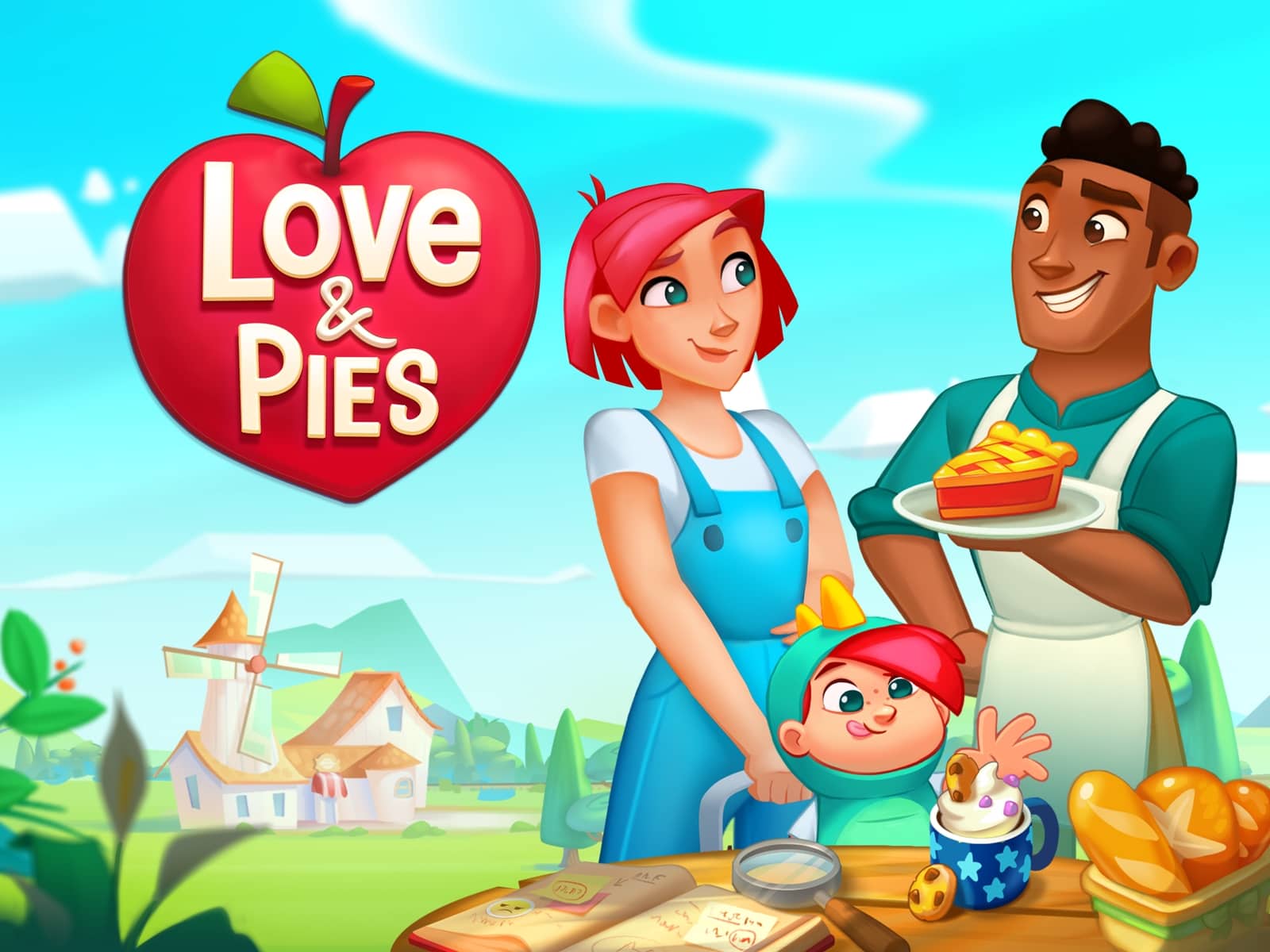
One unpopular account-recovery FAQ became a guided Smart FAQ form. Its dislike-to-view ratio fell from 3.74% to 0.90%. The published story reports support in 18 languages, a 4.36 overall satisfaction score and $50,000 in annual operational savings. The delightful detail is the unglamorous one: repairing a piece of help content mattered.
Trailmix customer results reported by Helpshift. Individual outcomes, not platform-wide guarantees.
Trailmix’s headline automation rate was 93%, but the account also says more than 90% of tickets passed through some form of automation. That distinction matters. Routing, gathering information and translating a message can help a human finish the case. A reader can copy the sequence: find the recurring issue, improve its information, automate a bounded step, then check whether players are happier.
04 / An answer is only the beginning
Care AI Agent is Helpshift’s player-facing AI product. Its configuration combines personality, approved knowledge, procedures, general instructions, guardrails and actions. The studio supplies policies and workflows; the agent can perform configured operations and hand difficult conversations to people. For a missing reward, the relevant test is whether the system can follow the approved recovery process, not whether it can write a charming apology.
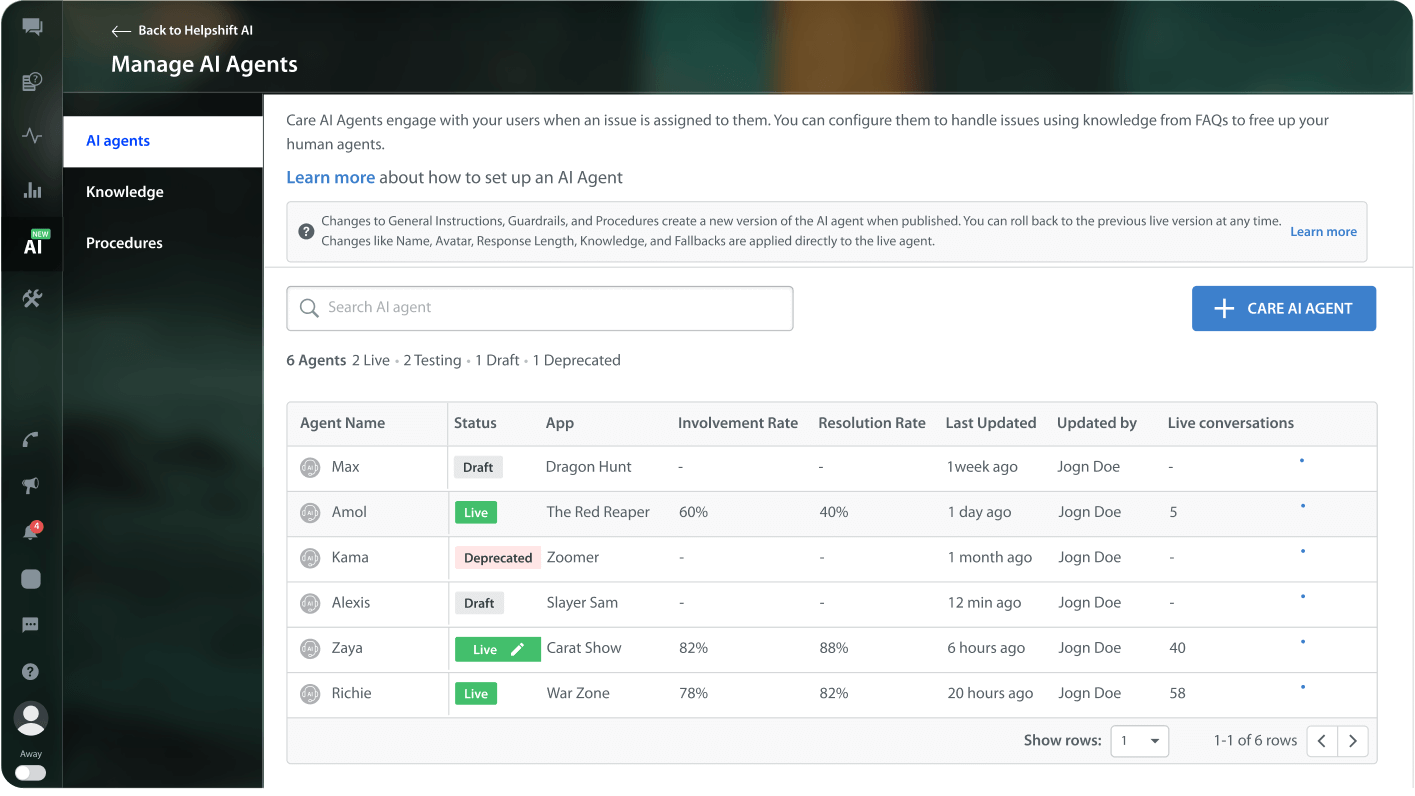
This puts Helpshift in competition with broader customer-service platforms such as Zendesk and Intercom/Fin. Its distinctive emphasis is gaming integration and player context, coupled with human services. The decision is less about which vendor has a chatbot than where the support experience lives, which systems it can act on, and how cleanly a person can take over.
Jam City offers another illustration. Its published case study describes a move from email-heavy support to an in-game knowledge base and messaging, with a reported 30% reduction in ticket volume. Reporting also made player feedback easier to carry into product decisions. A complaint about an update can become useful evidence for the next update. That gives support a second audience: the people making the game.
05 / Why buy the software and the people?
Keywords Studios announced its agreement to acquire Helpshift on December 5, 2022. Deal counsel JSA reported a $75 million deal value. The strategic logic was visible in the existing partnership: connect Helpshift’s automation with Keywords’ player-support operation and translation capabilities. Software could handle repeatable work; people could address conversations requiring judgement. The acquisition joined those activities commercially.
Today’s pricing follows the breadth of that offer. Helpshift describes a customized model based on interaction volume, activated solutions, technology and AI or human-service capabilities, and geographic and language coverage. A buyer therefore needs a brief, not just a seat count. How many conversations? Which countries? Which issues should software resolve, and which should reach a specialist?
Those choices also set the conditions for success. A neglected knowledge base gives automation weak material. An account dispute needs an approved procedure and appropriate access to systems. A sensitive conversation needs a reliable escalation route. Helpshift’s own Care AI rollout guidance recommends testing, an initial deployment to 10-20% of traffic, and weekly reviews. Buying the tool does not remove the obligation to understand the work.
06 / Catching the player before the complaint
The 2026 updates extend the same idea upstream. User Hub lets developers pass live user context; Proactive Engagement supports targeted in-app and push messages. The aim is to act on player circumstances before someone opens a ticket. For a VIP programme, that might mean outreach when a player reaches a configured threshold. The studio still has to decide which moment deserves a message.
In August, Helpshift announced Care AI versioning and instruction validation, followed by an AI Analytics closed beta that lets teams ask questions of connected data in ordinary language. Versioning is particularly revealing: an AI support operation needs to change its instructions, test changes and sometimes roll them back. Running the system is an ongoing editorial job as well as a technical one.
The wager running through Helpshift is that support belongs close to the experience it repairs. A QR code can spare a console player an email. A better form can spare an agent another round of questions. A careful handoff can spare everyone a repeated explanation. Games spend considerable effort persuading people to enter their worlds. The help button is where a studio gets to demonstrate that it would like them to stay.