Prayer has terrible onboarding. The vocabulary can be unfamiliar. Silence feels awkward. A rosary requires knowing where you are, what comes next and why any of it matters. Hallow’s wager was that the problem was not a lack of spiritual supply. Christianity had two millennia of that. The problem was the doorway.
So the Chicago company built one that looks like a premium consumer app: choose a voice, pick a session, set a reminder, download it for the train, join a challenge and return tomorrow. Inside are daily Gospel reflections, rosaries, novenas, Bible readings, Gregorian chant, sleep stories, music and guided forms of contemplative prayer. Some sessions are led by clergy and theologians; others feature actors and public figures including Jonathan Roumie and Mark Wahlberg.
This is not theology by disruption. Hallow is unusually careful to say the opposite. Its product takes old practices and reduces their setup cost. That simple distinction has carried the app from a handful of home-recorded scripts in 2018 to more than 10,000 sessions. In June 2025, Hallow said it had nearly 24 million installs across more than 150 countries and eight languages, with users completing more than 1 billion prayers.
A meditation app with somebody on the other end
CEO Alex Jones grew up Catholic, drifted into atheism and agnosticism, then used secular meditation while working in consulting. The calm helped, but he felt the exercise was missing a relationship. He began asking friends, priests and pastors whether Christianity had its own contemplative tradition. It did. Quite a lot of one.
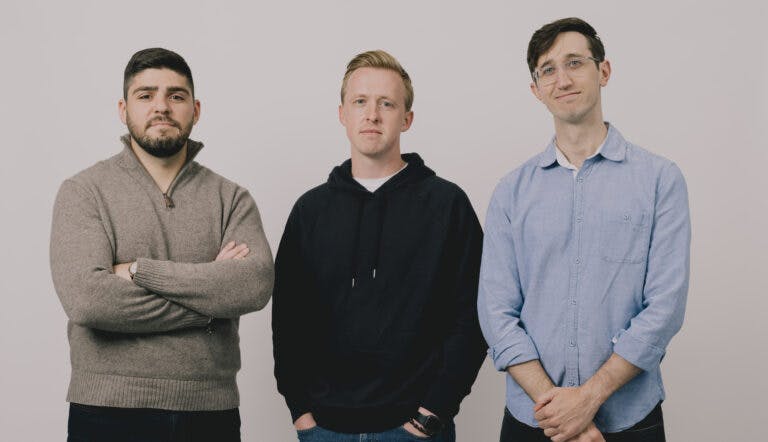
Jones and fellow Notre Dame graduates Erich Kerekes and Alessandro DiSanto began researching those practices, recording scripts and testing them with friends and family. Jones built a rough prototype. Kerekes was on a McKinsey partner track; DiSanto had worked at Goldman Sachs and in private equity. They left those jobs in late summer 2018 and put the app in Apple’s store that December. Jones later said he initially earned nothing, lived with his wife in a tiny studio and drained their retirement savings.
The founding insight was narrower than “religion on a phone.” Hallow borrowed the interface grammar of Calm and Headspace but aimed it at Christian prayer, with content reviewed for alignment with Catholic teaching. That specificity gave the app a distinct shelf in a crowded meditation market. It also created a trust obligation: a sleep narrator can be celebrity casting; a guide to prayer is closer to editorial judgment.
Hallow did not digitize belief. It digitized the moment between wanting to pray and actually beginning.YesPress analysis02 / What failed first
Too many good ideas became one bad strategy
There is no public Hallow postmortem with a flaming launch or fatal pivot. The first clearly documented failure was more ordinary: loss of focus. As the early team added people and possibilities, Jones said it was “doing too much” and not doing any one thing as well as it could. COVID-19 made the sprawl harder to ignore. The company’s lesson was that a growing founder’s job shifts from producing ideas to refusing most of them.
What changed their mind was usage. New Advent and Lent meditations performed well when the company synchronized product releases and marketing with the religious calendar. Sleep content also worked as an immediate fix for a concrete problem. Jones called sleep a “pain-killer” that could bring someone into the app, while prayer and meditation were the longer-term “vitamin.” The language is blunt for a sacred product, but the funnel is legible.
The Hallow habit loop
Stress, poor sleep or the wish to pray without knowing how.
A guided session removes decisions and supplies the next word.
Reminders, streaks, daily readings and group challenges create rhythm.
Longer programs, community and liturgical seasons widen the practice.
The calendar is the quiet advantage. Most consumer apps must manufacture occasions. Hallow inherits Advent, Lent, feast days and a daily liturgy. Each creates a reason to begin now, a defined program to follow and a natural group of people doing the same thing. In 2023, a Lent push carried Hallow to No. 3 across Apple’s U.S. App Store. After a 30-second Super Bowl ad aired in 14 markets in February 2024, it reached No. 1.
Prayer is free. Production is not.
Hallow debated whether to become a nonprofit. It chose a public benefit corporation and a freemium subscription instead. The stated reason was quality: polished software, original audio and credible teachers cost money, and advertising inside prayer would puncture the peace the product promised. Venture structure also made it possible to recruit with equity and pursue consumer-scale distribution.
The current list also includes $9.99 monthly and $119.99 yearly for up to six family members. A free tier offers hundreds of prayers and daily content.
The company says putting some skin in the game made users up to 2.4 times more likely to form a daily prayer habit, even when that commitment was only starting a trial. Treat that as the company’s own behavioral observation, not a clinical finding. Still, the mechanism is familiar: paying creates an intention to use what one bought. Hallow also says it gives free access to clergy and offers scholarships, allowing the paid layer to fund a broader free one.
Investors have supplied the other half of the engine: a reported $3 million seed round in 2019, a $12 million Series A led by General Catalyst in April 2021, a $40 million Series B led by Drive Capital that November, and a $50 million Series C in 2023. Total announced funding reached $105 million. Hallow’s disclosed 2024 Super Bowl buy was regional rather than national, so its precise cost remains private; Jones said it was a fraction of the roughly $7 million price then associated with a national 30-second spot.
04 / Customers and competitionPart audio studio, part parish utility
The core customer is Catholic, often someone who wants a more consistent prayer life or an accessible way back into one. Yet the company welcomes other Christians and spiritual explorers. Families can share a plan. New Kids Profiles give U.S. children 13 and under a curated space with a parent PIN and without adult social or purchasing features. Hallow AI answers questions about faith and helps locate sessions, while explicitly disclaiming the role of priest, mentor or spiritual director.
Then there is the institutional side. Parishes, dioceses, schools and universities can offer Hallow to their communities. Notre Dame and Franciscan University are among the named partners. This is more than bulk access. An institution lends trust, supplies a ready-made group and embeds the app in an existing practice. Hallow said those church partnerships helped drive its recent growth.
Alternatives range from Pray.com, Amen, Ascension, Glorify and YouVersion to Calm, Headspace, a parish Bible study, a printed devotional or no software at all. The last competitor matters most. Nobody needs an app to pray. Hallow must therefore make guidance and consistency worth the intrusion of a phone - the very object many people are trying to escape.
05 / The catchWhen the voices are the product, casting is governance
Celebrity partnerships widen the top of the funnel. Wahlberg and Roumie can reach people who would never search an app store for “lectio divina.” They also bring biographies, politics and controversy into a product built on trust. Hallow’s 2023 Advent work with Liam Neeson drew criticism from Catholics over his abortion-rights advocacy. Jones first defended the partnership, then later called it a mistake. In April 2025, Hallow stopped advertising on Russell Brand’s show after British prosecutors charged Brand with sexual offenses; Brand denied the allegations.
Recognizable voices reduce the social risk of trying a religious product and give campaigns a clear face.
A partner’s conduct can turn a content decision into a referendum on the company’s judgment.
The broader tension is not a bug to patch. Hallow wants Catholic fidelity and mass reach, sanctuary and growth mechanics, quiet reflection and a feed full of famous voices. Those goals can reinforce one another until they do not. A larger library may help users find the right prayer, or overwhelm a beginner. Community can make practice less lonely, or make a private act performative. A streak can support discipline, or become the thing one serves.
06 / The copyable playbookSteal the structure, not the purple gradient
Five moves worth borrowing
- Start with an old, valued behavior people struggle to repeat.
- Use a concrete pain point as the doorway, then earn the deeper habit.
- Launch around a calendar your audience already cares about.
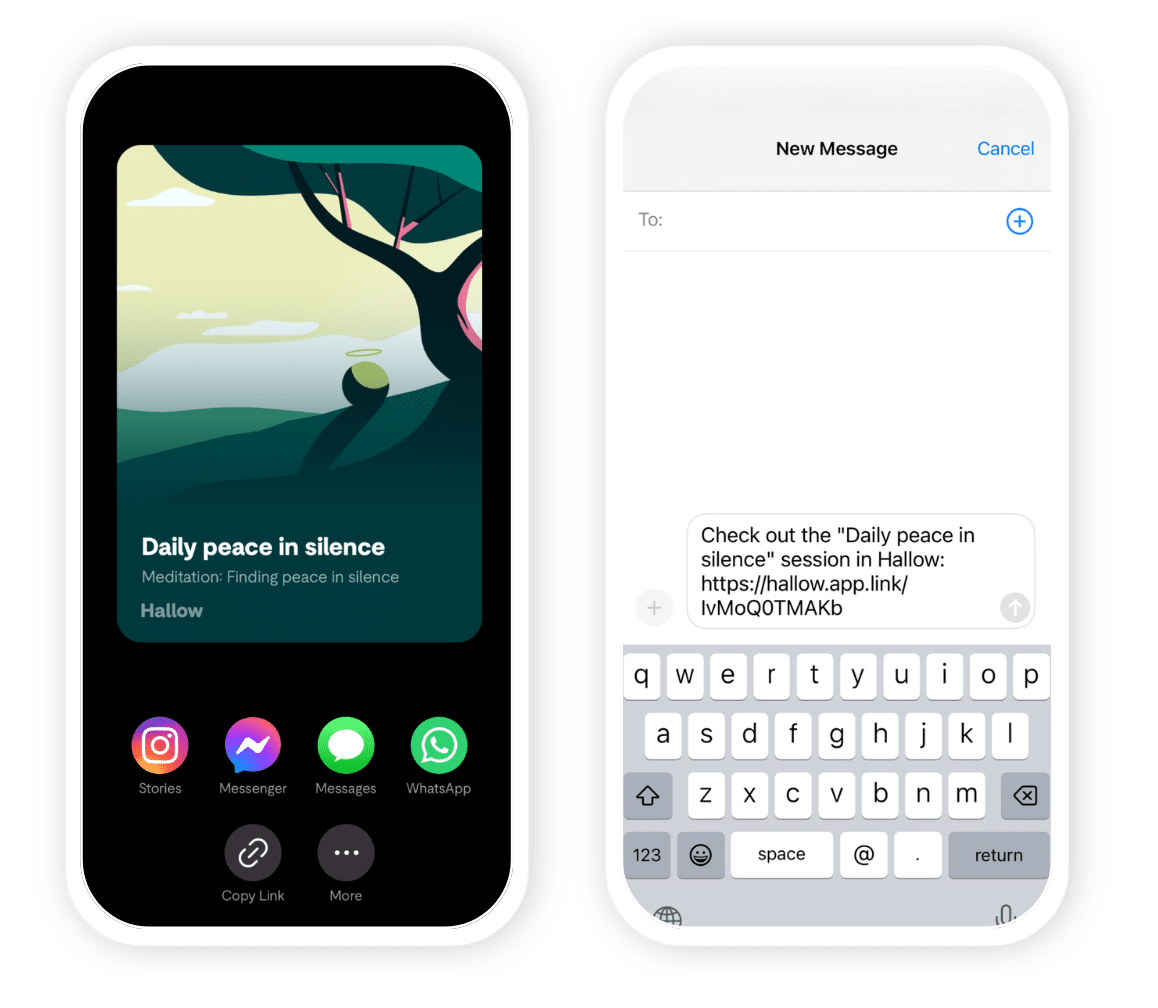
- Make sharing land on the exact useful thing, not a generic homepage.
- Let institutions distribute trust while the consumer product preserves choice.
This playbook will not work when the underlying practice is weak, occasional or invented by the marketing team. It also fails when experts will not vouch for the content, when the free alternative is already easier, or when reminders feel exploitative rather than supportive. Seasonal launches only compound demand that exists. A celebrity can accelerate attention, but cannot manufacture legitimacy.
Hallow’s most useful lesson is not “put religion in an app.” It is to respect the thing being modernized. The company did not flatten prayer into generic wellness; it built around Catholic vocabulary, teachers, rituals and time. That narrowed the audience, sharpened the product and gave every growth experiment a line it could cross. The continuing work is deciding where that line belongs.