Before Coach.me had its present name, it had a little identity crisis. There was Lifepoints, then Mibbles, then Lift. The original idea was a motivational robot that handed out points. A person would do something virtuous; the software would applaud. By December 2014, cofounder Tony Stubblebine was ready to admit that this arrangement had not worked very well.
The useful surprise was other people. Users could give one another props, answer questions and eventually offer personal coaching. The app had been built to reward behavior. Its community supplied something harder to program: attention. Coach.me’s history is the story of a software company discovering that encouragement had a human supply chain.
- Free habit tracking, with community support on iPhone, Android and the web.
- Optional human coaching through private chat: $25 a week or $87 a month.
- A second customer: coaches buying training, tools and access to clients.
The robot lost the room
Tony Stubblebine and Jon Crosby created Lift in 2011. By its 2014 transition to Coach.me, the central question had changed. How could the company distribute coaching to people who would never book an expensive appointment? A phone already traveled with its owner. Advice could travel in the same pocket.
In September 2014, Stubblebine described an experiment in which a teammate, Erin, coached about a dozen clients for several weeks. Daily encouragement appeared to help. The experiment prompted more tests and the recruitment of coaches. These were company observations, not grounds for promising every customer the same result.
The early complaint was wonderfully ordinary: people wanted their coaches to write more often. Software could sell access to a person; it still had to establish what that access meant. How much encouragement does someone need on day eleven of a streak? What should a coach do when the client disappears?
“Quiet people are hard to coach.”
Tony Stubblebine, September 2014
A tiny ceremony, repeated
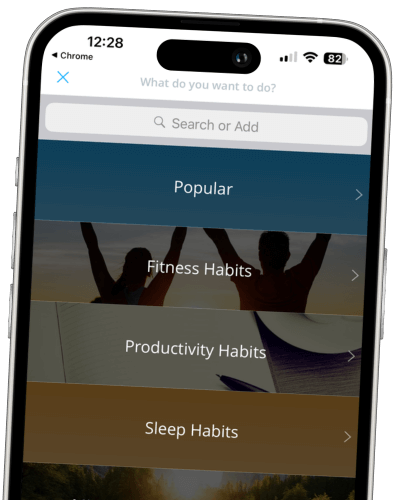
The basic product remains modest. Add a habit, choose a weekly target, set reminders and check in when you complete it. Progress becomes visible. Other users can give props, and a habit’s question-and-answer area offers a place to ask for help. The tracker is free; hiring a coach is optional.
That makes it useful for people working on exercise, meditation, writing, productivity or another repeatable practice. The problem is the gap between choosing a goal and returning to it tomorrow. Coach.me gives that return a small ceremony: act, record, receive a response, try again.
A 2012 release note contains an unusually thoughtful detail. Lift’s reminders backed off when ignored, doubling the interval between missed prompts. The team worried that an unchanging alarm would teach people to ignore their habits. That was the historical design, rather than a promise about today’s algorithm, but it captures the company’s preference for positive support over nagging.
What $25 buys
Habit coaching adds a private conversation. The published rate is $25 per week or $87 per month, and coaches also offer custom packages at their own prices. Calls are available separately. The support site lists leadership coaching at $150 per month, with live lessons, a peer lab and weekly learning.
Text changes the economics and the experience. A question can be sent when the difficulty occurs, without arranging a full appointment. A coach can offer advice and accountability around the chosen habit. The service depends on the client explaining what happened and the coach responding usefully; a subscription alone cannot do either job.
Within the habit-app market, Streaks offers task tracking built around maintaining a chain of completions. Coach.me combines tracking with a marketplace where the customer can hire an actual person. Its distinctive purchase is ongoing human feedback attached to the behavior being recorded.
For somebody who only wants a checklist, the free layer may be sufficient. For somebody struggling to follow through between conversations, the paid layer offers additional contact. Coach.me’s own terms make the boundary explicit: its services do not provide medical advice or substitute for diagnosis or treatment.
The coach has a checkout, too
There is another customer behind that conversation. Coaches need clients, payments, a profile and somewhere to manage the work. Coach.me supplies a directory, coaching tools, training and a community of practitioners. Its eight-week live Habit Coach Certification combines instruction, office hours, exercises and peer support. An on-demand version is also listed.
The payment rules reveal what the platform sells. Coaches bringing existing clients pay a published processing fee of 5% plus $0.30 per transaction. For affiliate-referred chat clients, the documented arrangement splits net revenue 50/50, with referral bonuses funded from the platform’s share. Different services have different terms.
That is a meaningful distinction for a coach deciding whether to join. A payment tool is relatively inexpensive; distribution takes a larger share. The business therefore serves both people seeking accountability and practitioners seeking a practice. Training helps supply the marketplace with coaches who understand the method.

First, make the app work
Coach.me’s January 2026 annual update describes a less glamorous priority: stabilizing the platform. The team said it had spent two years rebuilding fundamentals, updating mobile apps and refreshing the web experience. It reported negligible crash rates. Human encouragement still needs functioning software to reach the human.
Company-reported figures, published January 2026. Check-ins count actions, not individual people.
By May, a community update included a demonstration of coach content and message editing. In September 2026, Scott Maderer joined as director of coaching programs, with training and membership changes among his priorities. The next chapter still revolves around making coaches more useful and easier to find.
There is a practical idea here that a reader can borrow without buying anything: choose a repeatable action, record it and arrange for someone to respond. Agree on the frequency of that response. Tell them what prevented the action when it did not happen. The machinery is simple. Maintaining the conversation is the work.
Keep the conversation going
Explore Coach.me · Try the tracker · The Habit Vault · 2025 company update
LinkedIn · X · Instagram · Facebook
Watch the coach content demo ↗
Coach.me interviews and community videos ↗