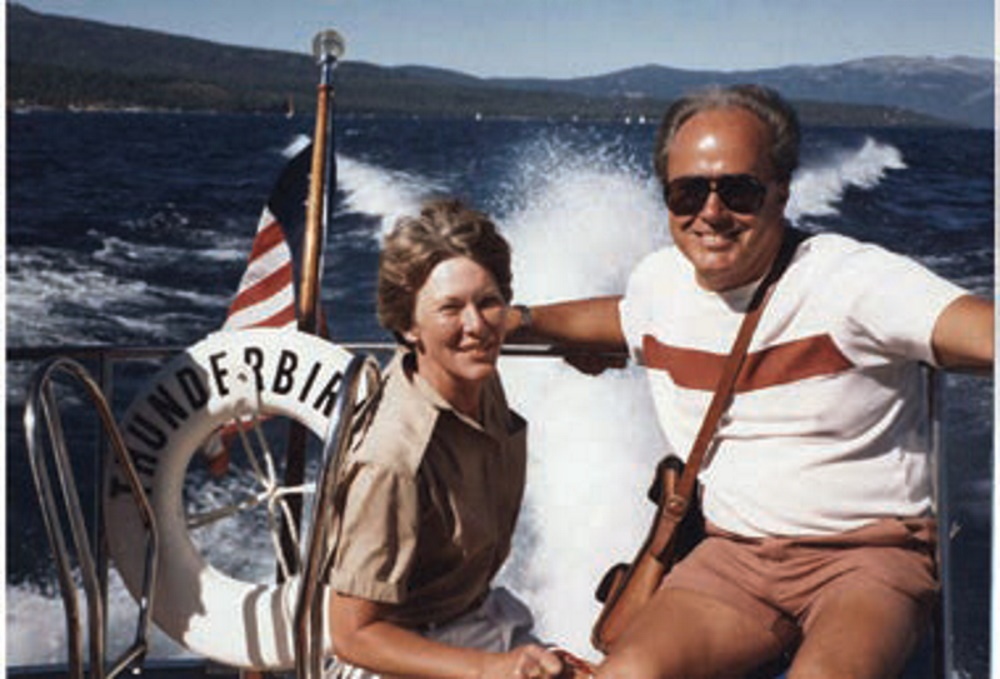
A wooden boat is an awkward thing to explain to an insurance company. Its age may be part of its value. The work lavished on it may matter more than its original price. In 1984, Frank and Louise Hagerty encountered that problem with their own boats. They already understood insurance. What they needed was coverage that understood the object.
- Specialist insurance anchors a wider business in car ownership.
- Valuation data, membership and auctions keep Hagerty useful between renewals.
- Expansion has required pruning: DriveShare was sold in 2023.
They started a specialty marine insurance business. In 1991, they added classic cars. That sequence explains something important about Hagerty today: its starting point was a mismatch between a standard financial product and a very particular customer. The company grew by taking that customer’s peculiarities seriously.
The useful part of the obsession
Consider the ordinary logic of an aging car. Time passes; value falls. A collector may experience the reverse. Correct parts, a documented history and an unusually good restoration can change the calculation. Two cars with the same badge and year can be very different financial propositions. An insurer needs to know which one is sitting in the garage.
Hagerty’s Guaranteed Value coverage addresses that uncertainty by agreeing on the insured value ahead of a covered total loss, subject to policy terms. Its customers include owners of classic cars, newer collectibles, modified vehicles, motorcycles and boats. Someone restoring a car can also explore coverage that increases its insured value as work progresses.
This is specialist territory, although Hagerty does not own the idea of agreed value. Grundy and American Collectors Insurance offer it too. Hagerty’s broader argument is that an owner needs help with much more than a policy: deciding what to pay, finding parts, getting home after a breakdown, eventually finding another buyer.
The valuation business makes that argument concrete. Hagerty Price Guide, published since 2006, combines sales information with automotive expertise. Its four condition grades distinguish concours cars from excellent, good and fair examples. The distinction is useful because enthusiasm is a poor appraiser. A cherished car can be wonderful to own and still have imperfect paint.
A club with an insurance engine
There is another problem with insurance as a customer relationship: most people would prefer never to need it. A policy can sit quietly for a year. A magazine, a video or an answer about an elusive part provides a reason to return before something goes wrong.
In the United States, Hagerty Drivers Club advertises membership at $70 a year, billed annually. Benefits include roadside services, a magazine, discounts, valuation features and Ask Hagerty, whose team helps with parts searches, shop referrals and buying questions. Insurance is not required. A person can enter through curiosity before owning anything that needs specialist coverage.
“We tapped into the emotion that is in our members, and certainly was in my family.”
McKeel Hagerty / Traverse Magazine, 2022
That is the logic behind the publishing and events operations. Shows such as Barn Find Hunter and ICONS speak to the hobby itself. The Amelia and Greenwich Concours put the brand where enthusiasts gather. Hagerty’s stated purpose is to make being a driving enthusiast easier and more enjoyable. Those activities give the promise somewhere to live.
The insurance economics remain central. Hagerty earns commissions and fees through managing general agents, and its reinsurance operation assumes risk and earns premium. Membership and transactions add other income. State Farm supplies another route to customers: the strategic investor committed $500 million in the 2021 public-market transaction, and its Hagerty-powered program reached 27 states by the end of 2025.
The expensive art of choosing
Following the customer also led to the auction room. In January 2022, Hagerty invested $15.25 million for roughly 40% of Broad Arrow. It then agreed to buy the remaining 60% for announced stock consideration of $64.8 million. The closing-date accounting value was higher, reflecting the share price. Buying expertise was a substantial commitment.
Broad Arrow brought auctions, private sales and financing. The connection is easy to follow: an insured collector may eventually become a seller, a buyer or a borrower. Hagerty can serve another part of that ownership cycle. That does not make every nearby business equally attractive.
In 2023, the company restructured and cut jobs. It sold DriveShare, its peer-to-peer collector-car rental platform, that October. Hagerty’s explanation emphasized profitable growth and a tighter core portfolio. MotorsportReg’s assets followed in 2024. These exits show where management drew a boundary; they do not establish that the underlying customer ideas were worthless.
The lesson another company can copy is practical: look for the next awkward problem your existing customer has, then test whether you are equipped to solve it economically. Shared customers are a starting point. They do not remove acquisition costs, operating complexity or the need to choose.
More of the risk, more of the reward
By August 2026, Hagerty reported crossing three million insured vehicles. Its June-quarter results counted more than 962,000 paid Drivers Club members. Vehicles and memberships measure different relationships, but together they show the reach of a business that began with a coverage complaint.
reported August 2026
advertised annual price
The next calculation is financial. A January 2026 Markel arrangement raised Hagerty Re’s U.S. quota share from 80% to 100%, increasing its share of both premium and risk. First-half results included $153 million in pre-tax transition costs and a $5 million net loss. Growth does not make the insurance arithmetic disappear.
Nor does affection make every car eligible. Traditional collector policies come with usage and underwriting conditions. Hagerty’s newer Enthusiast+ product began in Colorado for more frequently driven modern enthusiast vehicles, with different availability and terms. Owners still need coverage that fits their actual use. That was the wooden-boat problem all along.