Guy Shahar has about 22,000 photographs on his phone. He reckons he has sorted, printed, or revisited perhaps 250 of them. It is a nicely domestic embarrassment for someone whose business concerns the orderly handling of digital material. The camera got easier to use. The filing did not volunteer to do itself.
He uses that imbalance to explain Blee, the company he founded in 2022. An enterprise can make more marketing material with AI, then discover that every new version still needs somebody to check it. The extra capacity arrives at one desk; the extra responsibility lands at another. Somewhere between them, the campaign waits.
Shahar, a former lawyer who went on to work in marketing operations at Adobe, has occupied both sides of that handoff. He knows why the creator wants to publish. He also knows why the reviewer asks a further question. His business begins in the awkward space where both people have a point.
An education in being new
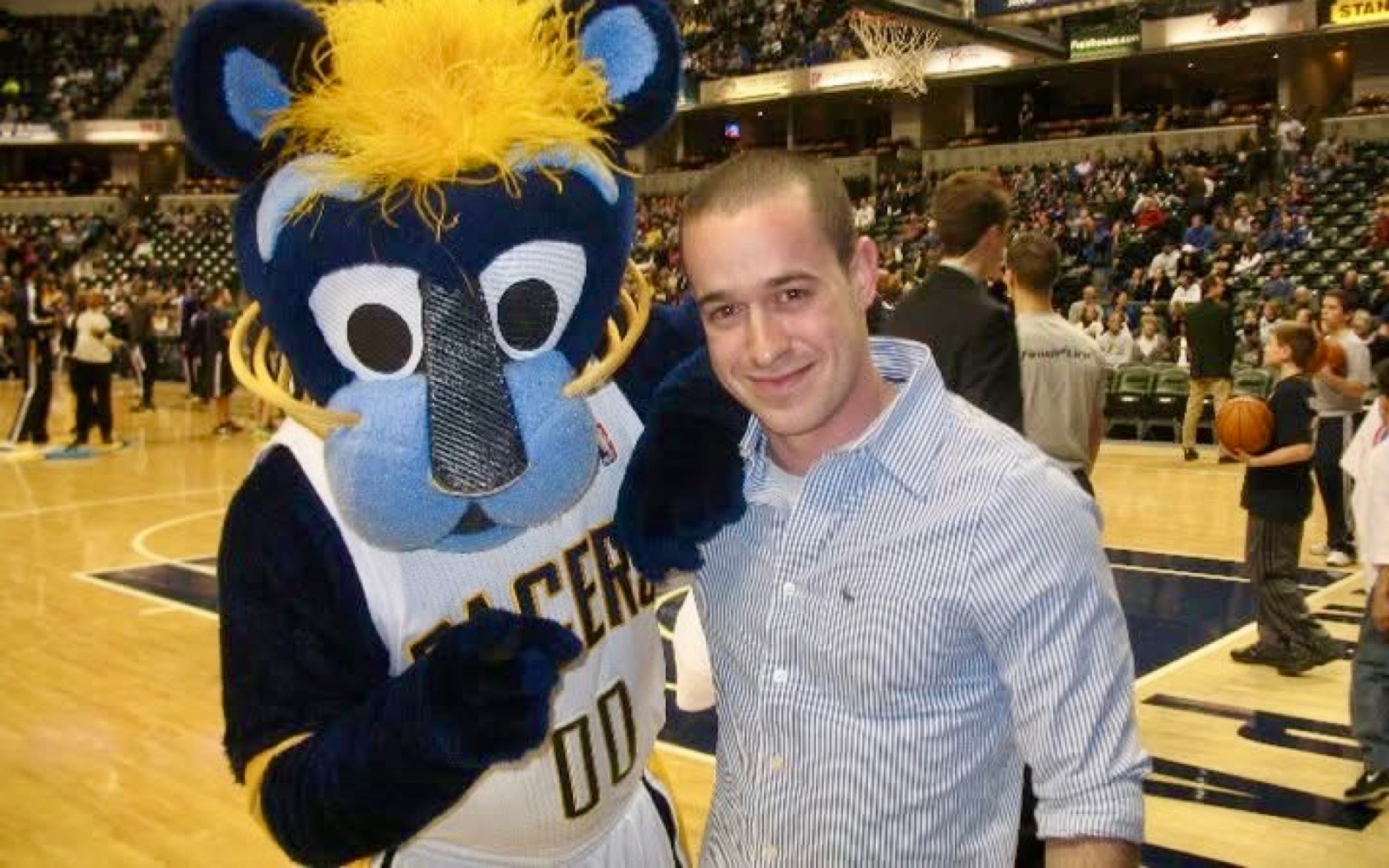
Starting again has been a recurring choice. At fourteen, Shahar moved from Israel to Italy with his family. Later came work in education in Indianapolis, where learning about Peyton Manning and the Colts helped him connect with students and colleagues. Sport offered a conversational entrance when familiarity was in short supply.
He returned to Israel, studied law, practiced, and pursued an MBA at Columbia Business School. During the MBA, he tried an online ticketing platform for school events. That small entrepreneurial experiment belongs in the story alongside the larger employers: he had already tried building a service people might actually use.
The career that followed included Kaltura, a summer associate role at McKinsey, and Adobe. His Adobe work progressed through digital strategy into strategy, planning, and operations for B2B products. The titles describe a practical education in how a large organization decides what to make, how to market it, and how to get several departments moving together.
The campaign has another audience
By February 2021, Adobe identified Shahar as a senior digital strategy lead. His published work there included a piece on account-based experiences for commercial banks and asset managers. The setting matters. A financial business must persuade customers while remaining precise about what it offers them. A campaign has an audience inside the company before it reaches one outside.
The law and marketing combination gave Shahar a useful vantage point. A marketer sees a launch date and the work required to meet it. Counsel sees a claim that might need qualification. Neither perspective makes the other disappear. A piece of software sold into that relationship has to respect the purpose of the review as well as the impatience surrounding it.
At FinovateSpring in May 2024, Shahar presented Blee's AI marketing compliance platform. The proposition included identifying possible risks before material reached consumers, approval workflows, and centralized records. Blee's advisory roster listed former Airbnb general counsel Rob Chesnut, former FTC chair Edith Ramirez, and former HP chief legal officer Harvey Anderson. The company was putting experienced legal judgment close to a product about legal work.
Blee had joined Y Combinator's Summer 2022 batch. Its description there couples faster approvals with review and recordkeeping. That final word is less glamorous than artificial intelligence, but it identifies a buyer's everyday concern: being able to reconstruct what happened after the excitement of a launch has passed.
The appeal of a better handoff
In a conversation with Alex Herrity and Tom Rice for Law://WhatsNext, Shahar described a change in marketing's possibilities. Testing could move beyond a couple of website versions toward dozens of variations. More versions could mean more relevant messages for different audiences. They could also mean a much larger pile of work for everyone responsible for approving them.
He was equally interested in what happened between departments. Introducing AI gave organizations a reason to reconsider arrangements held together by spreadsheets, email, and PDFs. The opportunity extended into the sequence of decisions around the content. Who sees it? When? Where do the comments go? Which version received approval?
“People come for the AI, they stay for the workflow.”
Guy Shahar, Law://WhatsNext conversation
That observation is an unusually plain account of why business software earns a place. An impressive first demonstration may get a meeting. A reliable way to finish Tuesday's work gives somebody a reason to come back on Wednesday. Shahar's attention keeps returning to the uncelebrated journey between an initial draft and a decision.
- 01Create in existing tools
- 02Get risk feedback
- 03Review and approve
- 04Monitor published content
Approval records connect the steps. Publication adds a new stage of oversight.
A day recovered from the queue
Rocket Mortgage offers a concrete example. In Blee's account of the project, initial marketing review fell from 72 hours to 24 hours. The reported reduction was 67 percent. The compliance team also saved 14 hours a week. These are customer case-study figures, describing one deployment rather than a promise about every organization.
Reported in Blee's May 2025 customer case study.
For Shahar's argument, the unit is revealing. A day is a quantity people can picture. It is a campaign sitting in review while colleagues work around it, or a decision arriving soon enough for the next task to begin. Faster creation only delivers part of that improvement. The rest depends on what happens to the draft afterward.
The Rocket work also put assets, approval records, and version histories into a central system. The quieter benefit was visibility: the team could inspect patterns in the approval process and give more targeted feedback. Better first drafts would reduce avoidable exchanges. The queue could improve through learning as well as through faster checking.
Listening as product development
Blee's account of its June 2026 website redesign offers a useful detail about Shahar's working habits. Its approval workflow bore his influence, shaped alongside engineers and customers describing where real reviews broke down. Integrations mattered because the work already lived in particular tools. A designer's canvas is a consequential place to put feedback.
The monitoring feature followed a similarly specific complaint. A customer explained how material slipped beyond formal review and how much effort went into spotting it afterward. That conversation became a feature. It is an ordinary exchange with a durable consequence: a customer's description of wasted time changed what the company built.
His hiring stories have the same small scale. Shahar praised engineer Ryan Newton for responding to customer feedback on the day a feature shipped and getting an improvement live an hour later. In another post, he described spending time with customers in person and learning golf from them. Customer research, it seems, sometimes requires different shoes.

Penny Jar Capital describes a hiring approach that brings experienced industry operators together with recent graduates. The common interest is building. Its account includes a CTO who works on his own car to exercise his problem-solving skills. Such details help explain the kind of company Shahar wants around him: people interested in getting close enough to a problem to repair it.
The question that followed him home
Shahar's interest in trust also surfaces outside formal review. After a candidate delivered a polished presentation, he found himself wondering how much the candidate had made and how much AI had supplied. Later, a funny cat advertisement prompted the same suspicion. The uncertainty had followed him from an interview into the day's entertainment.
The questions he raised were about reputation, authenticity, and the difficulty of knowing what to believe. They fit a founder whose customers put their names behind public claims. A convincing piece of content can create work precisely because it is convincing. Somebody still has to take responsibility for what it says.
There is a human complication here that software cannot wish away. Reviewers are accountable to colleagues and customers, while creators want their work to reach an audience. Shahar is building in the middle of those obligations. His own route through law, strategy, and operations gives that position a biographical logic.
Twenty million dollars, and the next draft
On September 8, 2026, Blee announced a $20 million Series A, bringing total funding to $27 million. Fin Capital and SMBC Fin Atlas Beyond Fund co-led the round. The company reported tenfold annual recurring revenue growth between June 2025 and June 2026. It planned to deepen the product and expand into further industries and geographies.
PayPal had selected Blee for marketing content review earlier that year. NerdWallet's chief legal officer, Ekumene Lysonge, described the benefit in terms of readily available answers and fewer competing places to look for them. For a founder talking about a growing flood of material, the customer's emphasis on finding an answer is telling.
The work ahead preserves the tension that attracted Shahar in the first place. Every improvement in creation gives companies another reason to make more. Each new channel gives reviewers another place to look. He has built a company around making those expanding responsibilities manageable. Somewhere in the background, there are still 22,000 photographs waiting to be organized.