Paul Burke thought his niece and nephew were ignoring the museum. They were looking at their phones, which seemed to settle the matter. Then they showed him the screens. According to Burke’s account of a trip to Rome, they were searching for information about the things in front of them. They had rejected the shared audio guides. Their curiosity was doing fine. The delivery system had lost the sale.
- The product: a cultural institution’s own digital guide, on mobile or the web.
- The work: audio, maps, interactive stories, publishing tools and ongoing support.
- The lesson: give people a reason to open it, then keep that reason current.
That misunderstanding helped inspire Guru Experience, co-founded by Burke and Hilary Srole. It is a useful opening for a company selling technology to museums: the visitor may already be interested. The institution has to meet that interest somewhere. Preferably before a search engine does.
The exhibition that never closed
Guru supplies branded digital experiences for museums, historic sites, gardens, parks and zoos. Visitors can listen, explore a map, follow a tour or try interactive content. Staff get the tools behind those experiences. The company occupies the space between a software supplier and a creative production partner, offering help with scripts, interviews, recordings and translation.
Its diagnosis was already visible in a 2017 company post. Museum apps, Guru said, too often became calendar-shaped shells that busy staff had to keep feeding. The company’s response was to offer a continuing partnership: maintenance, refreshed interpretation and help understanding visitor behavior. Launching the app solved only the first problem.
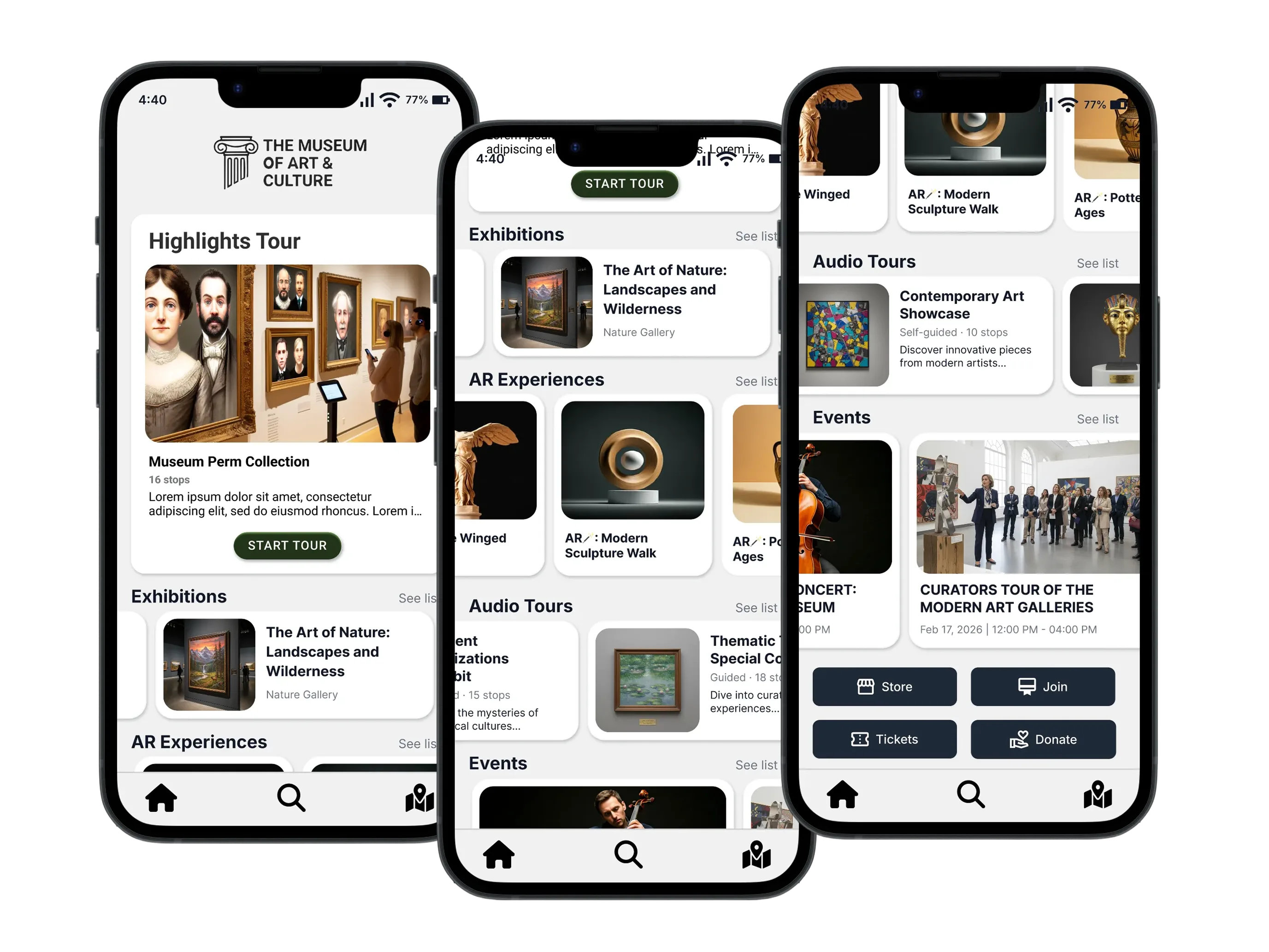
By July 2026, Guru was making a sharper argument about its content management system: awkward editing turns into old information. Someone has to change a stop after an exhibition closes. Someone has to do it while also doing another job. The buying test follows naturally: ask a curator to update the guide during the demonstration. Watch how much help they need.
“updating the thing is annoying, so nobody does it.”
Guru on museum content management, July 2026
Six weeks. Six hundred stories.
Consider Holocaust Museum LA. In Guru’s case study, the museum needed a bring-your-own-device guide for more than 600 audio stories, with six weeks before reopening after its pandemic closure. Guru chose a browser-based app. It carried the museum’s branding, supported English and Spanish, and let visitors use existing stop numbers or follow themed tours.
Guru reports delivery within a month and average visitor take-up above 30%. Those are vendor-reported results, and a browser guide at one institution does not establish a universal adoption rate. What the example does show is a practical decision about scope: preserve access to the stories, accommodate familiar habits, and get the guide into people’s hands.
A tractor, a trail, a reason to return
The John Deere assignment had a different shape. Its history lived across several destinations and an archive. Guru built a location-aware app with distinct guides, audio, games and archival stories narrated by heritage manager Neil Dahlstrom. Visitors could also design a hat and take an augmented-reality selfie. A tractor company’s past had acquired a surprisingly wearable interface.
History Colorado’s Black Heritage Trail made geography central to interpretation. Its guide organized stories around physical locations across the state and recommended related material. The content system let participating experts add stories themselves. Here the phone could connect dispersed places without pretending they belonged in a single room.
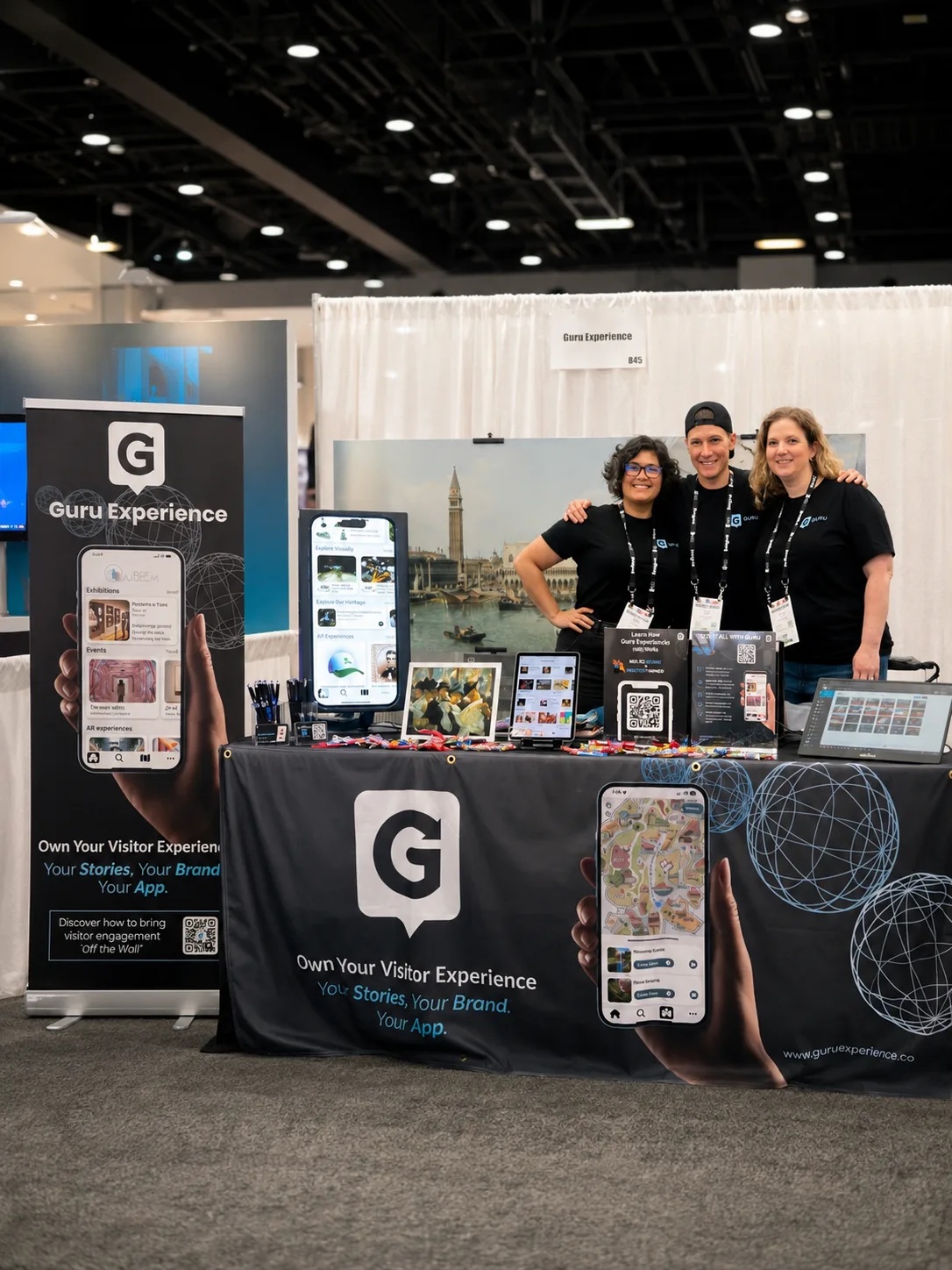
This mixture of technical and interpretive work appears in the team’s backgrounds. CEO Suzie Dergham previously managed operations at Antenna International. Kealy Gordon, who leads client relations, worked in product development at Smithsonian Enterprises. Creative leader Dana Duran came from Moxie Institute. Their experience reaches into the places where a digital plan meets a visitor, an educator and a deadline.
The price of keeping it useful
There are two prices to distinguish. At the San Diego Museum of Art’s October 2015 launch, the app was free to download and full content access cost visitors $5. That historical charge says nothing about a museum’s current Guru contract. Today, Guru scopes institutional pricing around the project and its support needs.
The company sells a dedicated institutional identity, including standalone branded apps, in a market that also has shared guides such as Bloomberg Connects. The choice requires an operating decision alongside a purchasing decision. Guru itself acknowledges that a free shared guide can suit an institution with no digital budget or capacity to manage a dedicated app.
Integrations complicate the budget further. Guru distinguishes showing a ticketing page inside an app from exchanging ticket data with another system. The latter depends on the other system’s interfaces and customization. Buyers can copy that distinction immediately: ask what information actually moves, who maintains the connection, and which work the proposal includes.
Guru’s own business has changed too. SEC filings record Live Current Media’s acquisition in November 2022, alongside the exchange of $675,000 in convertible-note principal for three million shares. Its current website describes a women- and employee-owned company. Those are snapshots from different moments; the historical acquisition should not be read as a current ownership chart.
Navigation deserves its own scrutiny. In its wayfinding guidance, Guru describes indoor positioning as a site-specific job involving signals such as Bluetooth and Wi-Fi. A floor plan alone cannot supply a trustworthy location. Buildings also change: galleries close, exhibitions move, accessible paths need attention. Before commissioning the clever map, ask who can correct it when a room shuts. That question applies just as well to an institution designing its own guide. Accuracy has an ongoing labor cost.
What changed was the invitation
In August 2026, Guru revisited app data it had presented at MCN in 2021. Initially, increased adoption seemed to indicate that the pandemic had made visitors more willing to download. Looking back, the company emphasized changes museums had made: integrating the guide into the visit, promoting it, and keeping content useful.
- 01Give a reason
to open. - 02Make discovery
easy. - 03Refresh what
people use.
That is an actionable lesson even for someone buying no software. Start with a visitor need. Introduce the guide where it helps. Assign responsibility for its next update. An app left unmentioned or unmaintained has little chance to earn a place in the visit. Back in Rome, the teenagers had already supplied the encouraging part: they wanted to know more.