The revealing number in the Panda Express story is 200. Before announcing a rollout of GridPoint across its U.S. restaurants in January 2023, the chain had tested the system in 200 stores. The experiment concerned something customers rarely notice until it goes wrong: the temperature of the room, the hours the lights stay on, the equipment consuming electricity behind the meal.
- GridPoint measures equipment use, then automates building controls.
- Its subscription model removes the upfront deployment hurdle.
- Connected buildings can also reduce demand when the grid needs relief.
The pilot produced measurable energy-cost savings and lower emissions, according to the companies’ announcement. Panda then committed to an 18-month deployment across its U.S. portfolio, which numbered nearly 2,500 restaurants at the time. Comfort remained part of the brief. Saving electricity would be a peculiar victory if the dining room became a place people wanted to leave.
That tension explains GridPoint better than the phrase “clean technology.” The company works where facilities management meets the electricity system. Its raw material is the ordinary commercial building, multiplied across a chain.
01 The bill tells you too little
A utility bill gives an operator a total. GridPoint works further down, measuring the building and individual equipment. Meters, sensors and controllers feed cloud software that can reveal patterns, flag anomalies and change operating schedules. HVAC, lighting and refrigeration become things a facilities manager can examine across locations, rather than mysteries scattered across a map.
GridPoint Intelligence combines that visibility with control. Managers can adjust HVAC schedules, monitor temperatures and prioritize equipment needing attention. Its public documentation describes a portfolio dashboard covering HVAC health, active alerts, comfort performance and test results. The practical question becomes wonderfully specific: which site needs someone’s attention today?
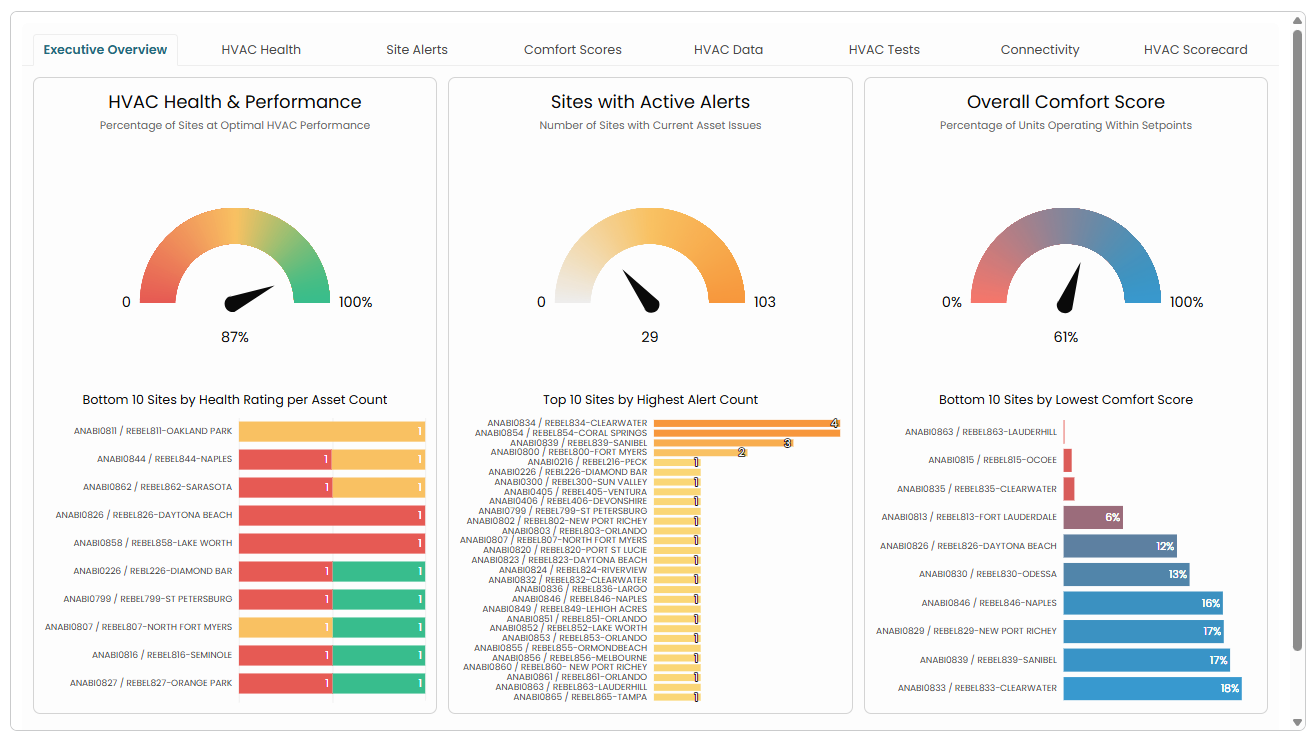
There is a useful detail in the testing instructions. A heating or cooling health test takes 30 minutes. Users are told to schedule tests through the testing tool; changing comfort settings to improvise one can permanently alter a site’s schedule. Even sophisticated building software depends on the quiet discipline of using the right control.
02 A restaurant is a repeatable problem
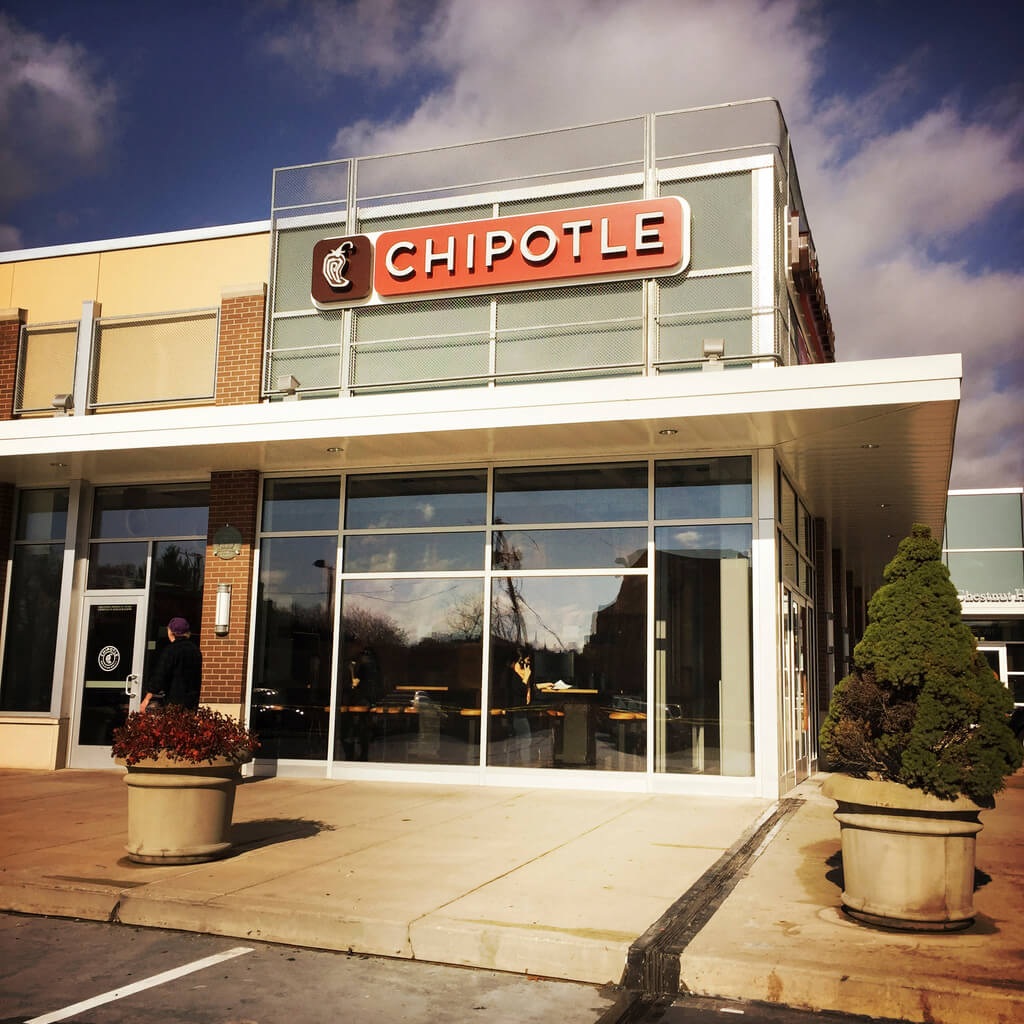
GridPoint’s customers include Chipotle and Walgreens as well as Panda Express. The industries vary, but the operating pattern repeats: many relatively small sites, expensive equipment, limited local time and a central team trying to establish consistent practice. GridPoint also markets to convenience retailers, automotive businesses, banks and fitness operators.
A chain can learn something at one building and apply it elsewhere. It must also accommodate differences in opening hours, climate and equipment. Portfolio-wide scheduling is valuable precisely because the portfolio is messy. Software that merely collects readings leaves much of that management problem untouched.
The company occupies a busy market. Buyers can consider 75F’s connected building automation or Budderfly’s energy-as-a-service offering, which includes equipment upgrades for qualifying sites. GridPoint’s pitch joins granular metering, ongoing operational controls and grid participation. A sensible comparison starts with what a building needs: better oversight, different equipment, utility-program access, or some combination.
There is evidence from the buyer’s side, too. Restaurant Brands’ 2024 annual report says it expanded GridPoint energy optimization to 24 California stores after a three-store trial. Several stores recorded energy savings above 10 percent. The results also prompted a project to assess earlier replacement of inefficient HVAC equipment. That is an interesting outcome for a controls system: better information can expose a machine that needs replacing. Automation and capital spending sometimes belong in the same conversation.
03 The installation has to be financed
GridPoint’s history includes an instructive narrowing of ambition. Founded by Peter Corsell in 2003, it acquired businesses across several energy markets. After a 2010 leadership change and layoffs, it concentrated on commercial building management, drawing on the hardware, software and service capabilities acquired with ADMMicro.
That history suggests a lesson about focus, rather than a tidy tale of inevitable success. The enduring business needed equipment installed at customer sites and people able to support it. GridPoint subsequently adopted a subscription model that removed upfront investment for customers. A technology purchase became an ongoing operating relationship.
Company growth and platform development
Financing technology deployment
Separate transactions. Different purposes. The credit facility is borrowing capacity, not an equity round.
In June 2023, HASI provided a credit facility of up to $150 million, expanding a relationship begun in 2019. The financing supports adoption by removing the initial spending barrier. The mechanism matters: someone must finance the physical rollout before subscription payments arrive. Customers still need to examine the proposed fee, savings assumptions and service obligations.
04 Give the air conditioner a second job
Once a building can be measured and controlled, another customer enters the picture: the grid. GridPoint can coordinate reductions or shifts in electricity demand across sites. Its demand-management tools address peak charges, time-of-use pricing and demand-response events. Aggregated flexibility gives utilities a resource assembled from equipment already in service.
- 01 / MeasureEquipment-level data
- 02 / AdjustSchedules and controls
- 03 / CoordinateDemand across buildings
Conceptual process. Available flexibility depends on site conditions and program rules.
The company’s stated goal is a gigawatt-scale distributed virtual power plant by 2035. That is a target. Delivering it requires controllable equipment, working communications and buildings with room to adjust demand. A restaurant with no safe operating flexibility cannot manufacture it for a utility event. Comfort, food safety and local program eligibility constrain what can be offered.
05 Count the savings. Keep the conditions.
In March and April 2026, GridPoint reported nearing $1.5 billion in cumulative customer energy savings across more than 20,000 commercial buildings. Those are company-reported totals. They describe an installed portfolio over time; they do not establish what the next customer will save.
“Energy can’t be an afterthought anymore.”
Derek Booth, GridPoint CEO / March 2026
Booth became CEO in April 2025. Weeks earlier, GridPoint had announced $45 million in strategic investment, including $20 million from Marunouchi Innovation Partners, with plans to pursue Japan and South Korea. The expansion thesis carries the same practical test as the Panda pilot: demonstrate value in buildings before multiplying the promise.
An operator can copy that sequence. Establish a baseline. Pilot representative sites. Measure energy and comfort together. Assign someone to respond to alerts and verify repairs. Then expand. An already efficient building may offer less savings; an unattended alert may offer none. GridPoint’s proposition becomes persuasive when a reading leads to a useful decision, and that decision survives the lunch rush.