There is a moment in every long relationship when familiarity stops looking romantic and starts looking suspicious. Thirty years? In advertising? The usual agency-client romance lasts just long enough to produce a launch film, a case study and a discreet change of LinkedIn status. Gotham and Maybelline New York have survived new owners, new media, new beauty standards and enough mascara wands to furnish a small chandelier. Their relationship began around the time Gotham was founded, in 1994. It is still the fact that explains the agency best.
Gotham is a New York creative shop inside the McCann orbit. It calls itself a deliberately small global boutique, a phrase that contains its business model in miniature: a close team doing strategy and creative work, with the reach of a large network when an idea has to travel. The agency's public center of gravity is beauty. Its portfolio moves across film, social, outdoor, commerce, sound and interactive experiences, while its stated ambitions stretch into household goods, lifestyle and wellness.
The advantage of remembering everything
An agency that stays with a brand this long accumulates something more useful than a mood board: it learns the difference between an asset and a habit. Habits are repeated because nobody wants to argue. Assets remain valuable because people remember them. The work is knowing which is which.
Consider three words from 1991: “Maybe It's Maybelline.” The line had left active duty, but it had not left the public mind. Maybelline reported 84 percent recall. In 2024, Gotham and sonic-branding firm Sixième Son brought it back as a contemporary three-second musical system. The refreshed version used the beat and ambient energy of New York while keeping the little piece of memory that listeners already owned. This was not nostalgia with better hair. It was an economic decision about attention: do not buy recognition twice.
The archive is not where an old brand goes to sleep. Properly handled, it is where tomorrow's media budget has been quietly compounding.YesPress
This is the transferable bit. Before inventing a new mnemonic, character or sonic logo, list what the audience can already retrieve without help. Score each asset for recognition, distinctiveness and room to evolve. Gotham did not merely replay an old commercial. It treated the melody as a flexible kit that could work in social clips, films and future campaigns.
What made the revival worth doing
Recognition is Maybelline's reported recall figure. The other scores are an editorial illustration of the strategic trade-off, not campaign measurements.
Then the concealer asked for a close-up
The cleanest example of Gotham's method is “Only Icons,” a 2024 campaign for Maybelline Instant Eraser Concealer. The product had become a victim of its own success. Fifteen years after launch, indie and luxury rivals were selling similar formulas in similar packaging. Younger buyers could recognize the object without necessarily knowing which one had arrived first. Earlier ads had stressed benefits. Those benefits were still true, but they had become table stakes.
Gotham changed the genre. Instead of another demonstration, it made a trailer for a fictional prestige documentary. Naomi Campbell, Gigi Hadid and RuPaul appeared as distinguished witnesses. The revered figure they had assembled to discuss was not a supermodel, musician or athlete. It was a tube of concealer with a sponge on top.
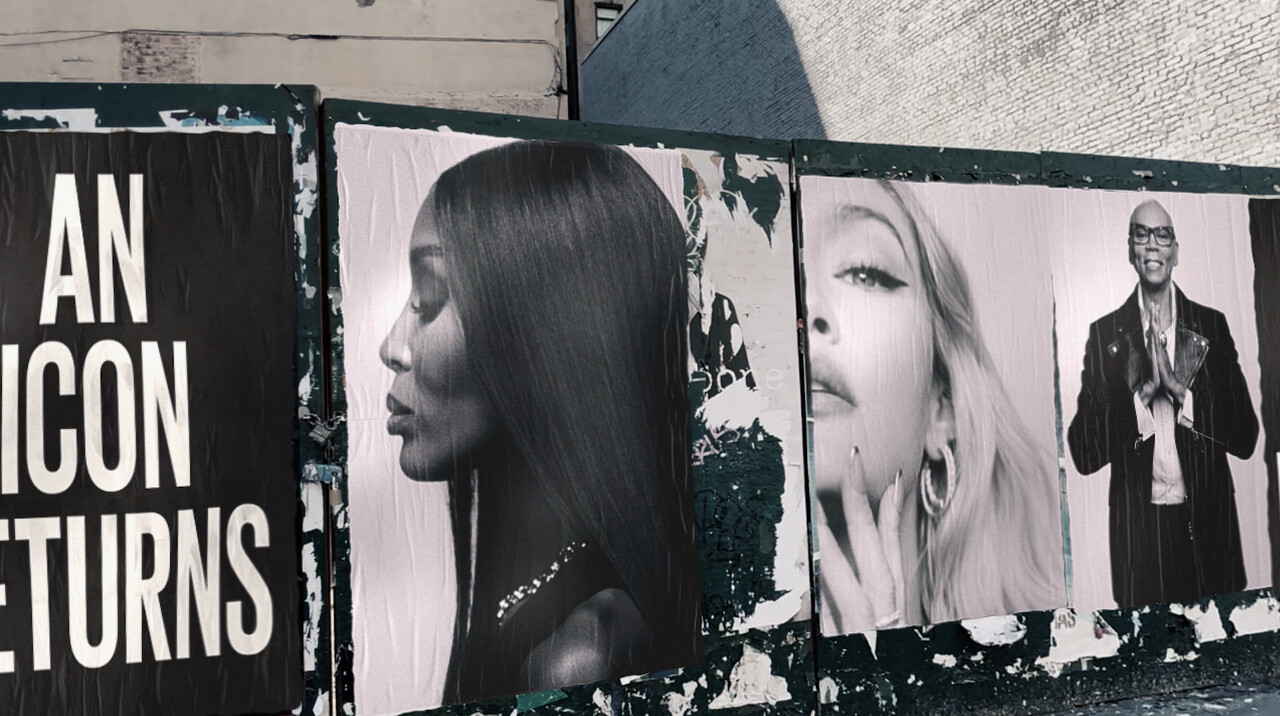
The joke worked because the product could support it. Instant Eraser already had longevity, recognizable packaging and a place in makeup bags. Gotham borrowed the visual language of documentaries such as The Last Dance and The Super Models, then shot across 35mm and 16mm film, broadcast cameras, an Alexa camera and an iPhone. Different eras of image-making appeared in the same piece. The concealer looked historic and current at once.
The campaign logic, without the celebrity fog
Copycat packaging and comparable claims made the original product harder for younger shoppers to distinguish.
Move from a functional product demonstration to cultural biography: make the product the character.
Tease, launch and sustain across the Emmys, social, digital, murals, wildpostings and billboards.
A 2025 Webby People's Voice win and Bronze Clio gave the idea an afterlife beyond the media flight.
There is a useful constraint here. You can copy the structure, but not the authority. A new product cannot announce its own legend and expect the room to nod. The technique depends on accumulated recognition, a distinctive object and witnesses whose fame creates comic contrast. Without those, mock reverence becomes an expensive inside joke.
Beauty advertising escapes the bathroom mirror
Gotham's recent Maybelline work keeps placing ordinary product claims inside formats people voluntarily consume. A waterproof eyeliner became “Ugly Cry,” a Y2K pop-video spoof starring Saturday Night Live's Chloe Fineman. She sang, danced and wept in the rain; the 36-hour liner stayed put. The demonstration remained perfectly legible, but the audience got a joke instead of a lecture.
For the 2023 Singles' Day season, the agency went in another direction. With Craft and 3D specialist Threedium, Gotham built Chromaverse, an augmented-reality game inside the Lazada app. Shoppers in Vietnam, the Philippines, Indonesia, Malaysia and Thailand moved through a cyberpunk New York, collected virtual makeup rewards, explored products and could shop without leaving the experience. New York was not decoration. It became interface and geography.
These projects describe Gotham's services more accurately than a list of capabilities. It sells brand strategy, campaign ideas, product storytelling and experiences that run through production, social, commerce and the street. Clients pay through the familiar agency machinery of retained relationships and project work. Gotham's distinction is not that it can make all these things; many competitors can. It is the continuity between them. The joke, the game, the billboard and the three-second sound all recognize the same brand.
Small enough to specialize, connected enough to travel
The agency market is crowded with global networks, beauty specialists and independent shops promising cultural fluency. Gotham occupies a narrow, useful position: a boutique identity backed by McCann's infrastructure. The arrangement lets it sound focused in the room and operate globally after the meeting. Chromaverse required strategy in New York, production and 3D craft, a commerce platform and execution across five countries. The pitch may be boutique; the plumbing cannot be.
That model also explains why Maybelline matters beyond the revenue of one account. The relationship functions as a laboratory. Over three decades, the agency has watched a beauty brand migrate from television dominance to creator culture, gaming, social commerce and sonic branding. Each new format tests the same question: what should change so the brand can remain itself?
A long relationship is not valuable because everyone knows the answer. It is valuable because everyone knows which question has survived.YesPress
The practical playbook is admirably unfashionable. Begin with memory. Find the product truth that competitors have made generic. Choose an entertainment format that makes that truth visible. Release it in chapters rather than dropping everything at once. Then let each channel do a different job. The Emmy premiere supplied scale; social supplied repetition; New York walls supplied texture; awards supplied a second news cycle.
Gotham's story is not that loyalty defeats novelty. Loyalty without reinvention is merely a long meeting. The interesting part is that accumulated knowledge can make reinvention more precise. After 30 years, the agency knows which three words are worth keeping - and when a humble concealer has earned top billing.