Gordon Hardie went to New York and found himself admiring a shop display. The attraction was a lineup of brands in O-I glass at Vine & 51st. He praised the products and the people selling them, then returned to a subject that follows him from the factory to the street: the bottle’s part in making a brand recognizable. Some executives can leave the office. Their merchandise is less accommodating.
The small episode offers a way into a career otherwise described in divisions, regions and board appointments. Hardie has worked with what goes inside the container: spirits, beer, wine, food and ingredients. Since May 2024, as president and chief executive of O-I Glass, he has been responsible for the container itself. His task in Perrysburg, Ohio, is to make that familiar object more competitive without losing the qualities customers buy it for.
It is an assignment with an awkward double requirement. A bottle must be distinctive enough to help sell a drink and economical enough for a drinks company to buy. The shop shelf rewards appearance. The manufacturing accounts keep a less romantic score. Hardie’s working life has brought him to the point where he has to answer to both.
A customer’s education
Hardie is a native of County Cork. His academic beginnings were in languages and psychology at University College Cork, where he also earned a higher diploma in education. An MBA at University College Dublin’s Smurfit school followed; he graduated in 1994. The combination is an appealingly untidy preparation for an industrial career. There is no need to pretend it was a plan for running glass furnaces.
His early drinks career took him to Pernod Ricard’s Irish Distillers, with responsibility for the Americas and Asia Pacific. He immigrated to Australia in 1999. Leadership jobs at Foster’s Brewing Group and Southcorp Wines put beer and wine alongside spirits. The categories changed; the recurring commercial problem was getting a product chosen, bought and delivered across markets with different customers.
At Goodman Fielder, the work moved into food. He held sales, marketing and innovation responsibilities before leading its baking business from 2003 to 2009. He also co-led the company’s Australian stock exchange flotation. Bread may lack the ceremonial glamour of a bottle opened at a celebration. It offers a rigorous education in running a business whose customers expect tomorrow’s delivery to be as dependable as today’s.
After establishing Morningside Partners, an advisory business, in 2009, Hardie joined Bunge in 2011. He became president of Food & Ingredients in 2018 and retired from that executive career in September 2019. Along the way, he led Bunge’s global Operational Excellence program from 2013 to 2019. By the time he took the O-I job, improving operations was already a substantial part of his record.
There were connections back to Ireland, too. In April 2015, UCD honored him as its Smurfit School Alumnus of the Year, at the same awards dinner where Primark’s Breege O’Donoghue received the Quinn School honor. His later board work included food businesses Greencore and ARYZTA, and he chaired Irish agricultural technology company MagrowTec between October 2023 and December 2025. The international itinerary never quite erased the return address.
- DrinksIrish Distillers · Foster’s · Southcorp
- FoodGoodman Fielder · Baking
- IngredientsBunge · Global operations
- The bottleO-I Glass · CEO from 2024
The boardroom door opens inward
O-I was familiar territory before it became his daily responsibility. Hardie joined its board in 2015, nearly nine years before succeeding Andres Lopez as chief executive. When announcing the appointment, board chair John Walker emphasized the customer perspective Hardie brought from packaged food and beverages. The company was hiring someone who knew its board papers and had spent a career around the businesses buying packaging.
A director’s familiarity still leaves plenty to learn. Early in his tenure, Hardie described conversations with more than 1,000 colleagues, from production employees to senior leaders. He also talked with customers and suppliers and visited retail and hospitality outlets. By March 2025, he said he had met more than 3,000 colleagues. Those are his own accounts of the effort, and they show where he chose to spend attention.
His first-anniversary message acknowledged the difficulty of creating a more competitive organization. He thanked employees for confronting waste, asking difficult questions and breaking down internal divisions. The vocabulary was direct, occasionally combative about inefficiency. It also recognized that a transformation lands on the people expected to carry it out. A program name can fit neatly on a slide; its daily consequences seldom do.
“Creating a highly competitive organization is not easy.”
Gordon Hardie · May 2025
His written expectations for leadership extend beyond output. In O-I’s 2025 business conduct code, he tied leadership to accountability and integrity. That is a public standard against which decisions can be judged, rather than a personality sketch. In a company operating across countries, the promise matters most when colleagues have to apply it far from the executive office.
A bottle has to pay its way
Hardie introduced Fit to Win in 2024, a competitiveness program built around costs, the manufacturing network and economic profit. The phrase can sound abstract until it meets a purchase order. Revenue alone does not establish that a business is earning an adequate return on the money committed to it. A busy plant can still leave its owner dissatisfied.
The competitive setting gives the exercise urgency. At its 2025 investor day, O-I described the challenge from aluminum cans in North American beer. It put the unit cost of a glass container 20 to 30 percent above a can in that market. European beer presented a different comparison. A global chief executive has to resist treating one region’s economics as a universal law.
The company also wanted more of its portfolio in premium categories, including spirits and ready-to-drink cocktails. That ambition has an operational consequence: how factories are arranged to serve different kinds of orders. Moving between products creates work and expense. The commercial promise of a more valuable bottle has to survive the practical business of producing it.
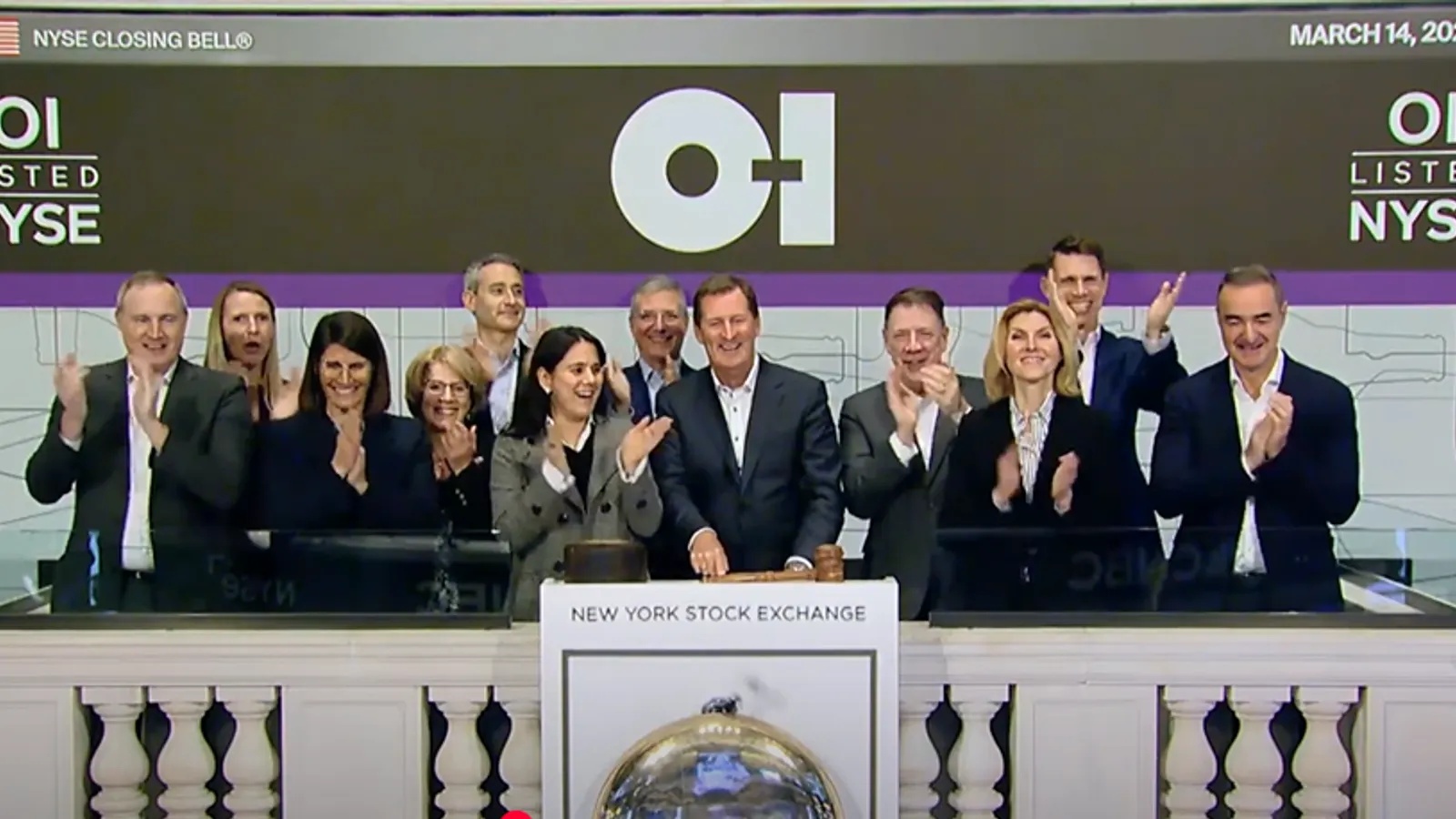
The expensive art of stopping
The clearest test of Hardie’s approach came in July 2025. O-I announced that it would halt further development and operation of MAGMA, its glassmaking technology program. The company acknowledged technical advances but concluded, following a review, that the platform lacked a path to its operating and financial return requirements. The decision put an end to a prominent part of the company’s technology plans.
Hardie instead pointed to the company’s Best at Both operations strategy. O-I planned to reconfigure its Bowling Green, Kentucky, facility as an operation focused on premium production at competitive cost. His argument was that this route could offer more premium output with lower operating costs and capital requirements than MAGMA would have delivered in the coming years. Those were expectations, with the obligation to prove them still ahead.
The episode makes an otherwise abstract preference for economic profit concrete. Technology has to clear the same commercial hurdle as the rest of the business. Ending a program can demonstrate discipline; it also records a limit in what earlier investment achieved. The revised plan has to carry both meanings. Shareholders do not get their capital back merely because the explanation is persuasive.
Two sets of numbers, one unfinished job
For 2025, O-I reported $300 million in Fit to Win benefits. Adjusted earnings per share rose to $1.60 from $0.81 in 2024, and free cash flow moved from a $128 million outflow to a $168 million inflow. These were measurable improvements in the company’s chosen operating and cash measures. They gave Hardie evidence that parts of the plan were working.
The reported accounts told a harder story alongside it. The company’s net loss per share widened from $0.69 to $0.84. Restructuring affected the results, and the adjusted figures exclude specified items. Reading the two presentations together is essential: they answer different questions about the same year. A claim of operating progress cannot make the costs of achieving it disappear.
Non-GAAP measure. Reported net loss per share: $0.69 in 2024; $0.84 in 2025. Adjustments include restructuring-related items.
Then Europe complicated the next chapter. In July 2026, O-I reported second-quarter adjusted earnings of $0.09 per share, down from $0.53 a year earlier. The reported loss was $6.33 per share, including a substantial European goodwill impairment and changes to deferred tax valuation allowances. Competitive pressure, elevated energy costs and disruption following restructuring weighed on the European business.
O-I lowered its 2026 outlook and realigned its 2027 targets. The Americas had performed better, but one region’s strength could not settle the company-wide question. For Hardie, the next test was plainly delivery in the places where change was taking longer. His tenure had produced progress and a setback, with neither providing permission to omit the other.
What he notices in a shop
Return to the New York store and the display that caught his eye. It is a modest, revealing incident because the product had reached the other end of his responsibility: finished, branded, available to a customer. His public posts also return to the sight of bottles moving along production lines. Between those two views sits the whole assignment, from making the container to making someone want it.
Hardie’s appeal as a subject lies in that change of vantage point. He spent decades helping businesses sell the contents. Now he leads the business selling the vessel, with all its industrial complications. The bottle in the shop looks resolved. The business behind it remains a work in progress. His job is to make the economics hold up as well as the glass.