Gopal Krishnamurthy sold a business in 2021 and carried its unfinished work into the next one. Atos acquired Visual BI’s consulting operation. Krishnamurthy and his partner, Jayaraman Anantharaman, kept the software products. The money from the sale helped finance Lumel, the company through which they would pursue an idea that had been gathering force alongside their consulting work.
There is something revealing about that division. Consulting had brought them into enterprises, close to the people trying to make sense of their numbers. Software offered a way to solve a recurring problem without starting a new engagement each time. Krishnamurthy had spent years building the first business. He used its sale to give the second one time.
Today, he is Lumel’s founder and CEO, based in Plano, Texas. Its work includes planning, reporting and data applications, with a collaboration that has brought enterprise planning into Microsoft Fabric. That destination can make the route look tidy. It involved a change in technology platforms, a decision about capital and a partnership that began well before either founder had a company to sell.
The sale that financed a beginning
Krishnamurthy founded Visual BI in 2010. The business worked in enterprise business intelligence and analytics, including the SAP ecosystem. These were environments where a report had to make sense to the person responsible for a business decision, as well as to the person who built the system. A technically correct answer was only part of the job.
Over time, the team developed products alongside its services. The retained portfolio would include names familiar to Power BI users: Inforiver, ValQ and xViz. Keeping those products when the consulting operation changed hands gave Krishnamurthy and Anantharaman a continuing project with its own customers, accumulated knowledge and technical demands.
The sale had a clear public marker: Atos announced completion of the Visual BI acquisition on September 3, 2021. The separation created room for a different kind of company. A consulting engagement organizes people around a customer’s particular requirements. A product has to carry useful answers into many customers’ working days. The founder’s experience remains valuable, but the software has to do more of the explaining.
For Krishnamurthy, that transition became part of the work itself. His later conversations about Lumel addressed the difficulty of moving from customized services toward a product that enterprises could adopt with less intervention. A good consultant can solve a problem in the room. A software product has to remain useful after the consultant leaves.
products retained
Before the boardroom, a dorm room
The partnership with Anantharaman had an earlier address: a hostel room at Thiagarajar College of Engineering. Krishnamurthy studied there from 1994 to 1998. Years later, his recollection of the college would reach beyond the degree to the classmates and colleagues who helped his businesses take shape.
In a July 2025 reflection, he named people who had joined early, recruited others and stayed involved as the companies grew. That is a more personal account of company building than a chart of job titles. Familiarity gave people reasons to trust a young business. The college connection kept appearing in the story.
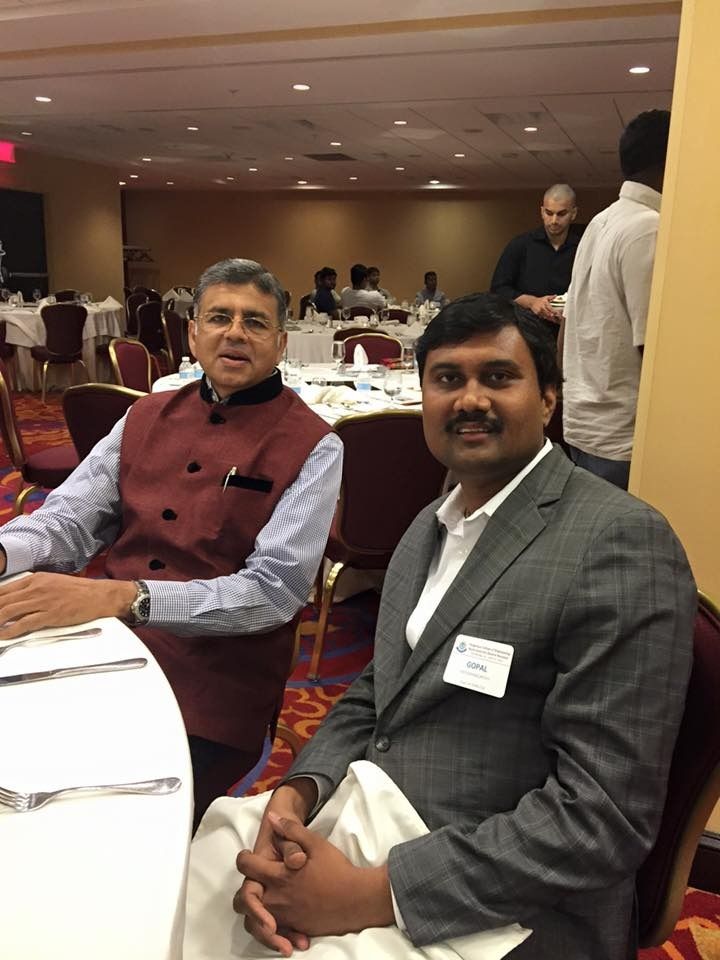
He also remembered advice from the college’s late chairman, Kannan, about motivating employees through the words a leader chooses. Krishnamurthy connected it to his preference for putting employees first: they were the people carrying the company’s work to customers. The lesson was about management, learned in a conversation rather than installed with a new process.
A dashboard with something to say back
His technical direction changed too. In 2017, Krishnamurthy moved from SAP consulting toward cloud data platforms and Power BI. He has credited customer Khaled Chowdhury in his account of the Power BI pivot. Listening to a customer could alter more than a feature request; it could redirect the environment in which the company chose to build.
The question underneath that move was practical. Business intelligence helps people examine what happened. Planning asks them to enter assumptions about what should happen next. If those activities live in separate systems, the numbers have to travel between them. Actual results go into the planning process; the finished budget or forecast comes back for comparison.
Each revision can start another trip. A forecast is rarely finished because someone has given it an impressive filename. Another assumption changes, another department responds, another version needs to be understood. The work includes collaboration, explanation and decisions about who is allowed to change what.
Reuse business definitions. Write plans back. Compare outcomes.
Lumel’s answer has been to build applications on the data platforms organizations already use. A semantic model, despite its rather professorial name, holds business definitions and relationships: the measures, dimensions and rules that make a number meaningful. Reusing that work gives a planning application a starting point familiar to the organization.
Krishnamurthy’s ambition is for business users to work with those foundations through an accessible interface. The technical architecture matters because it determines how much preparation stands between a user and a useful decision. His focus has moved steadily toward the place where a report can become a working plan.
Buying time with his own money
The decision to self-fund gave that product direction a financial counterpart. Proceeds from the consulting sale supported Lumel’s development. In 2023, Krishnamurthy explained his reluctance to take venture capital in terms of the pace and purpose of building. He wanted products to mature into something people could use in their daily work.
“As an entrepreneur, you have to be bold.”
Gopal Krishnamurthy, 2023
He paired that thought with another: “You have to be patient.” The combination is useful precisely because it can be uncomfortable. Choosing a direction takes conviction. Letting a product improve through use requires an ability to wait without treating every delay as a failure of effort.
Self-funding did not mean the undertaking was small. By the May 2025 interview, Lumel’s reported annual recurring revenue run rate exceeded $12 million and its team exceeded 300 people. Those figures describe that point in the journey. They also give some scale to the resources behind a business often described as bootstrapped.
Reported annual recurring revenue run rate
Interview-reported company figure. A run rate is not a personal wealth estimate.His target was much further away. He spoke of reaching a billion-dollar ARR business. It was an ambition, rather than a milestone, and keeping that distinction makes the story more interesting. A founder could be pleased with the progress already made while organizing his decisions around a much larger possibility.
The challenge is visible in the distance between a useful product and a company able to distribute it widely. Development, adoption and commercial discipline all need attention. Patient execution still has invoices. Krishnamurthy’s earlier business had supplied both experience and capital; Lumel had to turn those advantages into a repeatable business of its own.
Seven years to a shared platform
His relationship with Microsoft became a public expression of that long view. In December 2024, Microsoft announced a collaboration with Lumel to bring enterprise performance management for planning to Power BI and Fabric. The approach used existing semantic models and brought planning and reporting closer together.
Krishnamurthy credited Microsoft’s Arun Ulag and Amir Netz with supporting the direction from an initial meeting about seven years earlier. He also credited employees who had kept iterating, and customers and partners who had worked with the idea. The announcement marked a platform relationship built over years of product decisions.
On March 17, 2026, Lumel announced a first-party alliance with Microsoft for planning in Fabric IQ, initially available in public preview. Krishnamurthy described the shared goal as making planning available to organizations that had already invested in Power BI semantic models. The emphasis remained on using foundations customers had already built.
The work continued in public demonstrations. In April 2026, he joined Reid Havens for a session on Fabric Planning and writeback. At FabCon Europe, he was listed for a planning question-and-answer session alongside Microsoft’s Asif Kazi and Nick Hurt. A September product update described a new native planning engine in preview. The long bet had acquired a very practical schedule of demonstrations, questions and releases.
A return to the table
For all the discussion of platforms, Krishnamurthy’s college recollections return to another kind of table. He credits the table tennis room with helping develop his grit and communication skills. Competitive sport belongs in his own explanation of how he learned to carry himself, alongside the technical education and the people he met.
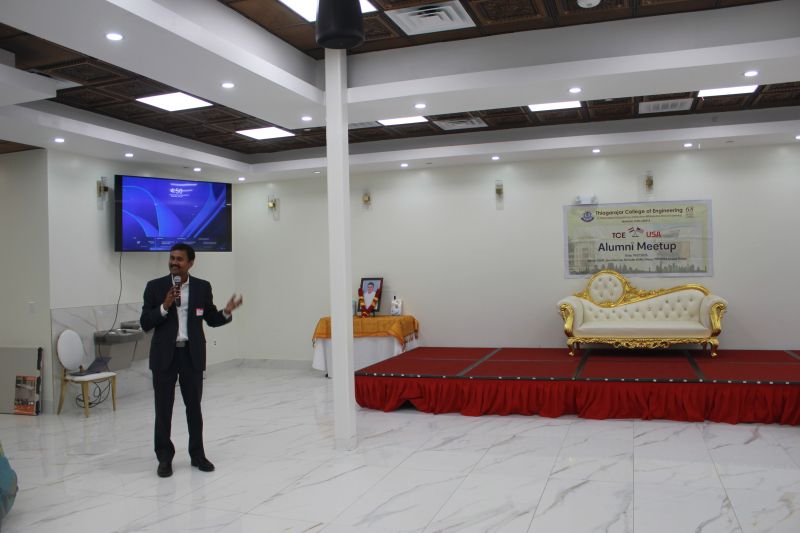
In July 2025, he pledged ₹1 crore as an initial grant toward strengthening the college’s brand through sports. The gesture gave a concrete form to his account of what the institution had given him. His connection to it included a business partner, early colleagues and a place to develop confidence through competition.
That is a fitting place to leave a founder whose decisions are often discussed as bets on technology. He sold a consulting business, kept its products and financed the time to develop them. Around those choices were people he had known for years. The unfinished idea kept moving; so did the relationships that helped him carry it.