In 1955, 127 people put $172,000 into a new savings and loan in Kalispell, Montana. There were two employees. Five businessmen had organized the venture. The arithmetic was small enough to understand without an investor presentation: neighbors supplied the money; a local institution put it to work.
Seven decades later, the business descended from that institution has become Glacier Bancorp. It operates across nine states. Yet its footprint contains a collection of names: Altabank, Wheatland Bank, Bank of the San Juans. That is the interesting detail. A company can grow by making everything look alike. Glacier has built much of its business around allowing places to remain recognizable.
- Glacier buys community banks and preserves local divisional identities.
- Customers get everyday banking, business credit and digital tools within a larger organization.
- The hard parts are integration, funding costs and keeping the relationships worth buying.
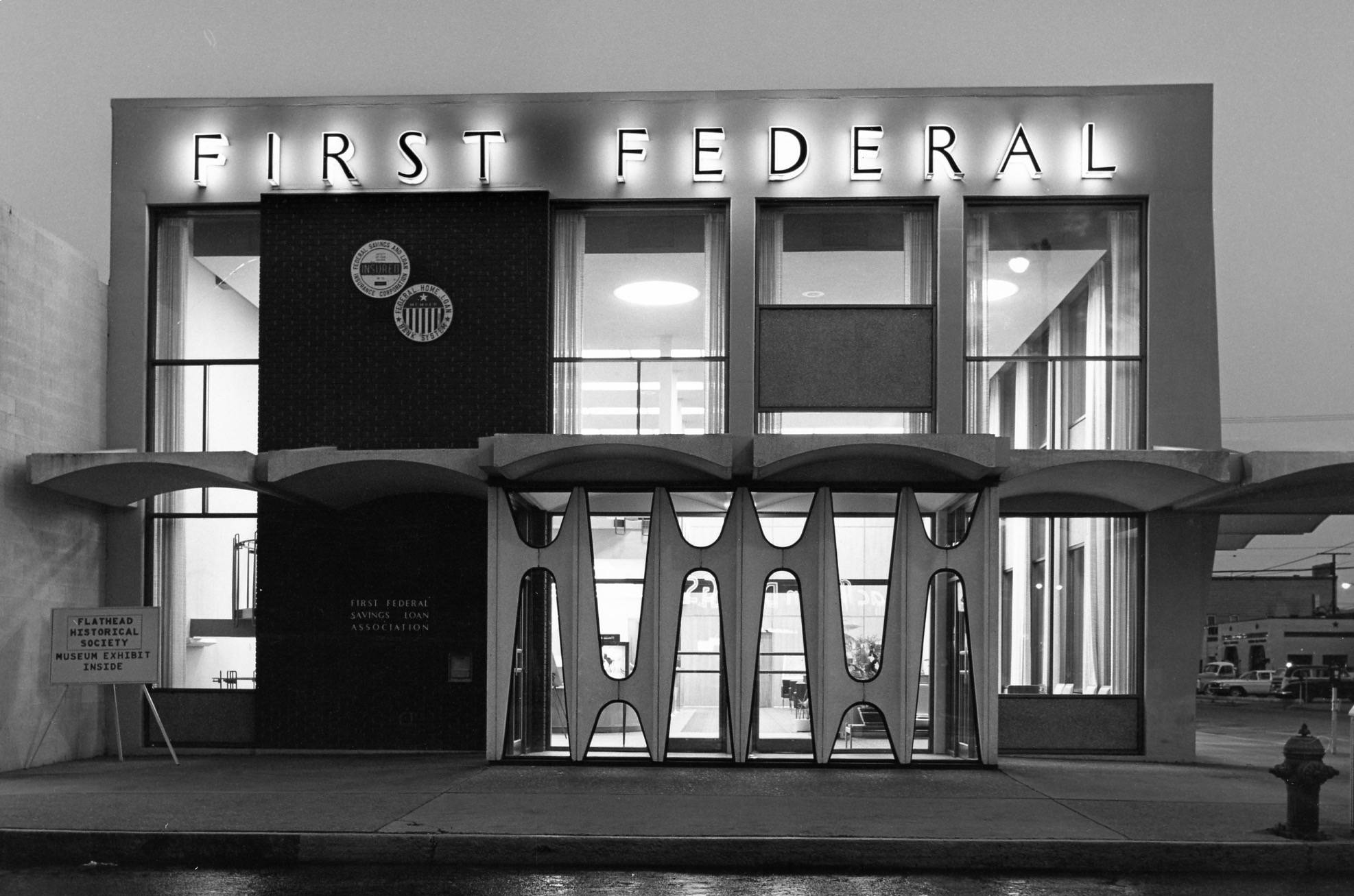
The sign stays. The systems move.
Glacier Bancorp is a holding company. Its subsidiary, Glacier Bank, delivers banking through divisions with their own identities and management teams. The distinction matters. Eighteen divisional names do not mean eighteen unrelated banks. They belong to one banking organization.
Its customers include households, smaller businesses, community organizations and public entities. The products are familiar: checking and savings, commercial credit, real estate and consumer loans, mortgages. Online banking, mobile deposits and bill pay give the local relationship a practical digital companion. A business can use lending to finance a property or equipment and cash-management services to move money.
For a household, the appeal is straightforward: a nearby branch alongside tools that let routine banking happen from a phone. For a business, the questions get more specific. Can the bank support a construction project? Can it handle payments and the daily movement of cash? Glacier’s offering spans those ordinary, consequential tasks. Customers still need to compare the actual division’s services and charges.
The proposition sits between an independent community bank and a national chain. Local managers bring knowledge of their markets; group ownership brings a larger financial and operational structure. Glacier’s published commitment to local decision-making is the differentiator. It does not establish that every loan decision stays in a branch, or that every customer receives the same product terms.
“We still believe community banking, maintaining a community bank’s independence, and great people are keys to our long-term success”Randy Chesler · President and CEO
Texas came with a second bill
Consider Guaranty Bancshares. When Glacier announced the Texas acquisition in June 2025, it valued the all-stock transaction at approximately $476.2 million, using Glacier’s June 23 share price. That was an announcement-date valuation, not a fixed cash payment. The acquisition closed on October 1.
Guaranty brought 33 locations across 26 Texas communities and became a new division. Its name survived. Behind that continuity came a core-system conversion, completed during the first nine months of 2026. Buying the business and connecting its machinery were separate jobs.
The expense was real. Glacier’s fourth-quarter 2025 results included $36 million of expenses related to that year’s acquisitions. That figure covered the year’s deals, rather than Guaranty alone. It is a useful corrective to the neatness of a transaction headline: ownership changes on a date; integration occupies people, systems and money afterward.
The squeeze came from funding
A familiar name cannot negotiate with interest-rate arithmetic. Glacier earns much of its income from the difference between returns on loans and investments and the cost of deposits and borrowings. Fees add another stream. The main engine still needs that spread to work.
In 2023, the engine felt the squeeze. Interest expense rose faster than interest income, and annual net income fell 26 percent to $223 million. The pressure came through funding costs. Knowing the borrower did not make deposits immune to competing rates.
The subsequent adjustment is visible in the accounts. By the third quarter of 2026, Glacier reported higher loan yields, a shift toward higher-yielding loans and reduced expensive borrowings. Its tax-equivalent net interest margin reached 4.01 percent. Those figures describe a changing balance sheet; they do not prove that local branding caused the improvement.
Net interest margin
People are part of the infrastructure
For Glacier, preserving local knowledge also means keeping people able to use it. Its careers material describes tuition reimbursement, leadership education, internal advancement and a 401(k) with immediate vesting, employer contributions and profit sharing. These are published benefits, subject to eligibility and plan terms.
There is an organizational bargain inside that approach. Keeping a local management team preserves experience that would take a new owner time to rebuild. Training and internal career opportunities give employees reasons to develop within the larger company. Those are sensible mechanisms for continuity, although the public benefits material alone cannot demonstrate retention or customer satisfaction.
The company also emphasizes volunteering and financial education. That fits the operating idea: employees participate in the same communities where customers make decisions. Whether a particular branch delivers on that promise is a customer’s experience to judge. A corporate benefits list cannot answer it.

What another business can borrow
There is a lesson here for an acquirer: decide which relationships need continuity and which systems need integration. Budget for both. Glacier’s own deals show flexibility. Bank of Idaho’s operations joined three existing divisions after its 2025 purchase; every acquired name does not get permanent preservation.
The transferable idea is a division of responsibility. Put decisions that depend on understanding a place close to people who know it. Give those people systems that work across the organization. Then check whether customers actually experience the continuity the acquisition was supposed to protect.
The conditions matter. If customers leave, credit quality deteriorates or funding becomes expensive, local identity cannot repair the economics. If integration disrupts service, the familiar sign may simply advertise a disappointing experience.
For customers, the useful next step is concrete. Find the division serving your area. Compare account charges, digital features and borrowing terms. Ask who handles your business when it becomes complicated. Glacier’s wager is that the answer can still feel local, even when the organization behind it has grown.