Before Giriish Bindal became a chief marketing officer, he was paid to notice things. His first recorded role, in 2005, was marketing research analyst at Smart Analyst. The title lacks the sparkle that marketing occasionally applies to itself. The habit it describes is more valuable: look closely, separate evidence from noise, and understand the person on the other side of the spreadsheet.
Two decades later, Bindal leads global go-to-market work at AdvantageClub.ai, a platform built around employee rewards, recognition, engagement, and benefits. His remit contains nearly every modern marketing dialect: integrated campaigns, digital marketing, field and event marketing, product marketing, corporate communications, and brand operations. The analyst's old question still sits beneath them all. What is actually happening here?
That question makes his career more interesting than a procession of logos. Bindal has moved through research, advisory work, internet publishing, real-estate platforms, consumer experience, and HR technology. Each move changed the subject. Each one widened the number of people whose attention he had to earn.
The researcher learns to tell a story
After Smart Analyst, Bindal joined RocSearch in 2007 as an associate manager in brand and marketing advisory. It was a logical widening of the lens: from gathering intelligence to helping a business decide what it meant. At the same time, he completed an MBA in finance and marketing at FORE School of Management in New Delhi, following a BBA in marketing from Guru Gobind Singh Indraprastha University.
Then came Times Internet in late 2010. Over more than five years, he worked as a chief manager in a business where information had to become useful on deadline. His name appeared on the editorial line of TJinsite, the TimesJobs publication about hiring and work. A former colleague later credited him with helping get PropIndex and TJ Conversations off the ground. Another remembered that webinar clients left happy and that Bindal would walk the extra mile for them.
Those recollections reveal two sides of the same operator. One is editorial: commission, shape, publish. The other is practical: make sure the person in the room has a good experience. Marketers often separate brand and service because the org chart does. Customers rarely bother.
“Technology is key to overcoming geographical barriers, fostering seamless collaboration among global teams, and enhancing employee engagement.”Giriish Bindal, at Contact Islands in Cebu, 2024
A widening circle of responsibility
The internet keeps changing the assignment
Bindal's public writing offers a time capsule of what occupied a digital marketer in the late 2010s. He wrote about backlink assessment, voice search, content-marketing mistakes, SEO keyword research, the psychology of home buyers, and the skills entrepreneurs would need next. The subjects zigzag. The underlying fascination does not: technology changes how people discover, judge, and choose.
In 2016 he became head of content marketing at PropTiger. From 2017, he also served as director of marketing at Housing.com. Real estate is a particularly unforgiving school for clear communication. A home is emotionally loaded, financially consequential, and explained through a vocabulary of square feet, approvals, neighborhoods, and future promises. Bindal's own essay on home-buyer psychology placed attention on the buyer's motives rather than the seller's inventory. It is a small but telling orientation.
By 2020, the assignment had shifted again. As global marketing leader at RoundGlass, his audience and operating field expanded. In September 2022, he joined AdvantageClub.ai as chief marketing officer. The category may be employee engagement, but the communications problem is broader. A product must make sense to HR leaders, finance teams, company executives, and the employees expected to use it.
A stage, four chairs, one useful sentence
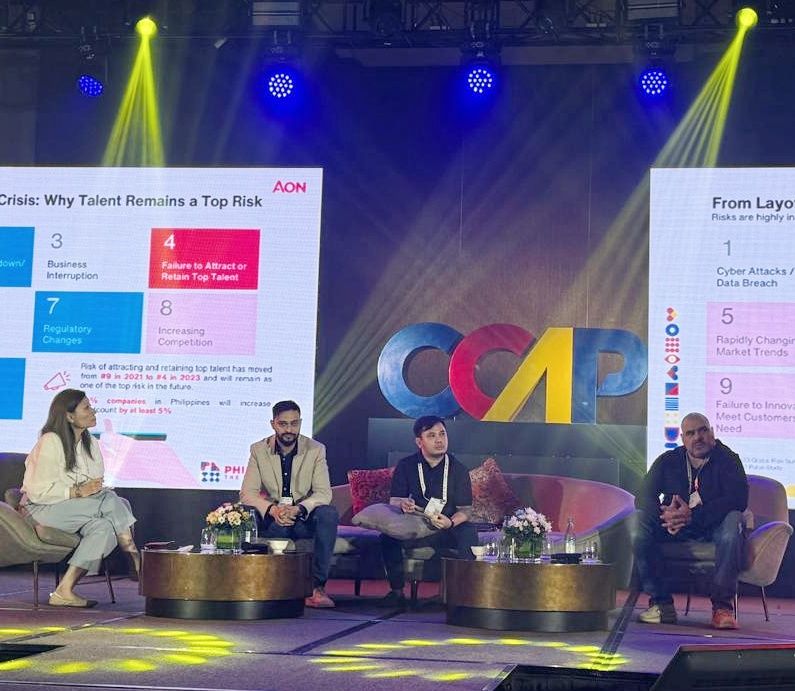
In July 2024, Bindal sat on a panel titled “Re-tooling for Managing Global Talents” at Contact Islands in Cebu. Behind the panelists, charts warned that attracting and retaining talent remained a major business risk. Bindal's contribution was concise: technology could overcome geographic barriers, support collaboration across global teams, and improve engagement.
It is a sentence with the polished corners of a conference stage, but it describes an operational challenge rather than a fashionable abstraction. Remote organizations do not suffer from a shortage of messages. They suffer when messages, recognition, and belonging fail to travel with equal force. A workplace platform has to cross those gaps without turning appreciation into one more notification to clear.
That is also why the CMO's job at AdvantageClub.ai is unusually connected. Product marketing explains what the system can do. Corporate communications gives the company a public voice. Events put that voice into a room. Digital campaigns find the next room. Brand building makes the encounters feel related. Bindal's official brief includes every one of those functions.
Adding two letters to the company name
In June 2024, Advantage Club became AdvantageClub.ai. Bindal framed the rebrand as a commitment to using artificial intelligence to personalize employee engagement, with an AI assistant called ADVA as a visible expression of the shift. “Our journey doesn't stop here; it's just getting smarter,” he wrote.
Rebrands are easy to announce and hard to inhabit. Two letters can alter a logo overnight. They cannot, by themselves, persuade a customer that a product understands people better. That proof must arrive in the experience: a more relevant reward, a timely moment of recognition, a useful insight for a manager, or less friction for an employee.
Bindal's path seems fitted to that translation job. Research taught him to look for evidence. Editorial work taught him to give evidence a sequence. Years in digital businesses taught him that distribution shapes the message. His current role asks him to make AI intelligible without allowing the machinery to eclipse the person it is meant to serve.
The durable marketing asset is not a channel. It is the ability to learn a new audience without losing your own voice.
Recognition, and what sits beneath it
The public awards list is long. It includes Brand Builder of the Year from World Marketing Congress and FE Visionary Leadership recognition in 2022, a content-marketing honor from World Marketing Congress in 2019, an APAC ContentMogul recognition from CMS Asia that same year, and several earlier performance awards connected to BCCL and Times Internet.
Awards are timestamps, not explanations. The more revealing record sits in the movement between roles. A research analyst became a brand adviser. The adviser became a digital publisher and client operator. The publisher became a content leader, then a global marketer, then a CMO responsible for coordinating the whole system.
There is no grand reinvention in that sequence. There is accumulation. Bindal kept the old tools while accepting larger problems. The spreadsheet stayed useful when the job added a headline. The headline stayed useful when the job added a campaign. The campaign stayed useful when the job added a product, a market, a team, and a company story.
His profile describes him as a strategist, storyteller, and brand builder. The order matters less than the combination. Strategy without a story struggles to travel. Story without strategy may travel nowhere useful. Brand is what remains after both have met reality often enough.
The work after the announcement
AdvantageClub.ai now presents a broad employee-experience proposition: recognition, rewards, engagement, loyalty, and benefits, with personalization and data woven through the offer. Bindal's task is to keep that breadth comprehensible across markets. It is the kind of work that rewards someone comfortable moving between a panel conversation, a product narrative, an event floor, and the small decisions inside a content calendar.
His latest public activity reflects that operating rhythm. He has celebrated recognition for the company's loyalty-management product, amplified hiring across Indian cities, and supported the creative and content roles required to keep a growing brand visible. None of it resembles the solitary analyst's desk from 2005. All of it depends on the same respect for signal.
The useful lesson in Bindal's career is pleasantly unfashionable. Attention is not a trick. It is the result of patient observation, clear language, repeated delivery, and a good reason for the audience to care. The tools will change. The job will acquire new initials. The person on the other side of the message will remain magnificently hard to fool.