The expensive moment in a software project often arrives quietly. Someone says the new system should be “simple.” Another person hears fast. A developer hears fewer screens. A manager hears fewer support calls. Everyone nods, the meeting ends, and four different definitions travel into the build. Gerardo E. Saborío Molina has spent much of his career working inside that gap. His subject is software, but his recurring concern is language: how an organization turns an intention into something a technical team can build, test and trace.
That concern eventually became ReqStudio, the requirements-management company he founded in 2016. Its premise is workmanlike. Teams need a shared place to gather requirements, review them, record approval and follow changes through a project. The company describes its mission in terms of closing the distance between IT and business. Saborío’s own path explains why that distance became worth building around.
He came to the problem after more than two decades as a software architect and engineer, not as an observer arriving from the margins. His public career crosses Costa Rica, Puerto Rico and the United States. It includes consulting, company building, cloud architecture, developer education and the unglamorous mechanics of keeping projects moving. The pattern is less a straight ladder than a series of translations: platform into practice, business need into technical plan, and individual expertise into a community’s shared knowledge.
A platform arrives, and a teacher travels
In 2004, Microsoft first named Saborío an MVP. He was the first person from Central America and the Caribbean to receive the award in ASP.NET, the company’s web-development framework. He would hold the title six times. The distinction put him inside an international community just as .NET was spreading through corporate development teams and local user groups.
Saborío did not keep that access to himself. As leader of the Developer Care Program for Latin America, he coordinated roughly 180 conferences in 10 countries. He appeared at Microsoft and community events including TechNet, DevDays, DeveloperCare, INETA, CTECs and TechEd. A 2004 report from Puerto Rico places him among the specialists presenting at a five-country gathering of .NET user groups. The route moved through Puerto Rico, the Dominican Republic, Panama, Costa Rica and El Salvador.
Years later, when Microsoft asked him to look back, those conferences remained one of his favorite projects. “It was a great time to teach people about .Net when it was new,” he said. He also remembered six trips to Redmond. The numbers suggest scale, but the more revealing detail is the choice of verb: teach. Saborío’s professional identity formed around making a new technical system legible to other people.
“It was a great time to teach people about .Net when it was new.”Gerardo E. Saborío Molina, 2020
From technical capability to business consequence
Teaching a framework is one kind of translation. Building for a business is another. In 2016, Microsoft described Saborío’s work on the cloud infrastructure behind AlChavo.com, a Puerto Rican financial-administration platform. Between 1,200 and 1,500 users were using the system after its move to Azure. Saborío emphasized what the architectural change meant in operating terms: room to grow with customers, quicker response and access to security certifications that would otherwise have demanded more money and time.
The episode is a useful window into his style of problem selection. The technical subject was cloud infrastructure. The practical questions were elasticity, reliability, compliance and the cost of future growth. Technology mattered because of the constraints it removed. That same logic sits beneath requirements management. A clear requirement is valuable less for the elegance of the sentence than for the expensive confusion it prevents later.
ReqStudio organizes that preventive work. Its public materials focus on requirements gathering, collaboration, review, change management, approval workflows and traceability. These are easily mistaken for administrative chores. In practice, they are the connective tissue between a sales promise, a product decision, an estimate, a developer’s task and a test result. When the tissue is weak, every team can appear busy while the product drifts.
He took the paperwork back to school
Saborío did something founders often say they value and less often make time to do: he studied the problem formally. At ULACIT, where his public profile records studies from 2018 to 2020, he researched how to standardize the analysis phase of intercultural software-development projects. The 2020 paper begins from sobering project figures. It cites only 16 percent of software projects finishing on time and on budget, 54 percent meeting one of those conditions, and roughly 30 percent being cancelled or abandoned.
The paper directs attention toward analysis, the phase in which teams identify requirements, interview business users and create the technical documentation that development will use. It asks whether cultural differences affect requirements documents and which practices can make the work more consistent. This is not an abstract question for teams distributed across languages, countries and organizational habits. A requirement can be grammatically correct and still carry different assumptions for the people reading it.
There is a pleasing symmetry here. Early in his career, Saborío moved around Latin America helping developers build a common understanding of .NET. Later, he examined the common understanding required before any platform choice matters. The tool changed. The underlying job did not: make complicated work transferable between people.
Continuity looks ordinary from the hallway
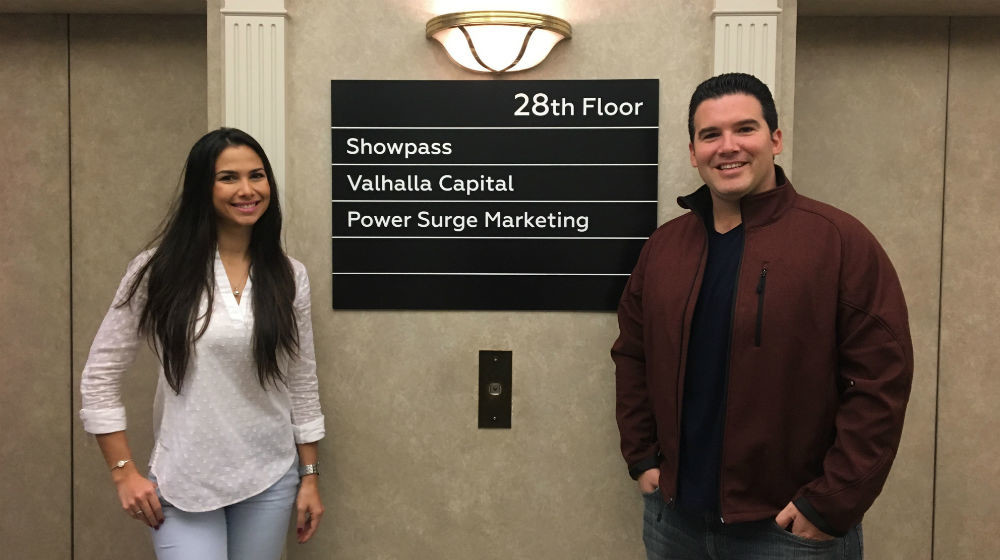
A photograph from October 2017 captures a different kind of systems problem. Saborío stands with colleague Nayka Vallejo beside an elevator directory in Calgary. They were connected to Art Solutions and were among the first startup workers from Puerto Rico to arrive after hurricanes had damaged the island’s infrastructure. A Canadian network assembled workspace, housing, equipment and practical support so people from affected companies could continue working.
The setting is plain: beige walls, an office sign, two people in travel-ready clothes. That plainness makes the picture useful. Business continuity is usually represented by a diagram or a policy. Here it is a borrowed floor, functioning internet and a colleague beside an elevator. The moment also adds texture to a career spread across Costa Rica, Puerto Rico and regional networks. Software may travel instantly. The people responsible for it still need power, a desk and relationships strong enough to make room when normal operations disappear.
The candid lesson in the résumé
Saborío has launched multiple businesses, founded ReqStudio and served as a Founder Institute mentor in Costa Rica. His résumé contains the expected founder signals: architecture, credentials, speaking, product work and international reach. Yet his most personal public reflection concerns something he did less of.
Looking back on the MVP years, he warned newer members not to let professional responsibilities crowd out help for the community. He acknowledged that his attention shifted toward commercial opportunities and said he regretted giving the community less of it. The comment resists the usual shape of a founder retrospective, where each decision becomes inevitable and each detour points toward the current company. Saborío left the regret intact.
It also clarifies why the conference years matter. Community work was not merely a distribution channel or a line on a biography. It was a source of friendships, teaching opportunities and repeated contact with how developers actually learn. The founder who later built a collaboration product first spent years in a collaboration network. The connection is visible without needing to be tidy.
Clarity is a form of risk management practiced before the risk becomes visible.
The useful thing to steal
ReqStudio’s category will never attract the attention given to the newest programming model. Requirements sit too close to meetings and documents. But that is exactly why the work is consequential. The cost of ambiguity compounds silently. A loosely defined request becomes a confident estimate. The estimate becomes a schedule. The schedule becomes a commitment. Only after code and expectations collide does the original ambiguity receive a price.
Saborío’s career offers a practical countermeasure: bring precision forward. Teach the shared system. Record the decision. Let people review the same language. Keep the path from request to delivery visible. Ask how geography and culture alter interpretation. Treat the document as a living interface rather than the remains of a kickoff meeting.
The arc from early .NET evangelism to ReqStudio is coherent because both projects depend on shared vocabulary. One helped a region learn how to use a development platform. The other asks organizations to become more exact about what they want built. In both cases, the work succeeds when knowledge survives the handoff.
Code can make an instruction run. It cannot decide whether the instruction reflects a common intention. That decision still belongs to people. Saborío has built his career around giving them a better place to make it.