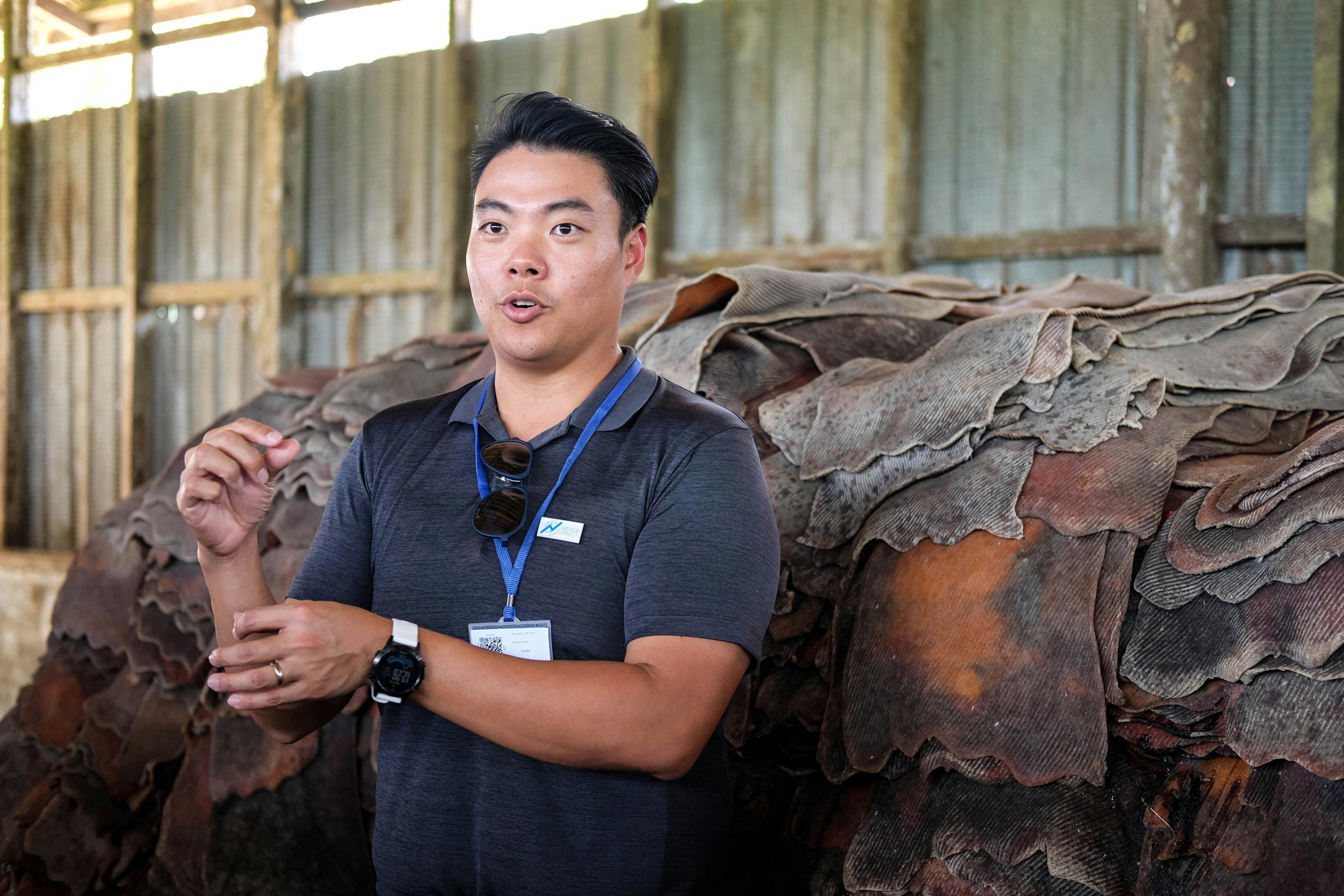
Gerald Tan used to sleep in the office. He travelled to his family’s rubber factory in Indonesia every week, sometimes staying several nights. Years later, a film crew brought him back to the plantation and factory for a video about digitalising the rubber industry. The setting was familiar. The business he was there to explain had changed.
By then, Tan was leading Agridence, the Singapore company originally called HeveaConnect. Its work involved following agricultural materials through their commercial lives: who supplied them, where they grew, what happened between a farm and a buyer. The factory had given him something useful for that work. He had handled a supply chain before he tried to put one into software.
There is a particular indignity in knowing your business intimately while struggling to find its records. The material can reach a customer while the evidence of its journey remains scattered among people and files. Tan’s career has followed that mismatch, from the rubber trade he inherited to the technology company in which he later increased his own financial stake.
An education with a factory attached
His family’s commercial history reaches back to the 1950s, when his great-grandparents moved from China to Indonesia and entered rubber and timber. His grandparents added a Singapore trading office. As a child, Tan visited the factory on Bintan Island and accompanied his father to meetings. Before the operations became his responsibility, he had watched the relationships that kept them moving.
He studied at Singapore Management University from 2004 to 2008, graduating magna cum laude. In 2011, he took over the family business. Running it meant crossing between life in Singapore and the demands of a factory, its workers and the farmers supplying raw material. His father supported efforts to modernise the operation.
His experience extended across processing, sales, plantation management, foreign exchange and futures trading. It also included talking to dealers and buying through agents. Those responsibilities matter because a commodity chain contains several businesses, each with its own pressures. A software designer who sees only the buyer’s desk can miss what has to happen long before a purchase order arrives there.
Tan speaks English, Mandarin and Indonesian; his public profile also lists several Chinese dialects at more limited proficiency. Language belongs in this story for a practical reason. His work required communication across the factory gate, through trading offices and into farming communities. The family business supplied an introduction to those worlds. Operating it supplied the homework.
The deal travelled faster than the data
After the family factory business was sold to Halcyon Agri, Tan had an opportunity to work with its strategy team. A DBS workshop on digitalising natural rubber became a point of departure. He brought the experience of handling transactions across the chain to a discussion about where the process failed its participants.
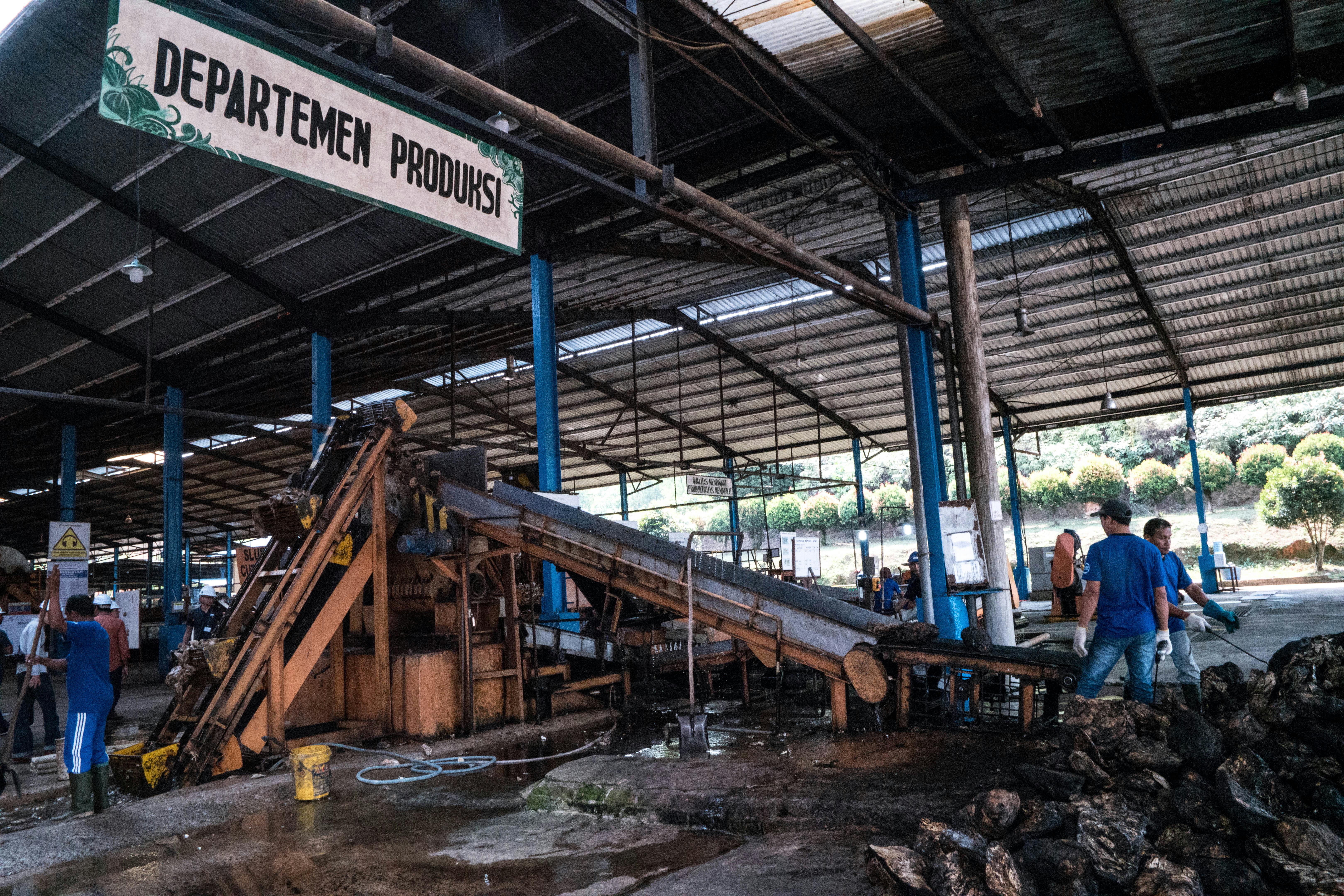
HeveaConnect was incorporated in 2018. Its trading platform began operating in 2019, giving buyers and sellers a place to conduct physical rubber trades. The ambition included price discovery and the workflow between an order and its fulfilment. A deal could have a shared digital record, rather than depend on the parties reconstructing it from separate conversations.
An early announcement of SGX’s investment reported more than 250,000 metric tonnes matched on the platform, with gross sales value exceeding US$325 million. These were historical platform figures, rather than a measure of Tan’s personal wealth or company revenue. Their significance was more straightforward: the system was being used to transact physical goods.
Continental joined the platform in 2021. Tan described the aim as attaching sustainability information to the rubber being traded, allowing procurement teams to consider evidence alongside the product. A commercial transaction became a place to carry information that a buyer might otherwise have had to request separately.
That changes the job of the paperwork. A record can help a purchasing team assess a supplier, a financier understand a transaction or a processor answer a customer’s questions. Rubber still has to be produced and shipped. The digital layer helps explain the shipment. Even an excellent tyre is a poor filing cabinet.
- 01FarmerOrigin
- 02AgentCollection
- 03FactoryProcessing
- 04TraderTransaction
- 05BuyerProcurement
metric tonnes of physical rubber matched, as reported in the early SGX investment announcement. A historical platform milestone.
The farmer at the other end of the screen
Tan’s interest in the chain has also concerned who receives its benefits. In a 2019 essay, he examined Indonesian natural rubber smallholder economics, comparing farmers’ earnings with minimum wages. That is a revealing choice of subject for someone building a trading platform. He was looking upstream at the people supplying its raw material.
At a smallholder-finance discussion in 2020, he connected farmers’ economic circumstances with environmental outcomes. He raised the difficulty of replacing ageing rubber trees when affordable long-term financing was scarce. Asking a farmer to invest in future production is easier than arranging the money needed to make the investment possible.
In March 2021, Tan and WWF’s Michael Steuwe presented the Sumatran Rubber Pilot through the Global Platform for Sustainable Natural Rubber. The collaboration brought together processors, tyre makers, financial institutions, technology providers and civil society. Its questions included what transparent, sustainable rubber would require and how the costs could be paid.
The same concern appears in his more recent public writing about smallholder inclusion. Tan advocates mobile tools that work offline, local-language interfaces and ways for cooperatives to aggregate data. Those are specific design choices. They address the distance between a buyer’s reporting expectations and a farmer’s ability to supply digital records.
The distinction between an ambition and an outcome remains useful here. Tan wants smallholders included in digital supply chains. Building the tools is part of that effort; a farmer’s access, costs and income still matter. A tidy dashboard cannot, by itself, settle the economics of growing rubber. His earlier writing gives the present product agenda a longer history.
A new name, then a larger personal stake
On 25 October 2022, HeveaConnect became Agridence. Tan’s letter explaining the change set out a holding company for the technology and a subsidiary, Agridence Rubber, for the rubber business. He also described an advisory board with equal numbers of buyers and sellers and a role in guarding against misuse of data.
The governance detail was part of the product’s credibility. Buyers and sellers could use the same trading infrastructure while having different commercial interests. Giving both sides representation acknowledged that tension. In a shared marketplace, the rules governing information can matter as much as the speed at which it moves.
In August 2025, Tan invested additional capital and became Agridence’s single largest individual shareholder. The company announced a transition from a corporate venture-built startup to founder-owned, founder-led governance, alongside a funding round led by Cercano Management with returning investors EXEO Innovation Fund and Provident.
Tan connected the change with greater agility, neutrality and direct accountability. The description does not establish that every competing interest disappears. It does show a decision to put more of his own capital behind the company and to make its ownership structure part of the argument for customers’ trust.
“Trust is everything in this business,” he said. The remark fits the career that preceded it. He had grown up around the relationships in rubber, then built a platform asking those relationships to carry structured data. Becoming a larger shareholder added another form of exposure to the work. The founder’s conviction acquired a line in the share register.
“Trust is everything in this business.”
Gerald Tan / August 2025
HeveaConnect becomes Agridence.
Rubber business moves into a subsidiary.
Tan adds his own capital.
Founder-led governance is announced.
Rubber lessons, different crops
The next announced step was Agridence’s acquisition of farmer connect in August 2025. Tan described complementary strengths: Agridence’s upstream presence in Asia and farmer connect’s work with downstream buyers and compliance in Europe. The combined offering covered farm mapping, supply chain records, risk monitoring and reporting across several agricultural commodities.
The geography makes the reasoning legible. Information collected near a producing farm has to remain useful to businesses farther along the chain. Adding a European presence and buyer-facing expertise was a way to connect those ends. The acquisition also carried the practical task of bringing two sets of capabilities into an offering customers could use.
Palm oil provided another chapter. Agridence helped develop and launch RSPO’s prisma system in February 2025. On 14 January 2026, RSPO and Agridence mutually concluded their development service agreement. RSPO announced other partners for the next phase. The launch belongs in Tan’s company history; so does the end of that engagement.
In coconut, Agridence developed SCP Links with the Sustainable Coconut Partnership. The platform supports shared sustainability information, reporting and digital audits. In 2026, Tan promoted practitioner training in Jakarta, connecting the digital infrastructure with the need for people to understand and use the assurance system behind it.
These extensions give his original factory experience a wider application. Rubber, coffee, cocoa and coconut have different commercial arrangements. Agridence’s proposition is that records about origin and subsequent handling can still be made useful across them. Tan’s work has moved farther from the family factory while remaining concerned with the passage between producers and buyers.
An optimist who keeps working the problem
Away from the commodity trade, Tan is a cyclist. He describes himself as competitive and drawn to a challenge. Cycling also gives him space to think through problems. It is a modest personal detail, but a welcome one in a career otherwise crowded with transactions, reporting systems and ownership arrangements.
He has spoken about resistance to the early platform, including reluctance among established industry participants and within his family. His account of persistence is practical: remain curious, adapt the process and continue improving it. He calls entrepreneurship a task that needs optimism. The repeated work appears to interest him as much as the initial idea.
The office nights remain the most useful image of his beginnings. They locate the founder inside the business whose habits he later tried to change. His story runs through a factory, a workshop, a trading platform and an investment of his own capital. At each stage, the question becomes more demanding: how much of a commodity’s journey can the next person actually understand?
Follow the work
Read Tan’s writing, watch his return to the factory, and explore the business he leads.
- Gerald Tan on LinkedIn
- Indonesian Natural Rubber Smallholder Economics
- Watch: digitalising the rubber industry (FT / DBS)
- Tan’s Business Times commentary
- Cycling and the craft of building Agridence
- The 2025 ownership announcement
- The farmer connect acquisition
- RSPO’s January 2026 development update
- Agridence: the company and its team