A billion dollars can make a career look inevitable. George Chang’s is more interesting when you start with the ten million. In 2000, that was the annual sales figure for Autoliv’s Chinese operation. By 2011, the business he led was selling more than $1.1 billion. On a chart, the first number almost disappears. In a factory, every additional order still has to become something that works.
That distance between a promising market and a dependable product runs through Chang’s working life. His career has taken him from purchasing to regional leadership, from airbags and seatbelts to electronically controlled brakes and suspension. The products generally live out of sight. Their executive’s challenge is rather visible: persuading people to invest, building teams that can deliver, and keeping an expanding organization from becoming pleased with its own size.
Read through his public remarks and a recurring concern emerges. Growth needs an organization, but the organization can become a burden. New technology needs partners, but a partnership still needs a production plan. An automobile may be sold with a beautiful silhouette. Chang’s professional territory is underneath it, where beauty gets a less generous hearing from physics.
The small number at the beginning
Chang was born in Malaysia in 1964. He earned a bachelor’s degree in mechanical engineering, with an aeronautical specialization, at Universiti Teknologi Malaysia, followed by an MBA from Heriot-Watt University in Edinburgh. His later automotive experience included Nissan. In 1997 he joined Autoliv as regional purchasing manager for Asia Pacific, beginning a progression through its Chinese, Asian and global operations.
Purchasing is an unglamorous entrance to an industry that produces so much glamour. It puts an executive close to the practical questions behind a finished vehicle: what can be obtained, from whom, at what cost, and with what reliability. Chang’s subsequent appointments carried him well beyond that function. Yet the route is a useful reminder that his career began inside the machinery of an operating business.
Two reported endpoints. Linear scale; no intervening years implied.
The growth story also had a customer’s verdict. Chery awarded Autoliv’s Shanghai vehicle safety operation its 2009 Supplier of the Year distinction, recognizing quality, delivery, commercial performance and project development. The award concerned the business and its associates, rather than a personal trophy for Chang. His response made that distinction explicit: “This is a testament of the dedication and teamwork of our skilled associates at ACS.”
It is a modest sentence beside a very large sales trajectory. It also points to what those numbers conceal. Commercial growth in this setting involves repeated deliveries and working relationships, not simply a swelling audience. An order carries obligations. A supplier award says something about meeting them.
A bigger market, a smaller appetite for bureaucracy
Years before the billion-dollar milestone, Chang was explaining why China deserved attention inside a multinational organization. In a 2008 interview, he recalled that colleagues at headquarters had questioned his vision back in 1999. He described a later relationship in which the CEO visited China regularly and he traveled to headquarters to present the business. The market’s promise had to be communicated as well as pursued.
His caution was equally revealing. He warned that a vast market could encourage an overly elaborate organizational structure, adding expense. Sharing resources, in his account, could also create broader jobs that helped attract and retain capable people. That is an unusually practical way to discuss ambition: how much organization can the opportunity bear, and what kind of work will make people stay?
The appealing interpretation is that Chang was thinking about the cost of success while success was still arriving. Expansion gives managers plenty of reasons to add departments. Each department arrives with an explanation. Eventually someone must ask whether all those explanations add up to a business customers want to pay for.
His promotions continued. He became president of Autoliv Asia in April 2012 and president of its Passive Safety business in September 2014. The progression widened his responsibilities from a national operation to regional leadership and then a global product business. China had become part of his route to worldwide responsibility.
A career measured in other people’s journeys
One smaller story gives the organization chart a human scale. Jean-Christophe Auge, later plant manager for ALT Technologies in China, credits Chang with making his move from Autoliv France to China possible. Auge and his wife arrived in Shanghai on January 4, 2004. He had been a frontal airbag development engineer and wanted to learn about her country.
Auge places Chang alongside Frank Roussel and Jean-Luc Verstraeten as people who influenced his life and changed his career. The recollection is specific: an opportunity to move, followed by opportunities to take on operational responsibilities and eventually lead a new facility. It offers a different unit of measurement from annual sales. A decision inside one company becomes a turning point in someone else’s working life.
It would be easy to turn that into a sweeping claim about Chang’s personality. The particular story is more useful. Auge remembers trust and opportunity. Behind a company’s geographic expansion sit individual decisions about who can do the work, who should be given a chance, and where that chance might lead.
Chang also made a change of his own. Autoliv announced in December 2015 that he intended to leave to pursue activities outside the automotive sector, with a transition into 2016. His LinkedIn lists Regent College study from 2016 to 2019. That interval sits between major automotive leadership roles, a reminder that even a long industrial career can contain a different kind of classroom.
Back beneath the car
In September 2022, a new investor group acquired majority ownership of BWI Group. Chang became its chief executive that month. The assignment paired revenue growth with manufacturing performance. BWI brought an established brake and suspension business, with roots in the Delco automotive operations that began in Dayton, Ohio, in 1909.
By then, the argument about the future of the automobile had moved well beyond engines. Electrification and automated driving raised questions about how a vehicle would control its motion. Braking, steering and suspension were becoming part of that conversation. Chang’s BWI years placed him at the meeting point of established component manufacturing and electronically controlled chassis systems.
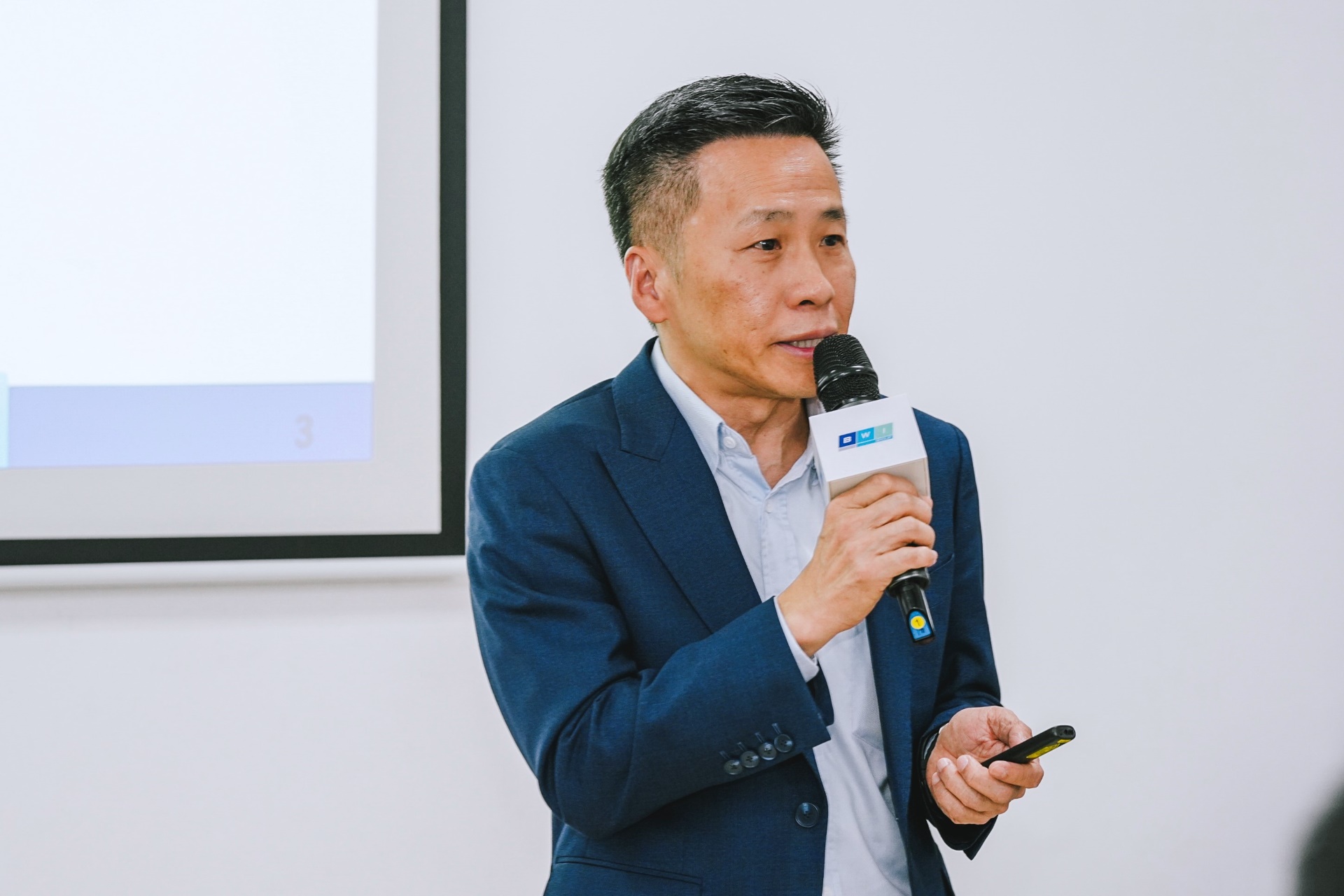
The history mattered because new ownership did not mean starting from an empty workbench. Existing technical experience and production operations gave the new leadership something to work with. The question was how to direct those resources toward a changing set of customer requirements. An old industrial business can acquire a new agenda without acquiring a new birthday.
The partnership behind a smoother ride
In July 2023, BWI and ClearMotion announced a partnership to supply full-active suspension components and subsystems to an electric vehicle manufacturer. ClearMotion’s control expertise and BWI’s suspension technology were to work together in its CM1 system. Chang discussed the collaboration in terms of complementary technical capabilities, including damping expertise brought by BWI.
Suspension has a wonderfully immediate audience. Passengers do not need to understand a control system to notice what a road does to their seat. The engineering may be intricate, but its result is experienced as movement. This gave Chang’s technology agenda a tangible destination inside the cabin.
The partnership also showed an approach to the work: combine capabilities across companies. A supplier with manufacturing experience and a company developing motion control could each bring something the other needed. For an executive, the task is to make that arrangement function beyond the announcement. Cooperation has to survive the less photogenic stages of development and delivery.
A future that still needed winter boots
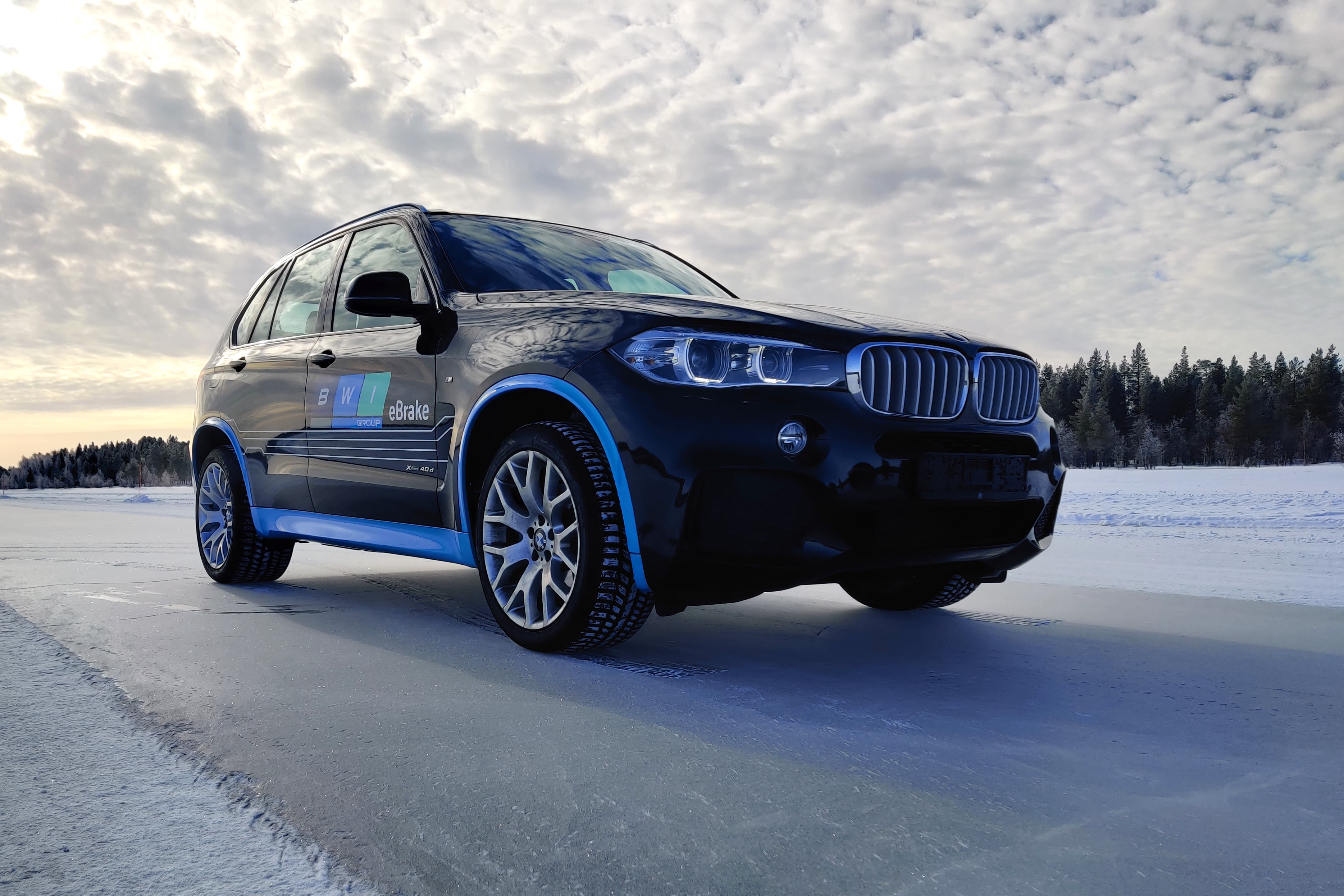
BWI’s March 2024 winter program tested chassis products in China, the United States and Europe. Its locations included Heilongjiang, Michigan’s Upper Peninsula and Swedish Lapland. Chang tied that geographic spread to serving more than 50 customers worldwide and meeting international requirements from development through production.
A map of the sales territory becomes a map of the testing obligation. The company’s lineup included integrated braking, parking brakes and controlled suspension. Its electro-mechanical brake technology also underwent cold-weather work. These were concrete places and physical tests attached to an otherwise abstract phrase: smart mobility.
In Budapest on April 9, 2024, Chang and thyssenkrupp Steering CEO Patrick Vith formalized an agreement to develop and manufacture electro-mechanical braking technology. The companies brought braking and steering knowledge to a joint project involving technical teams in several countries. Chang’s short declaration captured his public enthusiasm: “We at BWI are excited about the future of chassis-by-wire.”
“We at BWI are excited about the future of chassis-by-wire.”George Chang / April 2024
That July, he presented BWI’s All-by-Wire 2035 strategy. The announced roadmap called for an EMB prototype in 2024, an automated production line in 2025 and customer mass production in 2026. Those dates described the plan presented during his tenure. They belong to the story as commitments, with the distinction between scheduling production and achieving it kept intact.
BWI’s announced EMB milestones, not a record of completed deliveries.
The factory belongs in the future, too
Chang’s BWI agenda also extended to how components were made. At the Zhangjiakou manufacturing base’s production ceremony in November 2023, he discussed measures intended to support customers’ carbon goals. BWI announced targets for carbon-neutral operations by 2027 and net-zero greenhouse gas emissions across its supply chain by 2050.
The new plant’s plans included rooftop solar generation. It was a physical expression of a broader problem for automotive suppliers: a changing vehicle asks questions of the factory as well as the engineering department. Production energy, materials and supply relationships sit behind the finished part. They become part of the commercial conversation even when passengers never see them.
These targets widen the picture of his assignment. Revenue, technology and manufacturing were connected responsibilities. A product can be redesigned on paper much faster than a global supply network can be changed. The work of an operator lies in bringing those different clocks into a usable relationship.
The next opportunity
Chang resigned as an executive director of BeijingWest Industries International on December 27, 2024, citing other personal business engagements. His public LinkedIn now describes him as independent and open to new opportunities. BWI’s leadership listing, confirmed as of May 2026, names Tom Liu as global CEO.
His career leaves an identifiable sequence: a small Chinese sales base that became a substantial operation, wider responsibility at Autoliv, a period of study, and a return to automotive leadership during the shift toward electronically controlled chassis technology. Alongside it are the less numerical traces, such as an engineer who remembers getting the chance to move to Shanghai.
The useful question in this story is what makes an ambition operable. Chang’s public work repeatedly returns to teams, customers, partners and manufacturing. The future of a car may begin as an attractive idea. Eventually it must arrive at a factory, meet a delivery date, and cope with the road. That last customer is famously difficult to impress.