At Anderson Healthcare, the trouble was keeping track. Privacy incidents had to be documented. Business associate agreements had to be managed. A small team had to hold the whole picture together. In Genzeon’s account of the project, compliance and privacy director Ashley Brown describes an organization spending so much energy recording events that it struggled to learn from them.
Brown had used CompliancePro Solutions at Missouri Delta. She brought that experience to Anderson, advocating a familiar tool rather than a speculative experiment. Centralized records made incidents easier to retrieve and compare. Education could follow patterns in the data. Her compact verdict:
“The implementation of CompliancePro Solutions has been a significant time saver.”Ashley Brown · Anderson Healthcare
- Genzeon combines healthcare software with implementation and ongoing services.
- Its three platforms cover clinical administration, patient engagement and privacy.
- The practical lesson: understand the handoff before automating the task.
That small administrative story explains Genzeon better than a futuristic robot ever could. The company works where healthcare’s software meets its habits: the repeated entry, the missing document, the approval waiting for someone who understands the rules.
A narrower company, a bigger bet
Genzeon once served healthcare and retail. In August 2025, it announced an exclusive healthcare focus following the spin-off of its retail division as Moxie Retail. The stated ambition was access and affordability. The strategic change was concrete: concentrate its engineering, data and automation work on one industry’s recurring problems.
Founder Venkat Thumula’s background helps explain the choice. The company’s platform leadership biography says he spent a decade at Allscripts designing and developing healthcare products. He is now executive chairman; Ilanko Kumaresan is CEO. This is a business built around knowing how healthcare organizations operate, with AI added to an existing base of engineering experience.
Its customers include providers, health plans and healthtech businesses. Genzeon’s main website reports more than 75 healthcare clients. The buyer is an institution with workflows to repair, systems to connect and obligations to satisfy. A patient may encounter the result as a scheduling conversation or a quicker administrative process without ever encountering the Genzeon name.
Three doors into the same hospital
The product portfolio has three distinct entry points. HIP One supports prior authorization, utilization management and medical review. It organizes clinical information around coverage decisions. PES One, or Patient Engagement Solutions, handles patient and member interactions, including scheduling and service requests. CPS One, formerly CompliancePro Solutions, organizes privacy and compliance work.
Genzeon acquired CompliancePro in November 2021 and launched HIP One in November 2023. Those dates matter. Privacy software was part of the business before the generative AI platform arrived. Keeping records safe and producing evidence for a review are established customer jobs, rather than decorative features attached to a chatbot.
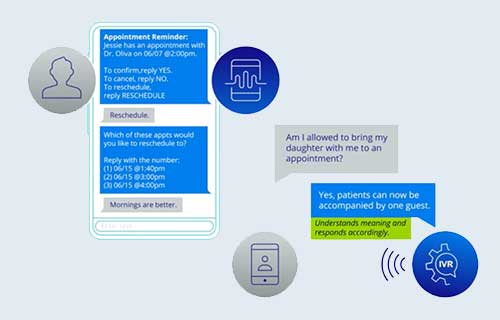
The commercial model combines enterprise software with consulting, engineering and managed delivery. Genzeon Platforms houses the product business, while the parent supplies broader services. Microsoft, UiPath and Databricks are partners. Genzeon fits between a healthcare software vendor and a systems integrator: it sells repeatable products and the work needed to fit them into an untidy organization.
The $2.25 million question
Consider a February 2024 case study involving an unnamed healthcare fintech company. Genzeon describes manual work across data aggregation, claims and customer service. Its team used process mining and interviews to identify automation opportunities, ranked them by cost, speed and user experience, then redesigned the workflows before deploying software.
The reported result was more than 100 processes automated in the first year, $2.25 million in first-year savings and a 30 percent reduction in operational cost. Genzeon says the target operating model took 12 months to establish. These are vendor-reported results from one engagement, with an unnamed client; they describe that project rather than a standard outcome.
Savings and investment are different numbers. A buyer should ask for software fees, integration effort, ongoing support and internal staff time in the same proposal. The transferable part of this case is the sequence: find the work, rank it, improve it, then automate it. Starting with the purchase reverses the useful order.
Medicare raises the stakes
In 2026, Genzeon’s work entered a particularly consequential setting. CMS lists Genzeon Corporation as the New Jersey participant in its WISeR model, working in the Novitas jurisdiction. The program tests technology-assisted review for selected Original Medicare services. Genzeon identifies HIP One as the platform supporting its deployment.

CMS describes a combination of enhanced technology and human clinical review. The model does not change Medicare coverage policy. It also pays participants a percentage of expenditures associated with averted inappropriate care, adjusted for performance measures including provider experience. That payment structure makes review quality and accountability central to understanding the business.
The market includes specialized alternatives such as Cohere Health and Humata Health, both fellow WISeR participants. Genzeon’s positioning combines review software, privacy tools and delivery services. In September 2026, UiPath named it Industry Impact Partner of the Year for Healthcare and Life Sciences. The award signals a partner relationship; patient outcomes still require their own evidence.
The day after the demo
A September 2026 Genzeon essay describes a recognizable failure pattern: automation remains live, but exceptions accumulate and users resume manual work. Its response pairs automation engineers with credentialed healthcare operators during development, then tracks operational measures after launch. This is the company’s stated delivery approach, not an independently measured cure.
For a buyer, the implication is straightforward. Choose a bounded workflow. Put someone who actually performs it beside the engineer. Measure exceptions as well as throughput. Assign an owner for maintenance. If records are inaccessible, rules are poorly understood or nobody owns the handoffs, an automation project has little foundation. The revealing question for Genzeon, or any competitor, is what happens to the ordinary case six months after the demonstration.