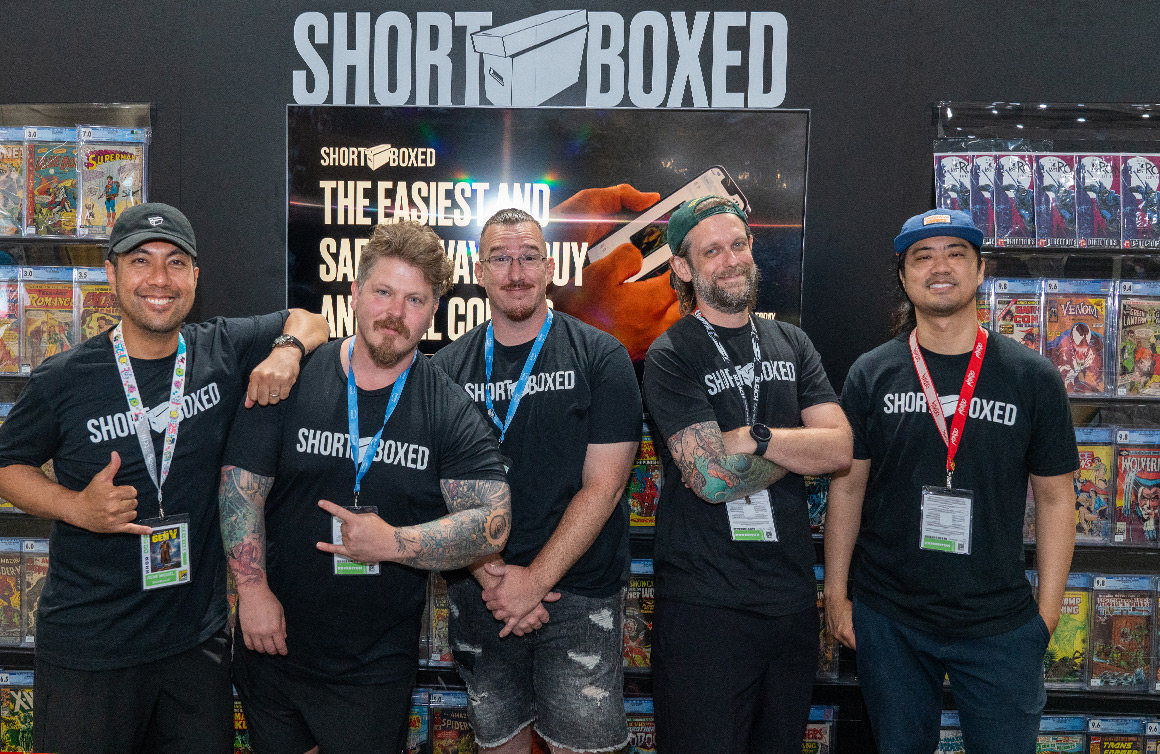
Gene Miguel’s startup began with a problem that fit neatly into a cardboard box. The box was long, the comics were graded, and the software used to sell them often behaved as if mobile shopping had never happened. Miguel knew this because he was not studying collectors from a polite distance. He was one of them. He and his friend BJ Abordo had read and collected comics since childhood. They started a blog to meet other people in the hobby, became dealers for fun, and spent paid time off, nights, and weekends on the convention circuit.
There is market research, and then there is standing behind a folding table while someone inspects a plastic slab with the concentration of a diamond buyer. The second kind tends to produce better notes. Miguel and Abordo saw what collectors tolerated: dated sites, repetitive listings, uncertain condition, awkward checkout, expensive fees, and the occasional scoundrel. They also saw a large culture with its own language, rituals, and finely calibrated sense of trust.
Both founders had careers in technology. Miguel worked in marketing roles associated with Twilio, Xamarin, and SingleStore, where he was identified as a senior field marketing manager. Their hobby supplied the problem; their day jobs supplied the reflex to turn a recurring complaint into a product. Shortboxed became the answer, with Miguel as CEO and Abordo as CTO.
“Being a comic book platform, I refer to the beginning as our origin story.”Gene Miguel
A launch with comic-book timing
Shortboxed launched in March 2020 at C2E2 in Chicago. A large convention was an obvious place to introduce a marketplace made for comic people. Then the founders flew back to San Francisco and walked into a plot twist no editor would have approved for plausibility. The city entered lockdown. Comic shops closed their doors. Conventions disappeared from the calendar. Dealers lost the rooms where much of their business happened.
The launch plan had been wrecked, but the need beneath it became more urgent. People at home reopened basements, closets, and attics. Old issues resurfaced; dormant interests woke up. Dealers needed somewhere to sell, and collectors needed somewhere to browse. Shortboxed had arrived with a mobile route between them just as the physical routes vanished.
Timing alone does not make a marketplace. A two-sided product must persuade buyers to show up for the sellers and sellers to show up for the buyers, a courtship complicated by shipping labels. Miguel has put the point plainly: “Building a consumer marketplace is hard - you're only as strong as your community.” Shortboxed’s early collectors did more than transact. They sent feature requests, bug reports, criticism, and encouragement. The company used that loop as a product department with excellent taste in cover art.
The ten-second listing
Shortboxed’s early product choice was aggressively specific. It was mobile-first because people increasingly shop from their phones. A seller could photograph the front and back of a comic, set a price, and submit. Miguel said a listing could take about ten seconds. Buyers got familiar marketplace gestures: browse, filter, make an offer, tap to buy.
The more interesting work sat underneath those simple gestures. A generic marketplace knows “item,” “price,” and “seller.” A comic marketplace needs grades, population counts, creators, issue notes, first appearances, classic covers, historical sales, and fair-market-value signals. Shortboxed could show whether a price looked favorable, fair, or premium. Its narrowness became an advantage: the software could speak collector instead of forcing collectors to translate themselves into a generic listing form.
Trust required its own architecture. Shortboxed began with graded comics, authenticated by third parties and sealed in tamper-evident cases. The marketplace was designed so the buyer and seller did not need a direct relationship. Shortboxed handled the payment, provided the shipping label, released funds after delivery, and stood between both parties when a package or transaction went sideways. Later it opened to raw, ungraded books, where condition is more subjective and the platform’s role becomes even more visible.
The useful founder lesson: live with the nuisance long enough to know which steps protect people and which merely waste their afternoon.
Modern mythology, modern plumbing
Miguel talks about comics with a collector’s affection and a marketer’s eye for distribution. He has described superheroes as “modern mythology,” characters carried into public life by films, television, video games, fashion, and music. A teenager might meet a hero on a screen and then work backward toward the first printed appearance. In 2024, Miguel said Shortboxed’s fastest-growing audience was college-age users and people in their early twenties.
That observation explains why a phone-first marketplace was more than cosmetic modernization. The source material may be seventy years old; the path into it does not need to be. Shortboxed uses the screen in a collector’s hand to connect cultural curiosity with an object that can be owned, priced, and traded.
Miguel is also careful enough to acknowledge cycles. Comic values climbed during the pandemic and then pulled back. He viewed the later settling of prices closer to their pre-pandemic trajectory as a healthier sign than permanent frenzy. It is an operator’s answer from someone who likes the objects but also needs a marketplace to remain credible after excitement cools.
Miguel and Abordo create a collector blog, meet dealers, and become convention sellers themselves.
Shortboxed launches at C2E2, then adapts as comic commerce abruptly moves online.
The marketplace reports more than 100,000 users and begins testing auctions.
More than 75,000 books from thousands of Shortboxed sellers begin reaching Walmart Marketplace.
A PSA program links comic grading directly to Shortboxed auctions.
From a niche app to larger rails
The company’s later moves follow the same habit of removing awkward handoffs. In 2025, Shortboxed brought a large part of its catalog to Walmart Marketplace. The collaboration placed more than 75,000 comics from thousands of sellers in front of a much broader retail audience. For Shortboxed it was the first expansion onto a third-party marketplace, a way to distribute specialist inventory through familiar mainstream rails.
In April 2026, PSA and Shortboxed joined the other end of the transaction. Under Grade & Sell specials, a collector sends comics to PSA for authentication and grading. PSA images the books and sends them directly to Shortboxed. Shortboxed lists them in seven-day auctions, processes the transaction, and pays the seller. The comic avoids an unnecessary trip home, along with the extra photography, listing, service, and shipping work that trip would create.
There is a pleasing consistency to the sequence. The ten-second listing removed seller typing. The marketplace model removed direct payment anxiety. The Walmart collaboration removed a distribution boundary. The PSA program removed a package’s return journey. Each move asks the same unfashionable question: which chore can disappear without making the transaction less safe?
The collector remains in the room
Miguel’s public persona rarely separates business from the hobby. He has moderated a convention panel about investing in comics, appeared on collector podcasts, and discussed market behavior in interviews. His vocabulary alternates naturally between product language and fan language. “Community-first” shares a paragraph with “stoked.” A formal roadmap might become, in his telling, the next part of the origin story.
Away from the long boxes, there is another glimpse of the operator in motion. Miguel has invited people on LinkedIn to join his road rides around San Francisco, with occasional runs and swims logged as well. It is a modest detail, but an apt one: the route matters, friction is noticed, and companions are welcome.
Shortboxed has raised a reported $4.2 million and widened its product from graded listings to raw comics, direct sales, and auctions. Funding, users, and partnerships supply the conventional milestones. The more revealing achievement is that the company still looks like the problem its founders first encountered behind a convention table. The details grew; the premise stayed legible.
Miguel’s story offers a practical kind of ambition. A hobby does not become a company merely because its fans are passionate. It becomes a company when someone can distinguish the beloved ritual from the needless nuisance. Keep the hunt, the history, the cover, the grade, the opinion, and the pleasure of owning the thing. Lose the ancient form, the repeated typing, the uncertain payment, and one extra trip through the mail.
The comic shop survives in that arrangement. It has simply acquired better plumbing and learned to fit in a pocket.