Before there was a platform, a pitch deck or a state contract, there was Yoli's house in Miami. Chris Bennett spent part of his childhood there, in a home-based program run by a woman who combined the patience of an educator with the instincts of a proprietor. He noticed what children tend to notice: the room felt good. Only later did he understand the economics. Yoli's program thrived. She moved from renting a home to owning one and created opportunity for her family while caring for other families.
Bennett grew up in a large family shaped by his parents, who had immigrated from Honduras. He counts 31 cousins. Many relatives ran small businesses, which meant entrepreneurship did not arrive in his life wearing a fleece vest or carrying a term sheet. It was simply what adults around him did: decide, improvise, account for the day and keep moving. His mother prepared taxes from home and took on other work. His father pressed upon him the value of thinking independently and accepting responsibility for how he used his time.
That mixture - family enterprise and Yoli's care - became useful long before it became legible. Bennett was one of the few in his family to graduate from college and the only one to attend an Ivy League university. At Wharton, he studied economics and entrepreneurship. He also started LiquidBooks, a service that helped students sell textbooks online. The idea was modest, practical and concerned with a familiar Bennett question: how can the internet give an ordinary seller a better chance?
The useful detour
After Penn came private equity in Chicago. The work supplied financial discipline, but Bennett kept testing possible futures. A friend eventually described Silicon Valley as a place where people went to start companies. Bennett visited, returned to Miami for two weeks to pack, and moved west. The speed of the decision is funny; the preparation behind it was not. He had been circling entrepreneurship for years.
In San Francisco, Bennett co-founded Soldsie with Arrel Gray. The social-commerce company helped merchants sell through Facebook and Instagram comments. He also helped start Black Founders, an organization created to increase the number of successful Black entrepreneurs in technology. Both projects sharpened his understanding of small operators and the uneven distribution of useful networks, tools and capital.
Then friends began complaining about child care. They could not find enough convenient, trusted options in the Bay Area. Gray knew the problem personally. Bennett found it strangely familiar. He had attended excellent care in a home; his sister had gone to Yoli for pre-K. Why, in cities full of ambitious people and expensive software, were programs like hers still so difficult to start and discover?
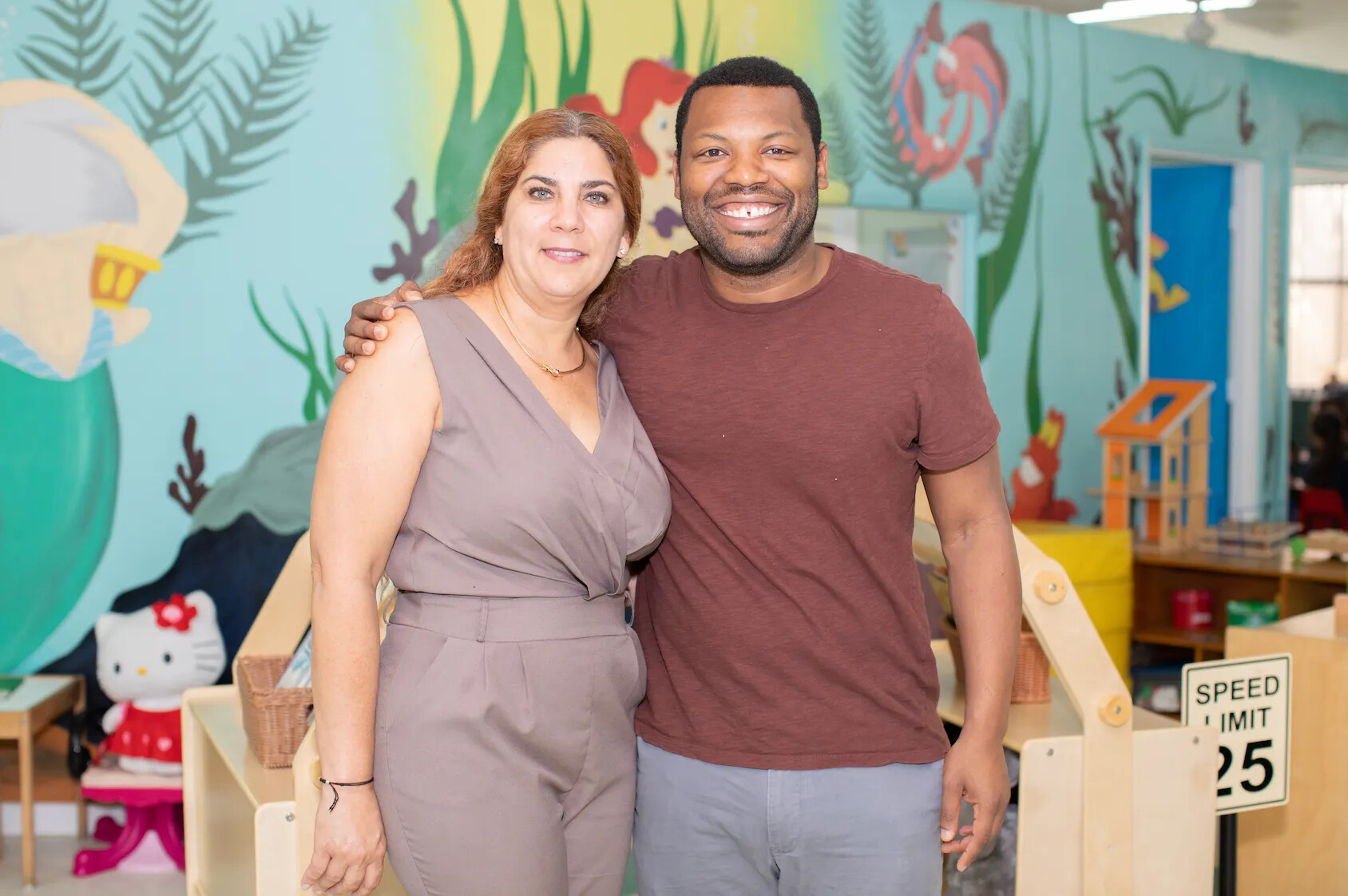
Bennett did what curious outsiders should do. He visited child care programs. He listened. Providers knew children and pedagogy, yet many were being asked to master licensing, marketing, enrollment, billing, parent communication and the tender art of collecting late payments. A person could be gifted in the classroom and still lose weeks to administrative riddles. Yoli had both educational and business aptitude. Bennett came to see just how unusual that combination was - and how technology could make it less unusual.
“Finding an effective, real-world context to test the business model is a really key part of understanding what's going to work.”Chris Bennett
A preschool before a platform
The founding experiment had the pleasing inconvenience of reality. Bennett and his team rented a house in the Berkeley Hills, hired a teacher and opened a child care program. They helped with licensing, curriculum setup, the website and enrollment. A second test followed in Los Angeles. Each program served 12 families. Parents enrolled, which was the useful signal. A functioning Tuesday morning is harder to fake than an enthusiastic pitch meeting.
Wonderschool launched in 2016 as a marketplace and support system. Families could find care. Providers could get help starting and managing programs. The company's software came to cover enrollment, billing, payments and communication, alongside business coaching and licensing support. Bennett had found a second expression of the instinct behind Soldsie: equip independent operators with tools that let their craft become a sustainable business.
There was also a more personal wager. Bennett credits early education with helping lay the foundation for his own path. In his 2021 TED talk, he argued for a close-to-home answer to the shortage: turn houses and other neighborhood spaces into small programs, then give educators the support to operate them well. The idea feels almost anti-futurist. No hovering school buses, no robot nannies. Just a good room nearby, a capable adult and software quietly doing the dull things.
The founder's changing job
Wonderschool's shape changed as the company grew. What began as a marketplace expanded into an enterprise platform for employers, provider networks and governments. Bennett has been candid about the corresponding change in himself. Early on, he was a builder who liked to tinker and improve things directly. A larger company required him to recruit, align and manage people who would do that work together. The title remained CEO; the verbs underneath it changed.
His own account lacks the customary founder mythology. He talks about inflection points as demands for personal growth, not as a victory montage. A two-person company asks for one kind of nerve. A 10-, 20- or 50-person company asks for delegation, clarity and the humility to discover that personal cleverness is a terrible operating system.
Away from the org chart, Bennett has described himself as a devoted sports fan. Basketball, football and baseball fill his feed, but he follows athletes for more than scores. He likes the way accomplished players talk about leadership and hard work. It is an unsurprising founder's pleasure: elite performance made observable, discussed in public and replayed in slow motion. His stated preference is for people who are brilliant, positive and plainly delighted by what they do. The positivity matters because Bennett's ambition is institutional, while his language remains personal. He talks about children fulfilling potential, educators building careers and leaders choosing work they can care about for a decade. Even his everyday media diet becomes a small study in durable motivation.
“There's just a lot of growth that needs to occur as an individual to have the ability to continue scaling with the company.”Chris Bennett
The company attracted backing from investors including Andreessen Horowitz and First Round Capital, then raised a $25 million Series B in 2022 led by Goldman Sachs. That year, Wonderschool appeared on the TIME100 Most Influential Companies list. Awards offer a clean line for a biography. The operational story is messier and more interesting: software designed for one provider has to survive many local rules, different payment systems and the practical habits of thousands of busy people.
From nearby rooms to state systems
The government work brings Wonderschool's contradictions into view. Child care is intensely local. It happens at breakfast tables, in converted playrooms and on playgrounds where somebody has misplaced one mitten. Yet access depends on state licensing, subsidies, workforce programs and reliable data. Bennett's company now tries to join those scales without treating providers like entries in a spreadsheet.
In 2026, Wonderschool introduced an oversight platform for state agencies. It brings enrollment, attendance, billing and licensing information into a unified view so agencies can flag patterns for review. The launch built on partnerships with more than a dozen states. It is a long architectural walk from the rented Berkeley house, but the rooms are connected. Better public administration can keep payments moving; timely payments can keep a provider open; an open provider can let a parent go to work.
Bennett's stated destination is strikingly specific: quality early care and education within five minutes of every child. Five minutes is not a slogan you can satisfy with a national average. It forces attention toward blocks, neighborhoods and the places where supply is thin. It also returns the company to Yoli. A useful program was not somewhere across Miami. It was part of Bennett's daily geography.
His advice to his 20-year-old self offers a companion principle. Worry less about grades, he has said. Take classes that genuinely interest you, learn independently and stop leaning so heavily on external approval. The line could double as his founder story. Several respectable paths failed to hold his attention. The durable one emerged where private memory met a public shortage.
There is an amusing modesty to the final picture. The technology entrepreneur's grand ambition is to help create more places like the house he already knew as a child. Progress, in Bennett's telling, does not always look unfamiliar. Sometimes it looks like recovering a good thing, understanding why it worked, and building enough scaffolding that thousands of other people can make it their own.