The trouble with invisible machinery is that people notice it only when it stops. An order pauses between sales and finance. A new employee waits for access. A customer request wanders among applications like luggage with the tag torn off. Somewhere, a human becomes the integration layer: copying a field, sending a reminder, repairing the little gap between one system and another.
Gautham Viswanathan has spent most of his career in those gaps. He helped create TIBCO BusinessWorks, an early integrated middleware platform. Years later, he co-founded Workato, a company built on the proposition that connecting systems should no longer be the private art of a small technical priesthood. His subject is enterprise plumbing. His argument is about who gets to hold the wrench.
There is a number he returns to: one percent. Big organizations lavish engineering effort on the celebrated processes - order to cash, claims, returns, the machinery whose failure reaches a dashboard quickly. Thousands of smaller workflows live outside that bright circle. They are consequential without being famous, and manual without being simple. Viswanathan calls this automation's one-percent problem.
The neglected map of work
A first life in the middle
Viswanathan studied electrical engineering at the University of Madras and later earned a master's degree from Iowa State University. In 1995 he joined TIBCO, early enough to watch enterprise software become both indispensable and gloriously complicated. He worked across engineering, product marketing, product management and corporate development, eventually serving in the office of the CEO and as a product vice president.
The notable artifact of that period was BusinessWorks. It gave companies a way to orchestrate information among applications, a blueprint that influenced the cloud integration products that followed. Middleware was becoming a category; Viswanathan was learning how a technical architecture becomes a product, and how a product becomes a company.
In a later founder interview, he described joining the little-known Teknekron and TIBCO orbit as one of the pivotal choices in his career. It is the sort of decision that sounds brave only in retrospect. At the time, it was a wager on unfamiliar people pursuing an unfashionable layer of software. The wager gave him colleagues he would meet again.
TIBCO: engineering, product and corporate development; BusinessWorks takes shape.
Two founder chapters: Blink Interactive, followed by iProfile.
Workato begins with former TIBCO colleagues.
AI@Work adds conversational building to the platform.
Named Product 50's Best Product Leader in the midsize-company category.
He left TIBCO in 2007 and founded Blink Interactive. In 2009 he became chief executive of iProfile, which used data and behavior to help enterprise sales and marketing teams identify and engage customers. Neither venture became the defining noun in his biography. Both mattered. They put him in the chief executive's chair and between the neat architecture of a product plan and the untidy evidence of a market.
The reunion, and the recipe
Workato began in 2013 with Viswanathan, Vijay Tella, Harish Shetty and Dimitris Kogias. The founding group carried shared history from TIBCO, but the world around the old problem had changed. Companies now rented scores of cloud applications. Business expectations moved faster. Integration still demanded scarce expertise, and every new SaaS tool created another border crossing for data.
Their answer was not merely middleware moved to somebody else's server. Workato's building blocks were called recipes: automations that could be understood, reused and shared. The domestic metaphor was disarming. A recipe is specific enough to follow, flexible enough to adapt, and improved by circulation. It made a complicated product idea legible without pretending the work beneath it was trivial.
“When the power is in the hands of the people to automate, businesses are no longer limited to improving just 1% of their business processes.”Gautham Viswanathan
The community became part of the product. By the time Viswanathan told Workato's founding story in 2023, users had shared more than 500,000 automations. Nearly half of the people building on the platform, he wrote elsewhere, worked outside IT. That second figure explains the first. Reuse grows when expertise can travel, and expertise travels farther when the builder does not need to begin as a full-time integration specialist.
This was product strategy disguised as hospitality. Bring business users into the room, keep technical teams in command of security and governance, and let both groups work on the same platform. Workato called the combination a fusion team. The phrase can sound like management furniture. The useful part is simpler: the person who knows why a process matters should not have to file a ticket and vanish from its design.
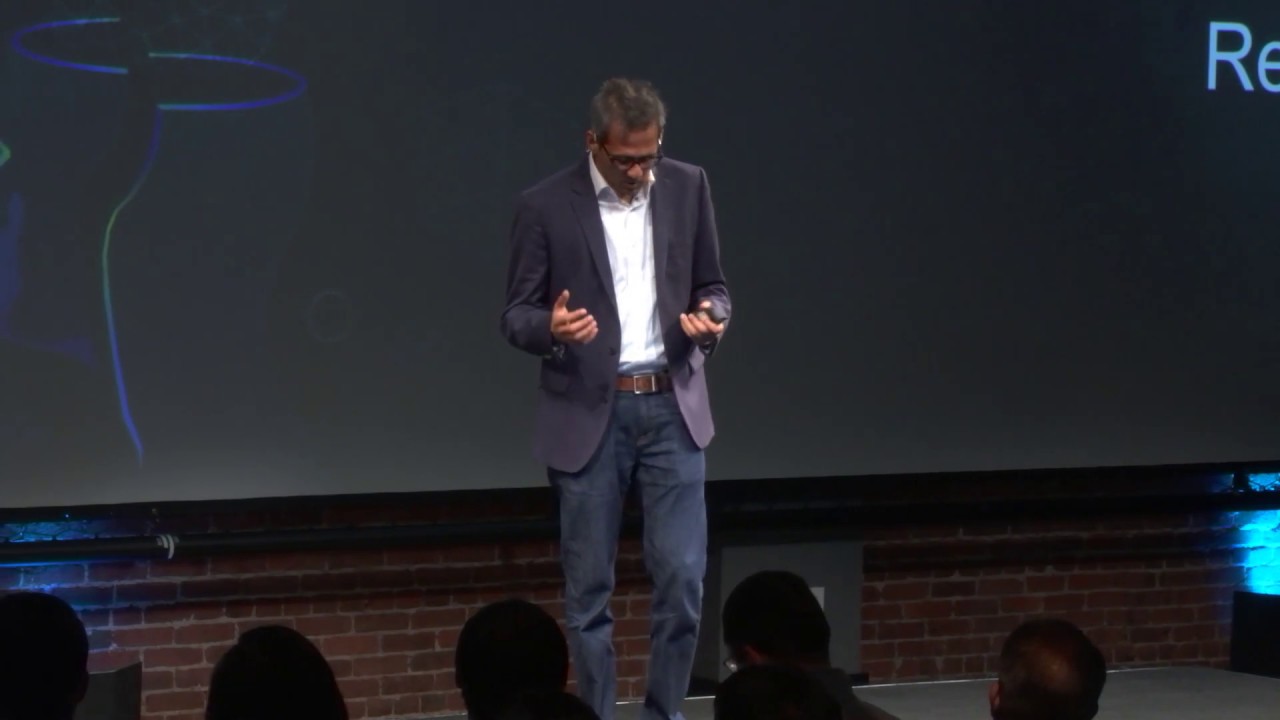
The conversational turn
Generative AI arrived carrying its usual luggage: grand forecasts, hurried demos and a thousand suddenly revised roadmaps. For Viswanathan, it fit an older concern. If natural language could help someone generate an automation recipe or a data connector, the circle of possible builders could widen again.
In 2023 Workato introduced AI@Work. Its Copilot was designed to turn a conversation into recipes and connectors. WorkbotGPT was presented as a way to ask for work across tools such as Slack, Teams, Zoom, email and CRM. Viswanathan described the copilot as a Workato-expert colleague trained on millions of data points from the company's public recipe community.
The interesting word there is not AI. It is community. The new interface drew value from the accumulated examples created under the older one. Workato's public library was no longer only a shelf of things people could copy. It became material from which the software could learn how builders describe and assemble work.
“We believe Workato Copilot will further lower the barrier of who can build within an organization.”Gautham Viswanathan, 2023
Lowering barriers inside an enterprise creates obligations that a cheerful consumer app can ignore. Who is allowed to see a customer record? Where may the data live? Who changed the workflow, and can an auditor reconstruct it? Viswanathan paired the conversational promise with the less lyrical list: permissions, masking, audit logs, regional data centers, encryption and controls over model training. Democracy without governance is merely a very efficient way to make a mess.
A bot before the boom
One patent naming Viswanathan as an inventor describes an adaptable, trainable bot that orchestrates automation across multiple applications. Filed before today's agent vocabulary became fashionable, it joined chat, machine learning and workflow execution in the same piece of enterprise machinery.
The scale of the small thing
Workato's growth supplied the conspicuous numbers. A $200 million Series E in November 2021 valued the company at $5.7 billion. In 2024, Viswanathan was selected as Product 50's Best Product Leader for a midsize company. The award cited his role in AI@Work and the product organization's response to rapidly changing technology.
Yet his public advice to founders is notably free of valuation arithmetic. Pick something that moves you and can make an impact. Find co-founders rather than going alone. When asked whether he would do it again, he answered that he would, in a heartbeat - even simply for the people, because the experience had been fun. This is less a doctrine than a preference for company in both senses of the word.
His inspirations, he has said, include filmmakers, sports figures, family and colleagues. It is a pleasantly indiscriminate list. Product work also borrows from everywhere: sequence from film, repetition from sport, patience from family, argument from colleagues. The executive who has moved among engineering, marketing, management and corporate development is unlikely to believe that useful ideas observe departmental boundaries.
The through-line is not automation for its own sake. It is the removal of avoidable friction from work, carried out by people with enough context to know what should change. The one-percent formulation gives that ambition a shape. The celebrated processes are already surrounded by consultants, software and scrutiny. The other ninety-nine percent are where the ordinary absurdities accumulate.
Even his patent trail circles the theme of reuse. One patent concerns cloning an API recipe while adapting it to the logic and schemas of different applications. Another covers a trainable bot working across multiple applications. Patents are not personality tests, but these make a recognizable pair: take knowledge that normally stays locked in one implementation, then help it travel. The same instinct appears in Workato's community, its fusion-team language and its copilots. Each is a different answer to the same practical question. How can one person's hard-won understanding of a workflow become a starting point for the next person, without asking either of them to ignore the controls an enterprise needs?
A person copies a number. Another waits for the number. A third wonders whether it was copied correctly. None of this will make a keynote, which is precisely why it matters. Viswanathan's career has moved from the first great age of middleware to cloud recipes and now to conversational automation. The machines have changed. The small gaps have not. His wager is that the people standing nearest to them should finally be allowed to close them.